
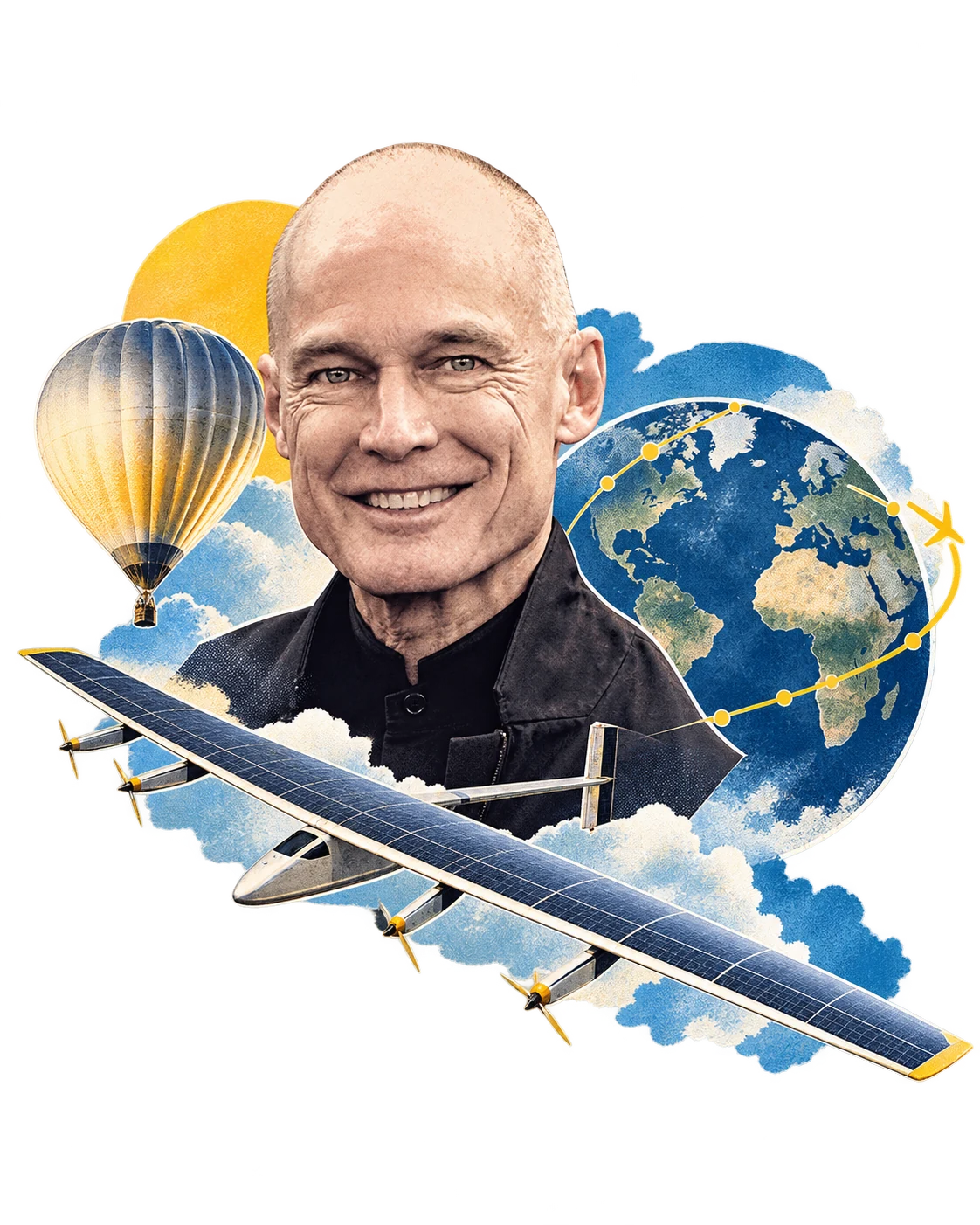
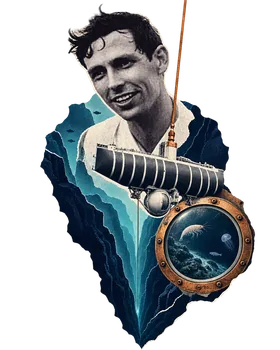
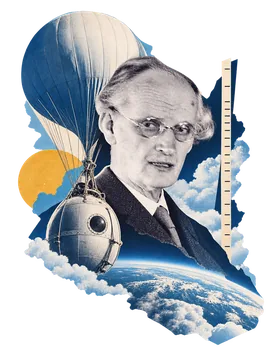
Last week I told the story of Jacques Piccard, the second generation of three generations of pioneering scientists who set records for altitude and depth. This week we'll talk about the third and final generation, who proves that he really did inherit the family genes. This is the first time I've written about someone who is still alive.
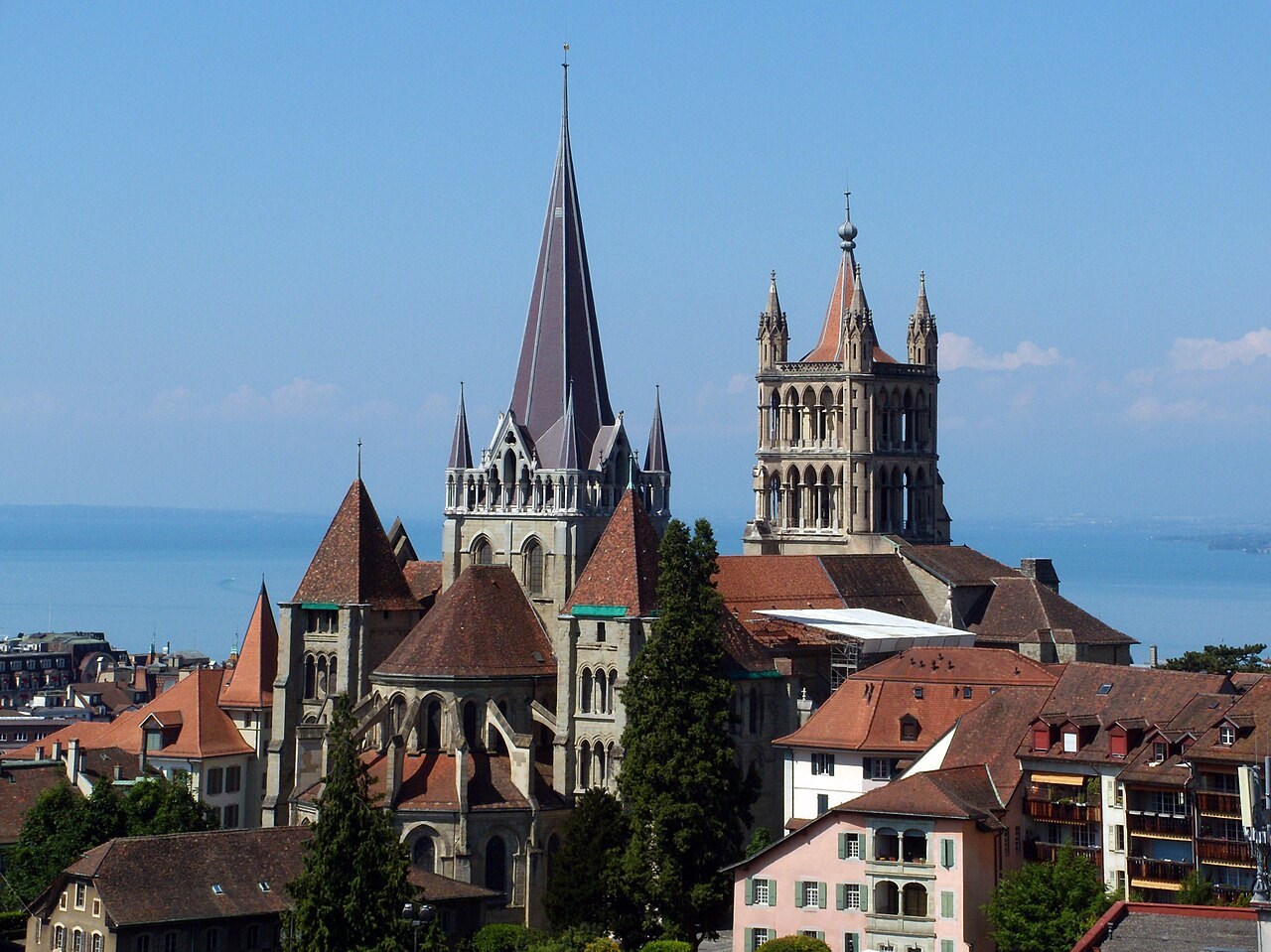
Bertrand Piccard, son of Jacques Piccard and grandson of Auguste, was born in Lausanne, Switzerland, in 1958. As a child, Bertrand spent time at the Cape Canaveral spacecraft launch facility, where he was introduced to aviation, became fascinated by it, and fell in love with it. He wanted to know what drew people to such extreme situations, and whether they really were "crazy," as those around them called them.
Bertrand studied psychiatry in Lausanne, and after graduating became a sought-after lecturer and instructor for the Swiss Medical Society for Hypnosis. As a member of the Piccard family, it was clear that he would seek his own path in the skies or in the depths. His grandfather Auguste broke altitude records, his father Jacques broke depth records, and all that was left for Bertrand was to break distance records.
Bertrand earned pilot's licenses for gliders, hang gliders, balloons, and airplanes. He was one of the pioneers of microlights (aircraft in every sense of the word, only lighter, and therefore subject to different regulations), and in 1985 he won the European hang-gliding aerobatics championship. Seven years later, Bertrand won the first transatlantic balloon race, then set out on his first major project: circling the world in a balloon.
In 1999, together with British pilot Brian Jones, Bertrand completed the longest flight in aviation history, circling the world in the balloon Orbiter 3 over the course of 19 days. When they landed, barely 40 liters of fuel remained out of the 3.7 tons they had set out with!
The Vision of a Fuel-Free Airplane
Bertrand realized that the shortage of fuel could easily have turned the achievement into a failure. This insight gave him the idea for his next major project, the most astonishing and exciting project I know of: an airplane that uses no fuel. To understand the scale of the revolution, I'll explain in a few words the difference between the engine in a car we use today and an electric motor. Imagine filling your shopping cart at the supermarket, going to the checkout, paying the full price, and then, a minute later, someone taking 70% of the products you bought and sending you home, even though you paid for the whole cart. You'd obviously feel cheated. That's what happens every day: every time you refuel your car, you get around 30% efficiency, whereas an electric car is more than 90% efficient! Bertrand puts it this way: "At home, I was brought up to be a pioneer and an explorer, because I was always allowed to be curious, ask questions, go beyond the obvious, and embrace the unknown. All my life I've been looking to explore and discover the unknown, to achieve the impossible." In 2006, Bertrand began designing a solar-powered airplane. "If we succeed," Bertrand Piccard said, "no one will ever again be able to claim that solar technology can't be used in the automotive industry, for heating, or for air conditioning." In January 2012, newspaper headlines announced: "An astonishing aviation and ecological breakthrough was unveiled the day before yesterday at a small military airfield near Zurich. It is the Solar Impulse, a new airplane powered solely by the sun and capable of flying day and night. A second prototype of the aircraft is expected to circle the world in 2012 without using a single drop of fuel."
The airplane was designed over six years by a team led by Bertrand Piccard and André Borschberg, with Israeli involvement in the design: the project's engineering information was managed using ENOVIA SmartTeam software, developed in Israel.
In an interview, Piccard described the connection between flying in a balloon and flying in the new airplane with enthusiasm and a sparkle in his eyes: "Circling the world in a balloon - no one had done that before. In both cases, we battle fatigue, lack of sleep, and other major obstacles. But enthusiasm gives you strength and fills you with energy, enabling you to take on tremendous challenges." In 2013, Bertrand completed a flight across the United States in a Solar Impulse airplane without using a single drop of fuel.
The flight around the world, planned for 2012, was postponed until 2015. In August 2016, Bertrand landed in Abu Dhabi in the solar-powered airplane, about a year and four months after taking off. The journey proved once again that solar energy can be used reliably and continuously over an extended period, in different weather and light conditions, and that energy can be stored in batteries for prolonged use at night or in cloudy weather. "We have enough solutions, enough technologies," Bertrand said after landing. "We mustn't accept pollution in the world just because we're afraid to think differently."
The trip around the world was completed in 17 legs, covering a total distance of 43,000 km. Each leg lasted anywhere from several hours to several days. The two pilots, Bertrand Piccard and André Borschberg, took turns flying the plane on the various legs (since there is room for only one pilot in the aircraft). They took short 20-minute rest breaks every few hours while the plane continued flying on autopilot. The longest leg lasted four days, 21 hours, and 52 minutes, from Nagoya, Japan, to the Hawaiian Islands. During it, Borschberg set a new record for a solo flight (a nonstop flight by one person). "What keeps humanity from switching to solar energy is the heavy weight of our habits. Most people simply want to keep doing the same thing day after day, instead of realizing that they can change. For many years, environmental solutions were very expensive and unprofitable, but today there's no excuse. Today, these solutions are profitable. If you insulate your home, drive an electric car, use LED bulbs, or have a smart power grid, you save money, create jobs, generate profit, and help the whole industry grow," Bertrand concludes. The character of Captain Jean-Luc Picard in Star Trek: The Next Generation is named after Jean, the brother of Bertrand's grandfather Auguste. According to some sources, Captain Picard is a fictional descendant of one of them.
Bertrand Piccard and André Borschberg were awarded a prestigious medal by the Royal Scottish Geographical Society in 2018.
Bertrand Piccard is married and has three children.
I'm still waiting to see which of his children will follow in his footsteps and what they will achieve.
תגובות
עדיין אין תגובות.