
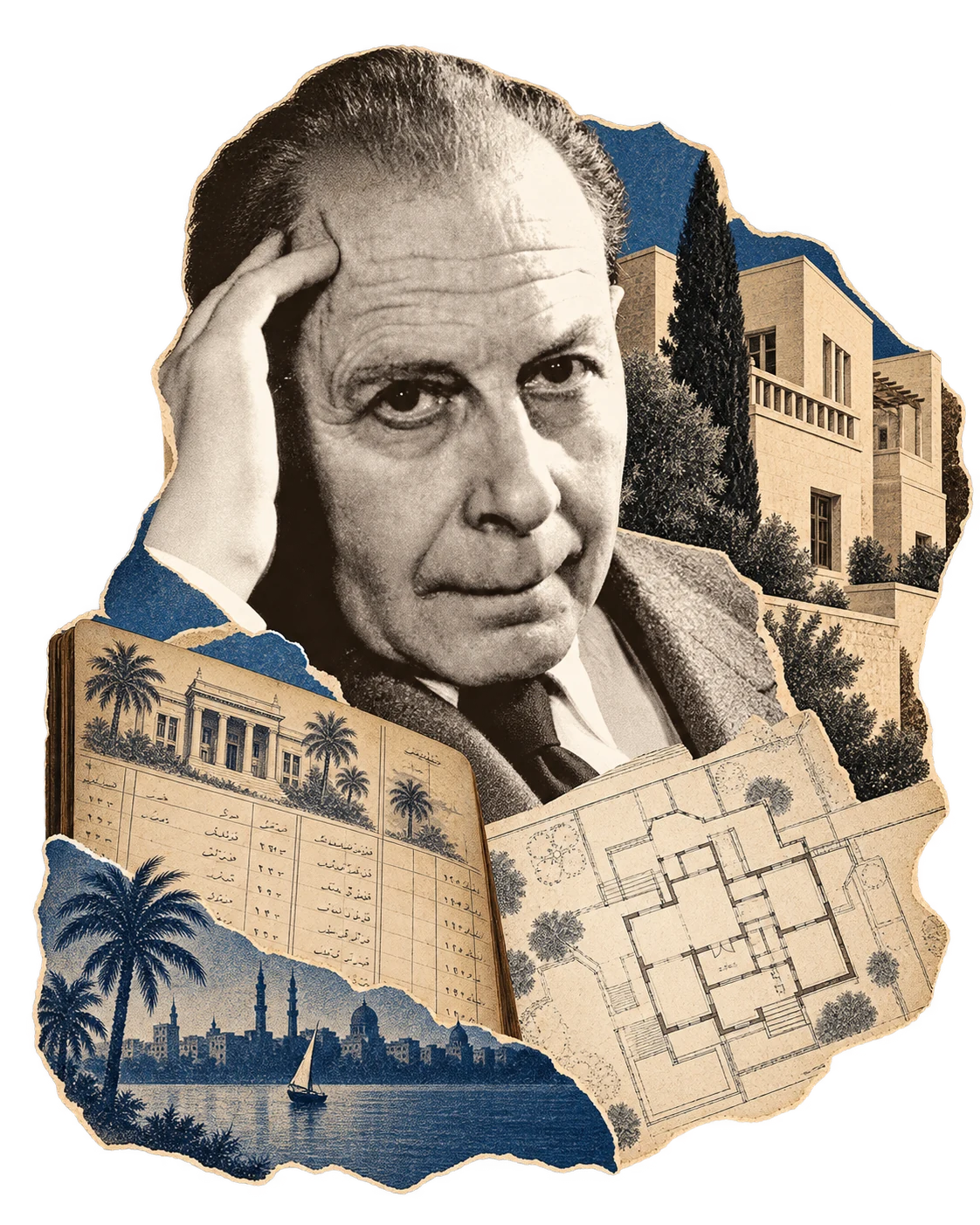
A wealthy Egyptian Jew and two renowned German Jewish engineers are just some of the elements in the story of one of Israel's most famous homes - the Prime Minister's residence.
Atlantropa, Mendelsohn and Schocken
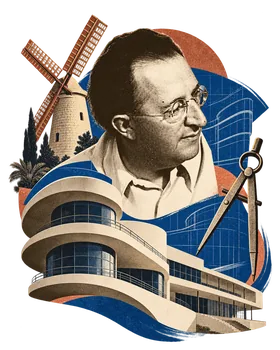
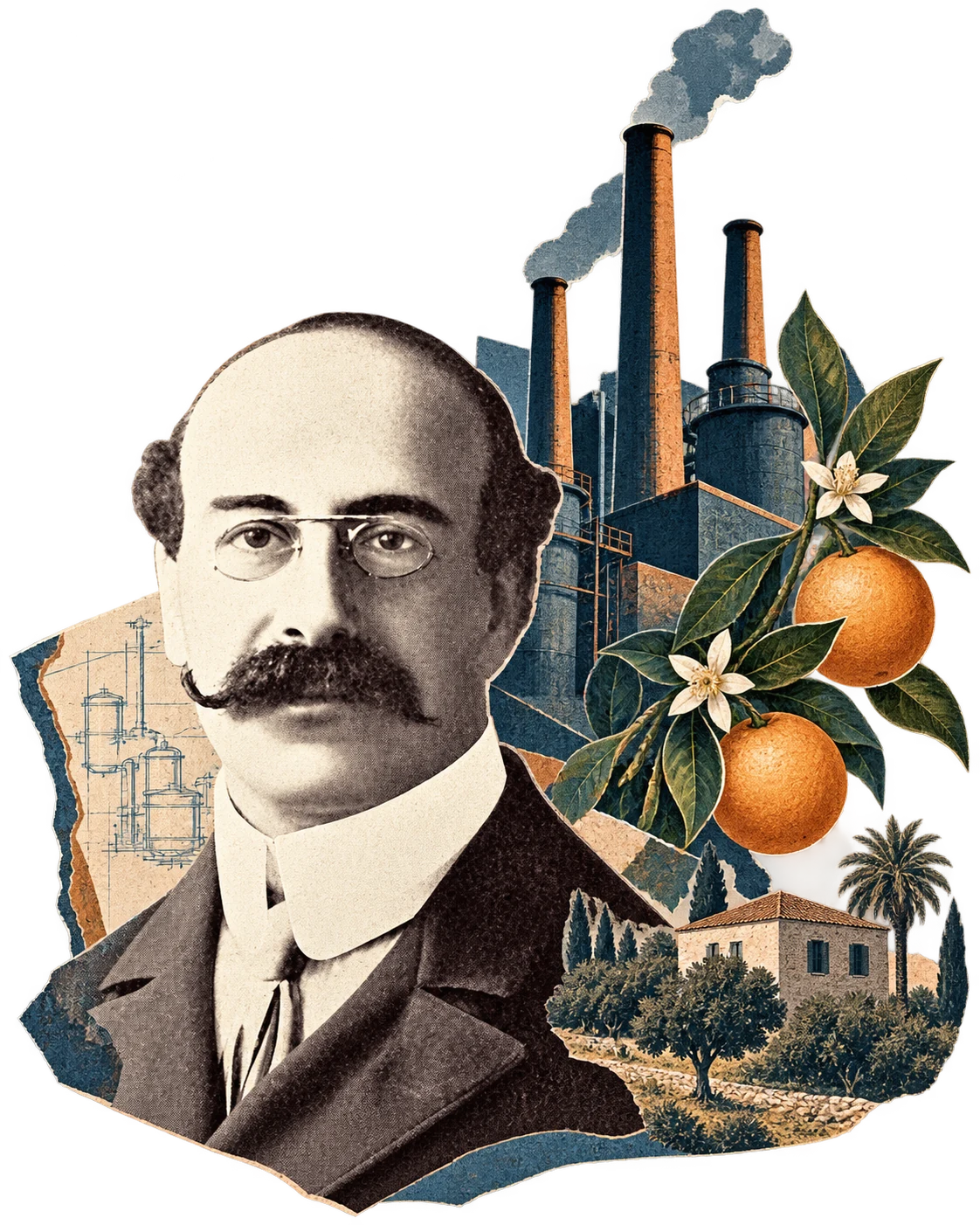
One of the most ambitious plans ever conceived was undoubtedly the Atlantropa Plan (originally called Panropa), which was considered fanciful in the 1930s. The idea was to build a 35-kilometer-wide dam between Spain and Morocco that would block the Strait of Gibraltar, cutting off the flow of water from the Atlantic Ocean to the Mediterranean Sea. The dam was supposed to lower the Mediterranean's sea level by about 200 meters and expose around 600,000 square meters of land for agriculture and settlement. The idea came from the mind of a German engineer named Herman Sörgel, whose right-hand man was the renowned Jewish engineer Erich Mendelsohn. Among Mendelsohn's projects were the Einstein Tower in Potsdam and the Schocken department stores, a chain owned by the German Jewish businessman Salman Schocken. When the Nazis came to power, Salman Schocken and Erich Mendelsohn realized that the Germany in which they had grown up was no longer safe for Jews, and both decided to immigrate to Palestine. There, Erich Mendelsohn opened an architecture firm and began designing many buildings, including Chaim Weizmann's home in Rehovot, known as 'the Palace,' and the Ziv Institute, later to be called the Weizmann Institute of Science. The President's residence is located on its grounds.
In Palestine, the two resumed working together, and Salman Schocken asked Erich Mendelsohn to design two buildings in Jerusalem's Rehavia neighborhood. One was his home, and the other was a large library for the collection of manuscripts he had brought with him from Germany, which contained more than 30,000 items from the Cairo Genizah. Salman Schocken established Schocken Publishing House and purchased the newspaper Haaretz, which his son Gershom Schocken ran until 1990.
Edward Aghion, Lydia and Kaufmann
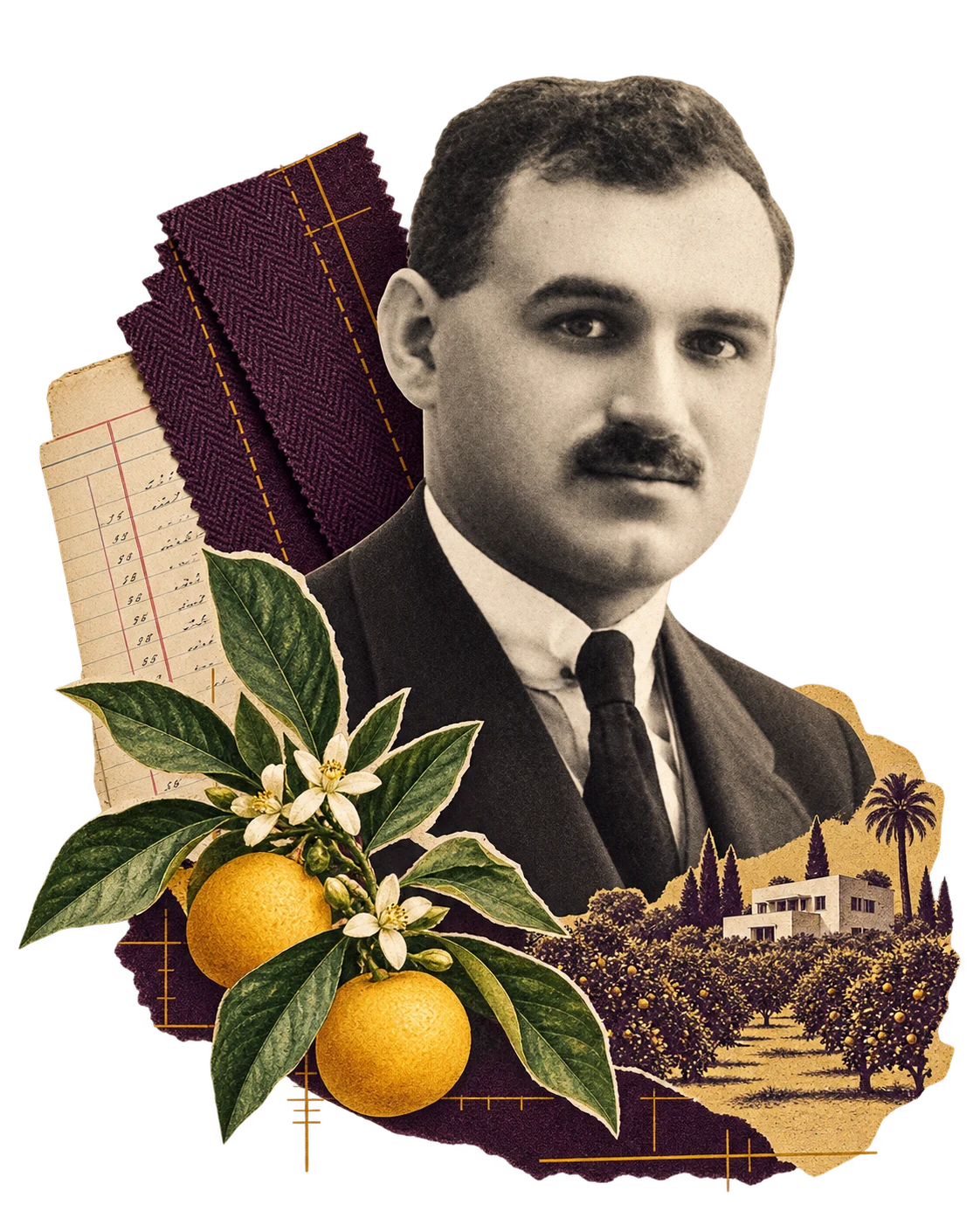
Edward Raphael Aghion was born in Egypt in 1883. The family originated in Spain, in a village called Ayllón, from which their original surname was derived. The family migrated to Salonika and from there to Alexandria, Egypt, where they changed their surname to Aghion, a name with a Greek sound meaning 'holy.' Edward Aghion belonged to the wealthy elite of Egyptian Jewry, alongside Baron de Menasce and the Cattaui family (see http://bit.ly/3if8IrX). Some members of this elite held senior government positions. One member of the Cattaui family, for example, served as Egypt's finance minister and communications minister, and as a member of the Egyptian Senate during the period of British rule in Egypt; another was a writer, diplomat, and speechwriter for King Fuad. In the 1920s and 1930s, the homes of wealthy Jews hosted balls, exhibitions, lectures, concerts, theater, and other entertainments.
When World War I broke out, the Turks deported Jews who held the citizenship of enemy countries, Russia and Poland, to Egypt. This brought these wealthy Jews into contact with the Zionist enterprise. From December 1914 to September 1915, more than 10,000 Jews were deported, among them David Ben-Gurion. Edward Aghion was captivated by the Zionist idea. In his magnificent home in Alexandria, he hosted Chaim Weizmann and Ze'ev Jabotinsky, who arrived with the deportees. Among his guests were also Colonel Kisch and the Irish Colonel John Patterson, who founded the Zion Mule Corps.
In Alexandria, the family established the Aghion Brothers Bank and later also founded Egypt's Cotton Exchange. While still in Egypt, Edward invested in various ventures in Palestine, including the Migdal insurance company, the Vulcan steel foundry, and the Phoenicia glass factory. At a time when the future of Palestine was uncertain, Edward Aghion decided to tie his future to the country and immigrate there.
In 1920, Edward Raphael Aghion married his beloved Lydia Bamba Shalom in a lavish ceremony. Lydia, also born in Egypt, was intelligent and witty, and was the first woman in Egypt to qualify as a lawyer. Like her husband, she devoted herself to the Zionist vision and served as president of WIZO in Egypt.
It is difficult to overstate the importance of the architect Richard Kauffmann's work. His plans were called 'the skeleton of the state,' and he himself was nicknamed 'the father of Zionist planning.' He designed Nahalal, the first moshav; Degania, the first kibbutz, was also built according to his plans. He designed homes for wealthy residents of Palestine, such as Beit Ziv in Tel Mond, neighborhoods in Haifa and Jerusalem, the Hebrew University's Givat Ram campus, and even the city of Afula.
Richard Kauffmann was born in Frankfurt and studied art and architecture as a young man. During World War I, he served in the Prussian army, where he was wounded and awarded the Iron Cross. After the war, he worked as an architect for the Norwegian royal family. In 1920, at the age of 33, he received an invitation from Arthur Ruppin, then director of the Jewish Agency's Settlement Department, to immigrate to Palestine and become the architect for the Palestine Land Development Company. Before the state was established, Kauffmann designed more than a hundred groups, kibbutzim, workers' moshavim, cooperative moshavim, and urban neighborhoods.
The lives of Richard Kauffmann and Erich Mendelsohn share many similarities, and their paths crossed repeatedly. Both were German Jews who studied at the same school in Germany. The two friends collaborated on several projects, but while Mendelsohn enjoyed the aura of a man of the world and moved in Jerusalem's upper social circles, Kauffmann was 'merely' a laborer who built the community.
The Vicissitudes of the Aghion House
In 1935, Edward Raphael Aghion bought a large plot of land on the border between the Rehavia and Talbiya neighborhoods. Rehavia was home to leading figures in academia and the political establishment of the Jewish community, while Talbiya was home to the Palestinian elite of the Mandate period, whose language and culture he knew and with whom he was on friendly terms. In this way, at the time, Aghion and his plot became a kind of physical and human bridge between the two peoples. At the end of that year, Edward and Lydia immigrated to Palestine with their two children and a staff of servants, and began building their home on the plot they had bought. The couple chose Richard Kauffmann to design their home because he seemed more 'Israeli' to them, and also because they found it convenient to speak with him in English. By the time Kauffmann began designing the house, the Schocken home and library designed by Erich Mendelsohn were already standing nearby. Kauffmann took the existing buildings into account and created harmony among the houses through the Bauhaus architectural style, which was then flourishing.
The builder they chose was Avraham Biberman, and about two years later the house was complete: two floors and 14 rooms. Construction took longer in part because of additions such as a shelter with a telephone and protection for the house against aerial bombardment. When the foundations were being dug, a burial cave from the Second Temple period was discovered on the site. For Edward Aghion, this was a sign that he had returned to the land of his ancestors, and that his home was another layer in the long history of the Jewish people.
In March 1938, when construction was complete, a housewarming celebration was held together with the bar mitzvah of Abel, Edward and Lydia's son. Among the guests were Herbert Samuel, the first British High Commissioner for Palestine, and his wife, who were visiting the country.
Just as in Alexandria, their home became a center for cultural events and fundraisers. Three months after the housewarming, Yitzhak Ben-Zvi came to lecture to an audience of more than 200 on 'The Countries of Origin of Oriental Jews.' In 1942, a recital featuring the singer Josephine Baker was held in their home to mark the British victory over Rommel's army at El Alamein.
In Palestine, Edward Aghion became involved in public life. In 1938, he was appointed president of the Friends of the National Workers' Health Fund. He was also one of the founders of Kfar Yedidia, which Kauffmann designed; a member of the board of a commercial center in Netanya; a member of the board of Hamei Tiberias; and a member of the management of a diamond company in Netanya, among other roles.
At the end of the War of Independence, the Egyptian government nationalized the property of all wealthy Jews. The family's financial situation deteriorated, and they left the house for a villa they had built in Haifa, at 7 Ayalon Street. They rented out the Jerusalem house, and one of the tenants was the King of Yugoslavia, who lived there for about a year. During the War of Independence, the house served as a hospital for Irgun fighters, run by Neta Bergman and Rachel Rivlin, the mother of President Reuven Rivlin. In 1953, the house passed into the hands of the Israeli government, though it is not known whether it was donated or sold. 'My soul still recoils from it. How are we to take over all these vast spaces and how are we to make use of them without getting lost inside them? The whole business of choosing this house was fraught with problems, but there was no alternative, and the die was cast,' wrote Moshe Sharett, then Foreign Minister, who became the first person to live in the house that same year.
In 1974, the house became the Prime Minister's official residence. The first to live there was Yitzhak Rabin, followed by Menachem Begin, Yitzhak Shamir, Shimon Peres, and Benjamin Netanyahu. Today, the complex also includes Villa Schocken and the Schocken Library, designed by Erich Mendelsohn.
Edward Raphael Aghion died in 1956 after a long illness and was buried in Haifa. The house is currently valued at about $40 million.
תגובות
עדיין אין תגובות.