
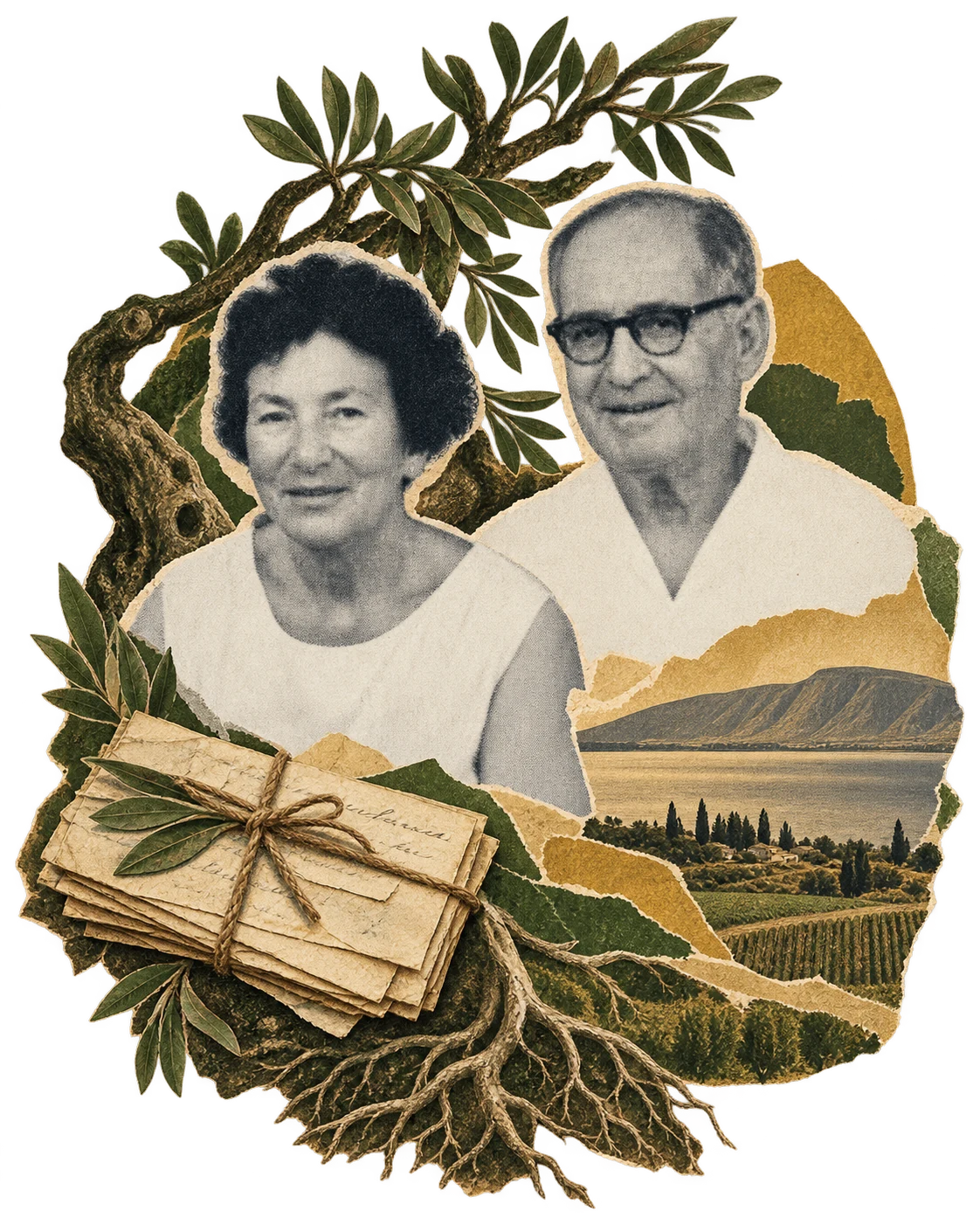
Few families can boast of being as large and as long-established in the country as the Yaffe (Yoffe) family.
A family originally from Russia, whose first members immigrated to the country in 1777. A quiet, modest family whose descendants include rabbis, pioneering farmers, senior military officers, members of the Knesset, judges, doctors, and more. Meir Shalev chose members of the Yaffe family as the protagonists of his book Fontanelle because of their deep roots in Jewish and Israeli history.
Avraham Yaffe 'the Big One'
This time, we won't tell the story of Dr. Hillel Yaffe, one of the first doctors, after whom the hospital in Hadera is named. We won't tell the story of Avraham Yaffe 'the little one,' a lieutenant colonel in the IDF and one of the Israel Air Force's first pilots, nor the story of his daughter Hanna Yaffe, the only female paratrooper in the IDF with a 'red' background. This time, we'll tell the story of Avraham Yaffe 'the big one.'
Avraham Yaffe commanded the 13th Battalion of the Golani Brigade. One day, his adjutant appeared before him and said, "A woman, not a young one, wants to see you." He replied, "I don't have time right now." The adjutant then said, "The woman says she's your mother." Miriam, then 60, entered her son's office and told him she wasn't going to leave the battalion. And that's what she did. She stayed with the battalion and accompanied it through all its battles as a cook.
In David Ben-Gurion's eyes, Miriam and her sister were two of the three prettiest girls in the town where he was born and raised. Later, he said that they were two of the three prettiest girls of the Second Aliyah (the third was Rachel Nelkin).
Plonsk and Ben-Gurion
Miriam Yaffe (née Kbashna) was born in 1889 in Plonsk, Poland, then nicknamed 'the Jerusalem of Poland.' Many Jewish intellectuals came from there, as the writer David Frischmann wrote: "The Enlightenment went forth from Plonsk to rule." The first association of Hovevei Zion in Poland was founded in Plonsk. But Plonsk is best remembered as the town where David Ben-Gurion was born and educated. Ben-Gurion and Miriam's family were closely connected. When Ben-Gurion (then Green) was 14, he founded a Zionist association in town called Ezra - an organization whose aim was to establish the exclusive use of the Hebrew language. One of its members was Miriam's brother, Yitzhak Kbashni, Ben-Gurion's childhood friend from their days studying at the heder. "We held each other's fingers and recited," Ben-Gurion recalled. Other members of the organization included Shlomo Lavi, one of the founders of Ein Harod, and Shlomo Zemach, principal of the Kadoorie School. Their initiative bore fruit, and all the town's residents spoke Hebrew. "In time, we even made the old people speak Hebrew, by answering them in Hebrew and addressing them in Hebrew. And there you have a very strange thing: the town spoke Hebrew!" Ben-Gurion recalled.
David Ben-Gurion immigrated to the Land of Israel in 1906. He wrote of that day: "I remember well the day I immigrated to the country. The town's young people gathered. We took a photograph beside the house (there was already a photographer in town). There were about fifteen of us in the group of immigrants, including three girls... Those three later became known as the most beautiful women among the Second Aliyah."
Michael Bar-Zohar, Ben-Gurion's biographer, wrote that "David noticed Malka's beauty. He was also impressed by the beauty of Miriam and Sarah Kbashni, daughters of Plonsk. Years later, when the two moved to the Galilee, David declared that the most beautiful young women in all the Galilee were the two Kbashni sisters."
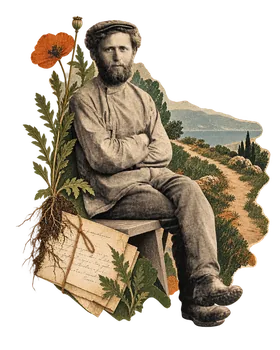
Haim Yaffe was born in 1883 in Oniecha, Russia, not far from the border with Belarus. He immigrated to the country in 1905 and spent five years training to become a farmer. In 1910, while working in Sejera (today Ilaniya), he learned that the Bulgarians, the first settlers in Yavne'el, had left, and that several farms were for sale. Haim organized a group of friends, including Yehezkel Brandstetter, Haim Zimmerman, Gershon Greenfeld, and Shmuel Duchvani, and together they came to Yavne'el. One of them recalled: "We knew the conditions in the Galilee, and we knew Yavne'el too... The colony welcomed us, and two of our friends joined its committee. Those friends - Haim Yaffe and Haim Zimmerman - brought order to the colony's public life and helped improve its relations with the JCA." The Yaffe family had two farms: one belonged to Haim, and the other was shared by his two brothers, Dov and Avigdor. Haim bought the properties before his brothers immigrated; they came directly to Yavne'el only in 1912.
Miriam and her sister Esther immigrated to Yavne'el, where they married the Yaffe brothers. Miriam married Haim, and Esther married Dov. Miriam and Haim's home was open to members of Hashomer. Haim was one of the settlers' leaders, and the duty to defend the homeland and personal responsibility became a legacy inherited by their three children, Avraham, Uri, and Shaul, who were born in Yavne'el. All three helped establish the IDF and founded communities in the country, while their sister Hanna also served in the military and in settlement work. Following David Ben-Gurion's decision to require the future military commanders to Hebraize their names, the Yoffe family changed its surname to Yaffe.
The Yaffe Family in Yavne'el
Avraham Yaffe 'the big one' rose to the rank of major general in the IDF, was one of the founders of Nir David, and owned one of the country's largest collections of Hebrew children's literature. He founded the Movement for a Greater Land of Israel and served as director general of the Nature Reserves Authority. It is said that during a discussion with Moshe Kol, then Minister of Tourism, about establishing a new nature reserve, Yaffe stepped out for a moment. In that brief time, the minister sighed and said, "Thank God we founded the State of Israel before there were nature reserves, because your boss wouldn't have given us enough land to establish a country."
Avraham Yaffe was also a member of the Eighth Knesset. After his death, Yitzhak Rabin, who belonged to the opposing political camp, wrote him a farewell letter: "Avraham is gone. His family and friends knew of his grave illness... Avraham the strong, the tall, powerfully built man who once joked that he stayed in the IDF because without him there would be no IDF, a general who looked like a real general... How moving it was to see the big Avraham handling a tiny butterfly or a little flower with such gentleness. How he loved children, and how they returned his love." Avraham Yaffe and Yitzhak Rabin were related: Aviva, Avraham's second wife, was Leah Rabin's sister.
Uri Yaffe was one of the Palmach commanders and a founder of Kibbutz Ma'oz Haim, as well as one of the founders and the first commander of the 9th Brigade. To this day, the brigade is named after Uri's underground nickname, 'Oded Brigade.' Uri Yaffe died and was buried at Kibbutz Ma'oz Haim in 2003. His gravestone bears the words: 'A farmer, fighter, and loving man - a man of dreams and vision that become reality.'
Shaul Yaffe helped establish the Palmach reconnaissance units, was the IDF's first armor commander, and was one of the founders of Kibbutz Yakum. Shaul Yaffe died at Kibbutz Yakum in 1977, aged 56.
In 1929, about a year after the family left Yavne'el, their daughter Hanna was born. She was the only sibling born in Tel Aviv. Hanna enlisted in the first battalion of the Yiftach Brigade of the Palmach and later joined Kibbutz Revivim. She married Yoel, a friend from the Palmach, and later the two moved to Moshav Herut.
The group Haim Yaffe organized in Yavne'el was called 'the radicals.' They were secular young people of the Second Aliyah who had come to a colony of First Aliyah settlers, most of whom were religious. The radicals preferred life in a colony where each person cultivated their own plot, while everyone also looked out for one another. They pushed for the establishment of a shared school system for religious and secular children. Leading the opposition was the ritual slaughterer, Rabbi Meir Harkavi, grandfather of Major General Yehoshafat Harkabi. Another principle established by the radicals was Jewish labor. Avigdor Yaffe recalled those early days: "I found myself among the lively group of young farmers who had settled in the colony. I learned from them the two principles at the heart of their aspirations: Jewish labor and the Hebrew language."
In response to severe economic hardship, the radicals, led by Haim Yaffe, established the 'Lower Galilee Colonies Association.' In 1914, they took in the deportees from Tel Aviv and the colonies of Judea and the Sharon region, and provided for their needs. Unlike the members of the colony, who started working on the farms after only six years of schooling, the radicals believed that education was the nation's most fundamental investment and its most important resource, and so they made sure their children continued their studies. This principle bore fruit, and the three Yaffe brothers became military men, men of letters, and founders of communities in the country.
One of the struggles waged by the radicals concerned equal rights for women, and it led to a split in the colony. For the first time, there were two opposing camps on this issue. On one side, the radicals fought for the farmers' wives to receive the same rights as men. Opposing them was the farmer Shoshana Yaffe, sister of the physician Hillel Yaffe (one of the first doctors in the country, after whom the hospital in Hadera is named), who opposed giving the farmers' wives a say.
Haim Yaffe was the first of the brothers to marry, wedding Miriam (née Kbashna), as mentioned. Her sister Esther married Dov Yaffe later, and Avigdor, the youngest of the brothers, married Miriam née Hordiner. These were the early years of the lively 1920s. The three families were close-knit, and there was a spirit of fellowship and understanding between them, as they all looked forward to a promising future together in Yavne'el. Toward the end of World War I, the economic situation suddenly worsened. The capnodis beetle destroyed the almond groves, wheat prices collapsed, and a dispute over women's rights split the colony into two camps. Dov and Esther Yaffe were the first to leave the colony - the first crack in the unity of the Yaffe family. Haim and Avigdor shared Dov's cows, machinery, and debts. Only the wind moved through the empty storehouses. There was no grain to sell and no cash to support the family. After about six months, Haim came down with sciatica (nerve inflammation) and was bedridden for two months. It was clear that, once he recovered, he would not be able to return to physical labor. The youngest brother, Avigdor Yaffe, recalled those days: "For me, they were days of a terrible nightmare. The thought that I would be left alone here, after many years of life in a bustling home, of a social life and children whom I loved dearly, depressed me. Haim, who saw how distressed I was, suggested that I leave too. He laid out before me the story of the past few years and the efforts to improve things, all in vain... 'What future awaits you?' he said. 'Only the ruined fields! Visit one of the moshavim and see whether it appeals to you.' Early the next morning, Haim and Miriam's family would leave the colony. Outside, friends were sitting and talking, trying to dispel the atmosphere of mourning that hung over the place. The two were beloved by the people there, and no one failed to feel deep sadness at their departure. I sat next to Uri, Haim's son, and I knew he shared my feelings. He was bound to the place with every fiber of his being; the child was suffering the pain of parting. We both kept quiet and didn't join the conversation."
In 1928, the family left Yavne'el and moved to Herzliya, where Haim managed the settlers' lands and worked on planting citrus groves.
Gan Menashe in Herzliya
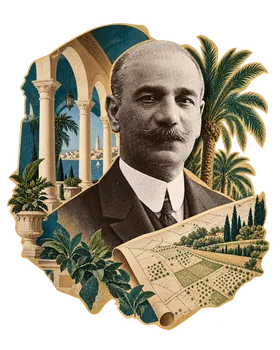
In 1936, Baron Felix de Menashe bought an orchard covering 218 dunams northwest of Kfar Saba, near the orchards of Gan Haim. He planned to build his home on the land, with a garden around it. As befitted a very wealthy man, he hired the best people to design the house and garden that would later become known as Gan Menashe. The house was designed by Ze'ev Rechter, who had by then designed the Kalia Hotel by the Dead Sea, Susskin House, and Engel House. He would later design the Mann Auditorium and the Binyanei HaUma convention center.
This was not Felix de Menashe's only dream of building a home in Israel. As early as 1927, there were plans to build 'Menashe House, Haifa, Mount Carmel' at 120 Yefe Nof Street. Designed by the architect Alexander Baerwald, it offered the finest view in Haifa and was intended to serve as the family's summer home. The Panorama Hotel was later built on the same plot. During the 1929 riots, Arabs threatened Felix de Menashe, telling him that unless he left his properties in Palestine, they would damage his property in Egypt and Jordan, and the idea of a house on Mount Carmel was abandoned. After the riots, in 1933, the house was sold to Dr. Downes. His wife, Lady Florence Downes (Chapman), was the sister of General Allenby's wife. Allenby was then serving as Governor of Egypt, and he advised his brother-in-law to move to Mount Carmel in Haifa.
The building plan for Gan Menashe included the family home and a living unit for the family chauffeur. In the end, however, because of the riots and the outbreak of World War II, which led to the collapse of the baron's family's business operations, only the chauffeur's home was built. In 1939, Judge Zedekiah Harkavi (father of Major General Yehoshafat Harkabi) introduced Baron Felix de Menashe to Haim and Miriam Yaffe. The baron invited them to live in the already completed unit and look after the garden.
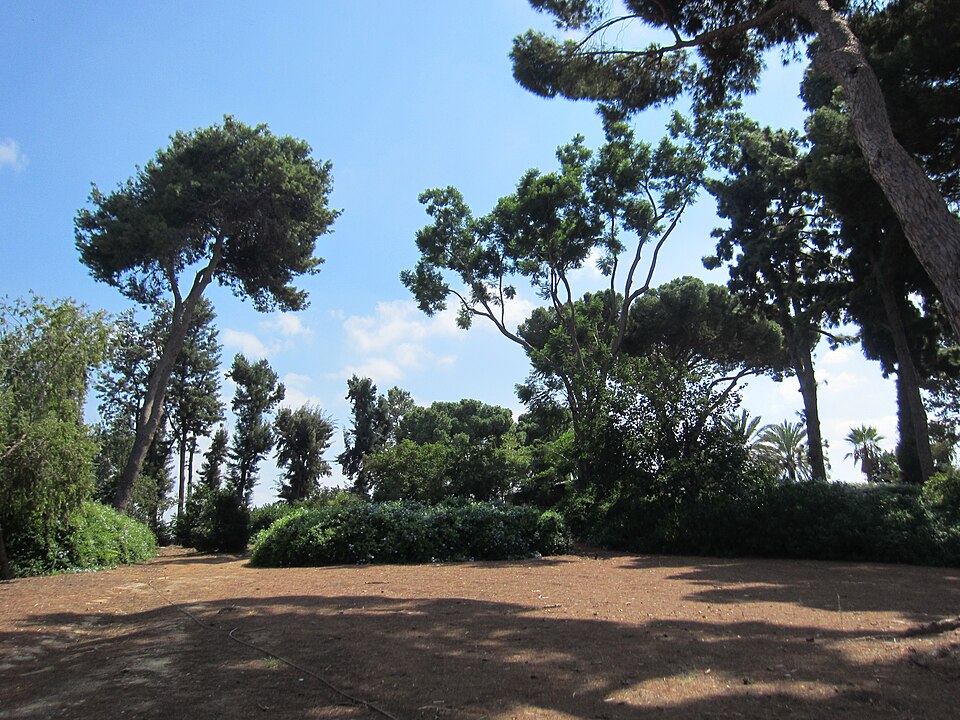
The garden was designed by Yitzhak Kutner and Lipa Yahalom, who are considered the founders of modern landscape architecture in Israel. It became one of the largest and most beautiful private gardens in the country. An avenue of cypress trees, some of which have survived to this day, led to the house and garden. The garden's beauty and the health of its plants were thanks to Miriam Yaffe. She was helped by her friendship with Lipa Yahalom, who saw the garden as his life's work, and with her longtime friend Noah Naftolsky, a member of the Second Aliyah whom she had known since the days of Kinneret and who also owned a nursery in Givatayim. The garden was a collection of rare plants and trees from around the world, enveloped in fragrances that changed with the seasons: citrus blossom, jasmine, magnolia, and honeysuckle. There was a cedar of Lebanon and phytolacca trees from South America, which the family called 'the sulk tree,' because the children would sit in their shade when they were angry; pines from Italy, an Egyptian palm, a Judas tree, and a plumbago. Fifteen varieties of cacti also grew in the garden, some of which can still be seen today.
The garden, hidden amid the orchards, was used by the Yaffe family's fighters as a secret meeting place for members of the Haganah and the Palmach. A concealed weapons cache and a communications station disguised as a dovecote were installed on the roof of the house. The garden also had a telephone line, quite a rarity at the time, as well as a pickup truck. Everything was based on Jewish labor, in keeping with the spirit of the Yavne'el radicals.
Haim and Miriam at Gan Menashe
Haim and Miriam held all their family celebrations at their home. Many visitors came to the garden, among them David Ben-Gurion, Arthur Ruppin, Hanna Rovina, and Aharon Meskin.
In 1961, at the invitation of the Jewish producer Kurt Unger, the British writer Lawrence Durrell, author of The Alexandria Quartet and husband of Baron Felix de Menashe's granddaughter, visited the country. Unger came up with the idea for a book about a brave Jewish woman who helped bring the State of Israel into being. The book was published, but served as the screenplay for the film Judith. In 1964, Italian actress Sophia Loren, a film star of the day and one of the most beautiful women of the time, came to the country to film the movie. Unger taught Loren a few words in Hebrew, and during a tour of Nazareth led for her by the then commander of the Northern Command, Avraham Yaffe, she surprised him by thanking him in Hebrew when he helped her sit down in a chair: "No hands, please!"
The connection between Sophia Loren and Avraham Yaffe began when he volunteered several soldiers from the Paratroopers Brigade, including Yoni Netanyahu, to appear as extras in the film. During filming, Avraham invited Sophia to his parents' home at Gan Menashe. She was so taken with the place that she stayed for about a week. The film The Bride and the Butterfly Hunter, starring Gila Almagor, Yossi Banai, and Yossi Pollak, was later also filmed in the garden and released in 1974.
Haim Yaffe died in 1966. His son Avraham tried to buy the garden and house and entered into negotiations with George de Menashe, Felix de Menashe's son. The deal fell through because Haim was unable to raise the money needed, and the garden was sold to the millionaire Shaul Eisenberg. Miriam Yaffe continued living in the garden until 1968, then moved to live with her daughter at Kibbutz Revivim, and later with her son at Kibbutz Yakum. Miriam died in 1975.
תגובות
עדיין אין תגובות.