
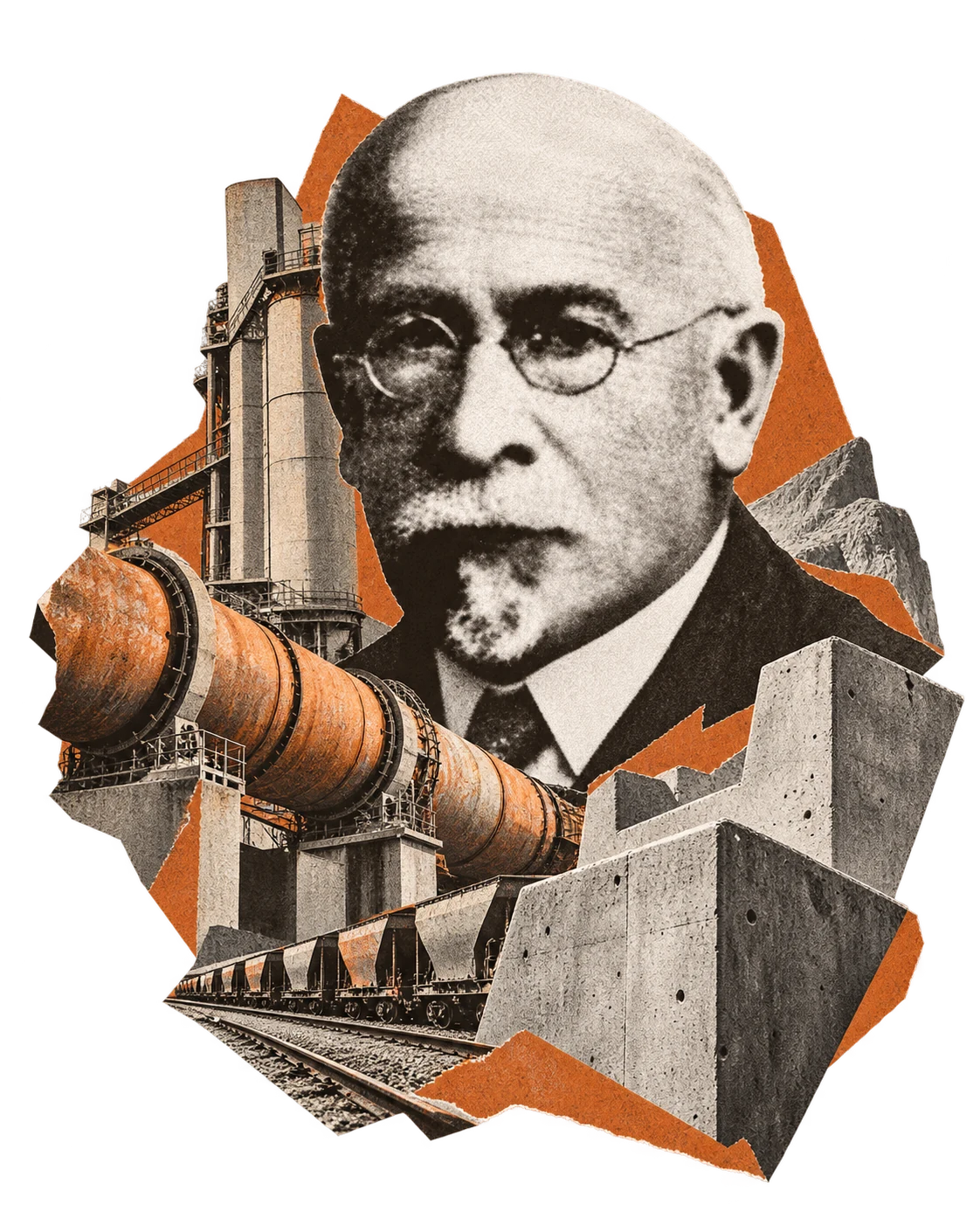
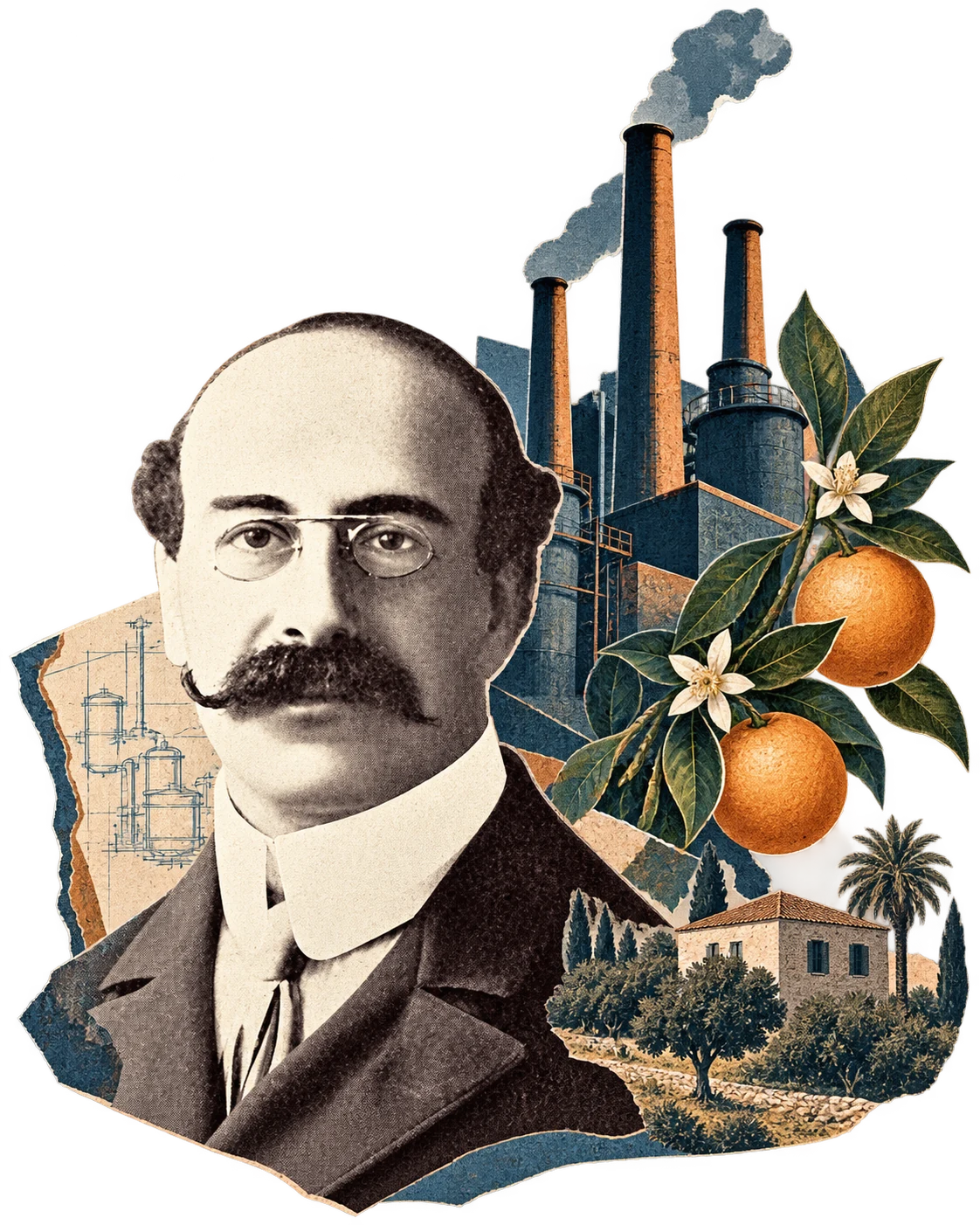
A man of few words and many deeds, he believed that building the state required action, industry, and infrastructure.
The Founding of the Cement Factory in Haifa
In his vision, Herzl knew that the country to be established would need a cement factory. In his book Altneuland, he indeed noted that the factory ought to be built in Haifa, since he foresaw a promising future for the city as a leading port. In 1919, 17 years after the book was published, seven businessmen founded the Portland Syndicate in the Land of Israel. In 1922, the company was legally registered in London, and Michael Polak, who headed the founders, set about raising the initial capital that would enable the company to build Haifa's first cement factory, on land purchased near the village of Yajur. The construction of the factory, its outfitting, and the training of its workers took two years. In October 1925, with great excitement and the knowledge that they were making history, the first kiln was fired. In December of that year, the first bag of cement was produced at the Nesher factory in Haifa. From then until today, Nesher has supplied most of Israel's cement needs, and the factory is considered one of the largest of its kind in the world.
The name Portland Syndicate in the Land of Israel tells the story of the first production of cement. Joseph Aspdin was born in Leeds, England, in 1778 and was the builder who invented concrete. He discovered that a mixture of clay soil and limestone, fired in a kiln at an especially high temperature, produced a new material, which he called Portland cement because its color resembled the soil in the Portland area. He patented his invention in 1824, and the process for producing concrete is still used today. The discovery of cement transformed industry throughout the world, and over the decades that followed, various materials were developed from the same base to meet the many and varied needs of construction.
For example, it was discovered that cement mixed with gravel, sand, and water could be poured into a framework and used as an exceptionally convenient, fast, and strong building material: concrete. When iron was added to the mixture, it could be used to build especially strong structures: reinforced concrete. It was later found that the material was resistant to water, and to this day it remains the principal component in the construction of dams, piers, bridges, and breakwaters. Floor tiles and stairs came later, also made of cement. These discoveries changed the skyline and made the growth of skyscrapers possible.
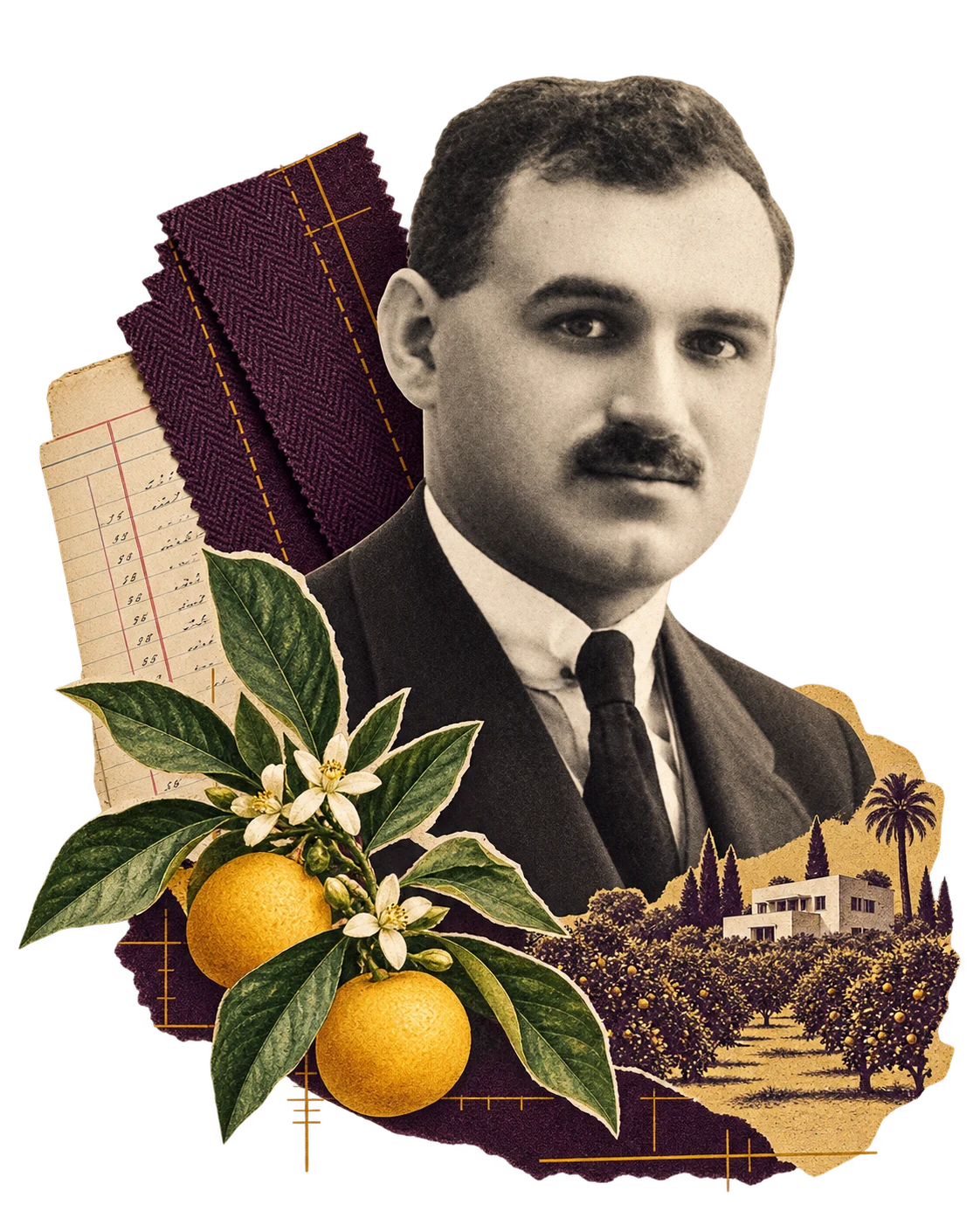
The young engineer Nahum Wilbushwitz and his mentor, Mendel Hankin, traveled around the country to find a suitable location for a cement factory. At the end of their tour, they realized that Mount Carmel had large deposits of limestone, while the Kishon Valley had a high concentration of clay. The combination of these materials and the proximity to the future port to be built in Haifa settled the question of where the factory would be located.
The seven founders of the syndicate, headed by Michael Polak, a wealthy refugee from the Bolshevik Revolution in Russia, approached Dr. Arthur Ruppin, director of the Palestine Land Development Company, and asked him to hurry and purchase the land needed for the factory near the village of Yajur. The land was purchased in November 1921, and shortly afterward Bela Spiegel submitted an application for a building permit. Spiegel was a Hungarian Jewish engineer and chemist, and one of the directors of the Hungarian General Coal Company, which also owned a large and successful cement factory. Laboratory tests showed that Israeli cement was superior in quality to European cement of the time.
From Russia to the Nesher Factory
Michael Polak was born in March 1864 in Slutsk (then in Russia, today in Belarus) and was the youngest of the brothers in his family. During his childhood, the family moved to the city of Nizhny Novgorod (now Gorky), on the banks of the Volga River. His brother Shlomo was a doctor, and his brother Sauli (Shevach) was a lawyer. Their father was a successful and wealthy merchant, which made it possible for all his sons to pursue higher education. After completing his mathematics studies at the University of St. Petersburg, Michael joined his father's oil business. At the time, oil wells were discovered in Baku in the Caucasus, and Michael's father developed ways to transport oil to consumers by ship along the Volga River. After their father's death, Michael and his brother Sauli turned their father's transport company into a large shipping company.
In 1898, the company Mazot was founded, with the Paris Rothschild family joining as partners alongside the Polak brothers. It was engaged in oil exploration in the Baku region. Shortly before the Bolsheviks came to power in Russia, Rothschild withdrew his investments from the area, and the Shell company took his place. Michael Polak continued to hold management positions and remained the principal shareholder. After Shell came on board, he became a millionaire - an opportune moment to flee Russia.
In 1918, Michael moved to Paris and met with the heads of PICA (Palestine Jewish Colonization Association), a company for Jewish settlement in the Land of Israel founded by his former partner, Baron Edmond James de Rothschild. Michael became the baron's trusted associate, and the baron appointed him to PICA's board of directors. At first, Michael considered establishing a paper mill in the Land of Israel, but abandoned the idea after consulting experts who apparently told him that there were not enough trees in the country for such a factory.
Word of his desire to establish a factory in the country spread, and a group of investors led by the engineer Boris Goldberg (brother of Yitzhak Leib Goldberg, known as “the unknown benefactor,” about whom Bialik wrote the line “May my lot be with you, humble ones of the world, mute of soul” - see*********) became interested in the idea. Boris Goldberg, a partner in the Silicate factory in Tel Aviv, decided to establish the Portland cement factory in Haifa, and Michael and Sauli Polak joined him as partners.
Michael Polak first visited Israel in 1908 as a member of the Russian group “Tsaritsyn,” made up of wealthy Russian Jewish Zionists. During that visit, he purchased land in Haifa. He fell in love with the country and returned several times. In 1923, he settled there permanently and began building and managing the factory, a bold undertaking for that period. Houses for the workers were built near the factory and eventually became the neighborhood of Nesher. Some claim the neighborhood was named after the bird of prey, while others say it was named after a cement factory in Germany (Geier), and that Michael chose the Hebrew translation of the name.
Michael gave the same name to a ship he purchased in 1927 to transport cement. When it arrived in the country, he renamed it Gozal. The ship served the cement factories until 1932, when it was sold following a decline in demand. Michael Polak managed the factory until 1945, when at the age of 81 he retired and sold it to Solel Boneh.
His Donations After Retirement
Even after retiring, Michael Polak did not stop making donations. He established the Cancer Research Institute in Jerusalem and supported more than 100 orphans at Mikveh Israel for many years. In England, he founded the “Humanitarian Trust,” a trust fund worth one million pounds sterling, whose interest was devoted to educational causes in Israel, especially technical training. He also donated toward the establishment of the Shevach vocational school in Tel Aviv, named after his brother (Sauli Shevach). At first, the school was housed in Boris Goldberg's Silicate factory building. In 1949, it moved to 7 HaMasger Street, on the hill where the American Christian “Mount Hope” farm had stood for about a hundred years. The farm gave its name to the Hatikva neighborhood.
Michael Polak was a man of few words and many deeds. In his modesty, he preferred to travel by public transport: “On the bus I see more people. I like people, and I love listening to what they have to say.”
In March 1954, he died childless in Haifa. His simple-looking marble tombstone bears the inscription: “Mordechai Hertz, son of Zvi Hirsch Polak, died on the 20th of Adar II, 5714, in the 90th year of his life. May his soul be bound in the bond of life.”
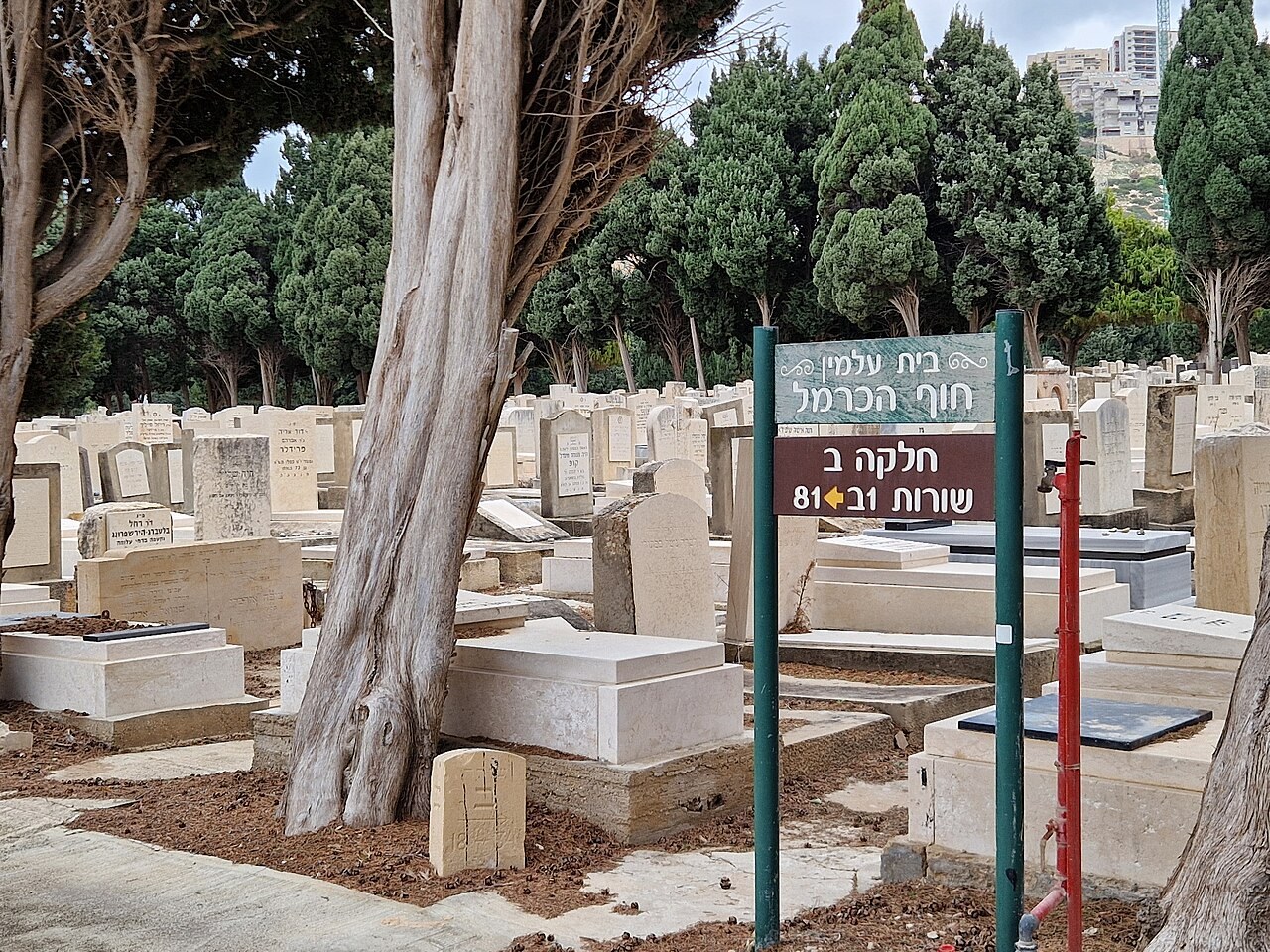
Both Kibbutz Ma'agan Michael and the street leading to the factory in Nesher are named after Michael Polak.
תגובות
עדיין אין תגובות.