
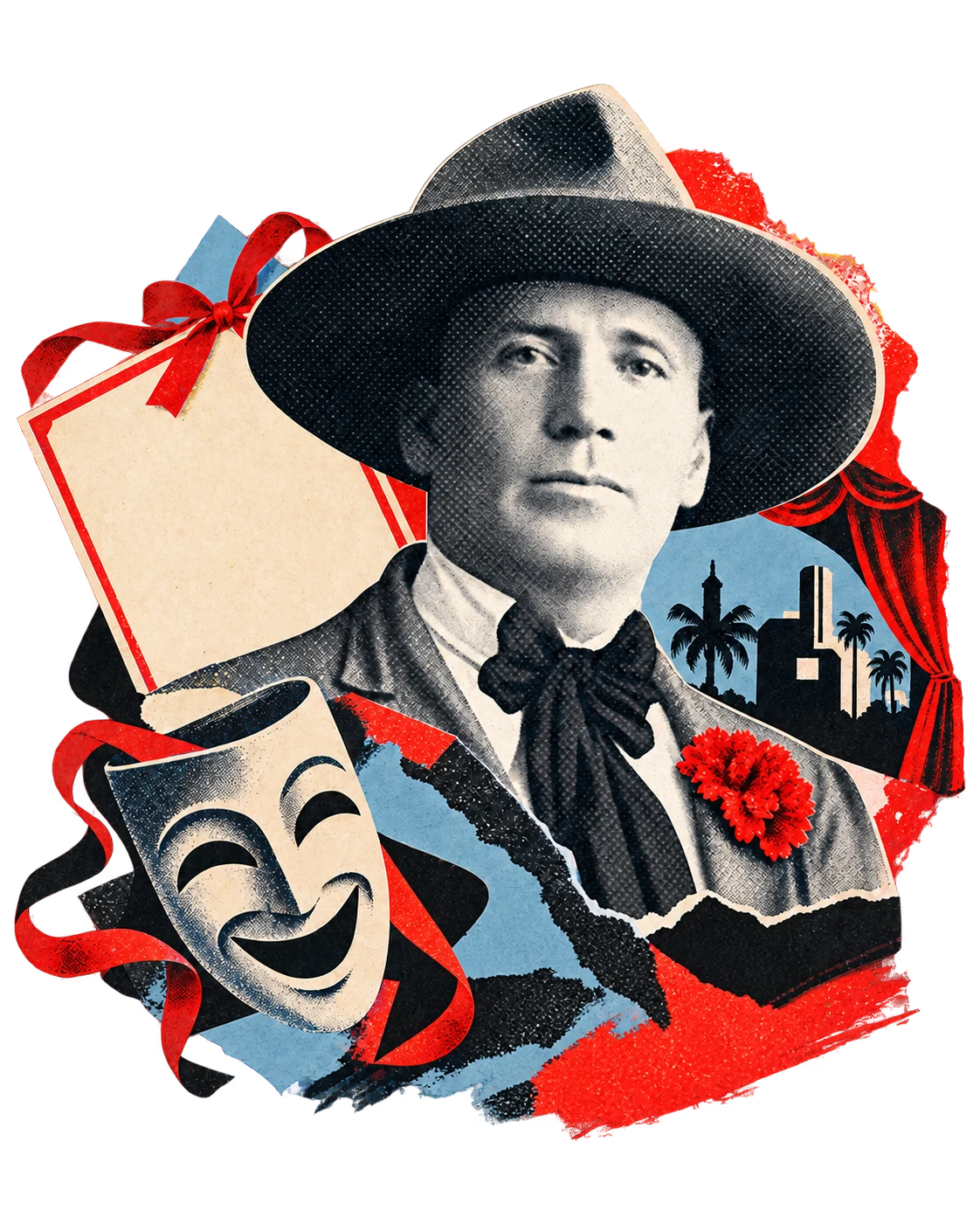
In October 1925, an announcement appeared with the following wording: "... We hereby announce that they have gone the way of all flesh and entered into the covenant of marriage - may they rest in peace! Friends and acquaintances are invited to share in their sorrow on Saturday night, the sixth of Cheshvan, at their home, a house appointed for all the living" - this was the invitation issued by the happiest man of the time.
Abraham Aldema (Al-Dema)
Abraham's family name at birth was Eisenstein. When he immigrated to the Land of Israel in 1906, he changed his surname to Aldema, for two reasons: first, he wanted to adopt a Hebrew name, as many members of the Second Aliyah did, including David Ben-Gurion (Green) and Rachel Yanait Ben-Zvi (Golda Lishansky); second, the name expressed his philosophy of always being happy and optimistic, and never crying. When his children were born, he gave them cheerful names: Ran, Gil, and Ditza.
Abraham Eisenstein was born in Ukraine in 1884 to a wealthy Jewish family. His talent for painting and music stood out from an early age, and he was sent to the big city of Odessa to study art. There he encountered the Zionist idea through Dov Borochov. After the Kishinev pogroms of 1903, when pogroms broke out in 1905, Abraham was already defending Odessa's Jews with a weapon and preventing attacks on them. A year later, Abraham told his parents he intended to immigrate to the Land of Israel. "How will you make a living in that poor country?" they asked. As he was on his way to the ship, they informed him that they were cutting ties with him, and that if he got into trouble, he should not turn to them.
A Hebrew Name and Roots in Ukraine
When he arrived in the Land of Israel in 1906, he walked to Jerusalem, stopping along the way to visit Rachel's Tomb and whitewash it. Like most immigrants that year, he took on a variety of jobs to survive: he took photographs and established a Hebrew theater, a gymnastics association, and an orchestra. In 1907, he met Dr. Haim Bogerashov, a teacher at Herzliya Hebrew Gymnasium, who suggested, "Come and teach art at the Gymnasium." "How can I teach when I don't know Hebrew well enough?" Abraham asked. "Don't worry," Bogerashov said. "You'll teach art, and the students will teach you Hebrew." And so, for nearly 50 years, Abraham Aldema taught at Herzliya Hebrew Gymnasium. He was the life and soul of the Gymnasium's parties. It was clear that he was an unusual figure among the teaching staff. Abraham stood out for his elegant appearance: riding pants (then known as "britches"), a pressed shirt, an unusually large tie, a wide-brimmed hat, and above all, a fresh red carnation in his lapel every day.
One of his students described him this way: "There wasn't a celebration in Tel Aviv in those days that Aldema wasn't involved in initiating, organizing, and putting on. He would paint scenery, build structures, plan the festivities, and lead them. Excursions, carnivals, conferences - he was the life and soul of them all." He added: "...At private parties, which were held so often in those days, Aldema would sit down at the piano and could play all night, so that the young people, men and women, could take to the dance floor..." In those days, Abraham was a member of the Hebrew Stage Association, which was in fact the first theater troupe in the country.
But Abraham was not only involved in parties; he was also active in protecting the country's security. In 1909, he traveled to Europe and met Dr. Haim Bogerashov, who asked him to smuggle three rifles into the country to defend the Yishuv. At the port of Jaffa, the package fell and opened. The Turkish police arrested him, but the Russian consul argued that, as a Russian subject and under the existing agreements, he should be transferred to detention in the courtyard of the Russian consulate in Jerusalem. He was held for five months, playing music and winning everyone's affection. At his trial in June 1910, the Russian consul testified in his favor and confirmed that Aldema had brought the rifles for... commercial purposes, which was entirely legal. Abraham Aldema wrote in his diary: "Hooray! Acquitted! Completely free! I don't have enough words to express my joy and excitement now... I can't believe my good fortune."
In 1912, Abraham Aldema initiated a costume parade in young Tel Aviv. Meir Dizengoff, then head of the neighborhood committee, decided to adopt the idea, and that is how the Adloyada was born in Tel Aviv.
His next venture was one of the most sensational of the day. Before cinemas and television, the city would fall asleep in the evenings. In 1917, Abraham founded the "Middle Finger Gang," or, as it was better known, the "Trask Gang," whose purpose was "to spread joy and play pranks," but also to promote the Hebrew language. It is said that the gang would burst into parties where people weren't speaking Hebrew, and its members would go from one reveler to another, holding a candle and looking for "a word in Hebrew." The gang even dared to dance the tango close together in public, which was not customary at the time.
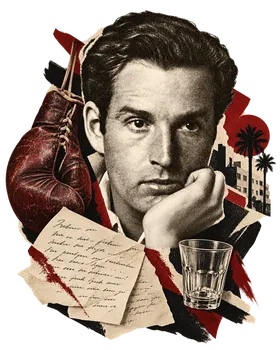
One of the most unforgettable balls took place during World War I, in the spring of 1917. The Turks issued an order expelling Tel Aviv's residents, fearing they would assist the British, who had invaded from Egypt to the south. The ball was in full swing before the order was published. One of the city's activists exclaimed: "While such terrible things are happening all around us and the greatest dangers threaten to destroy us, these young men go about their merry-making." Anyone who stayed in the city and was caught faced the death penalty, but Abraham and his friends remained to guard the property. About a year and a half later, the residents returned, and the gang resumed its activities and even grew. It now included Aharon Meskin, Avraham Shlonsky, Alexander Penn, and others. The king of the city's nightlife at the time was Baruch Koshinsky, better known as Baruch Agadati.
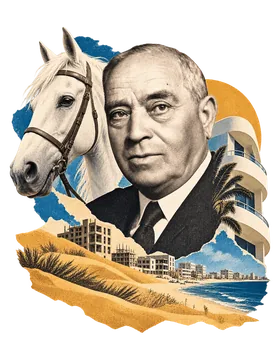
Agadati held the Queen Esther pageant in Tel Aviv and rode on horseback with her at the head of the Adloyada, alongside Meir Dizengoff. Agadati also organized masquerade balls at Eden, the first cinema in the country.
On Purim in 1928, members of the Trask Gang distributed a flyer around the city accusing Agadati of excessive dandyism (he wore a three-piece suit). Worse, they claimed that he had organized all the balls to get rich, and that he was traveling abroad with his pockets full of money. Among other things, the flyer said: "We will fight for the honor of Purim, for joy and merriment flowing from folk instruments in their purest form, and we will call for a boycott of greed and money-grubbing..." Baruch Agadati could not let this pass and sued the painter Simcha Eisen, who had written the flyer, for libel.
The Trial and Life in the Aldema Courtyard
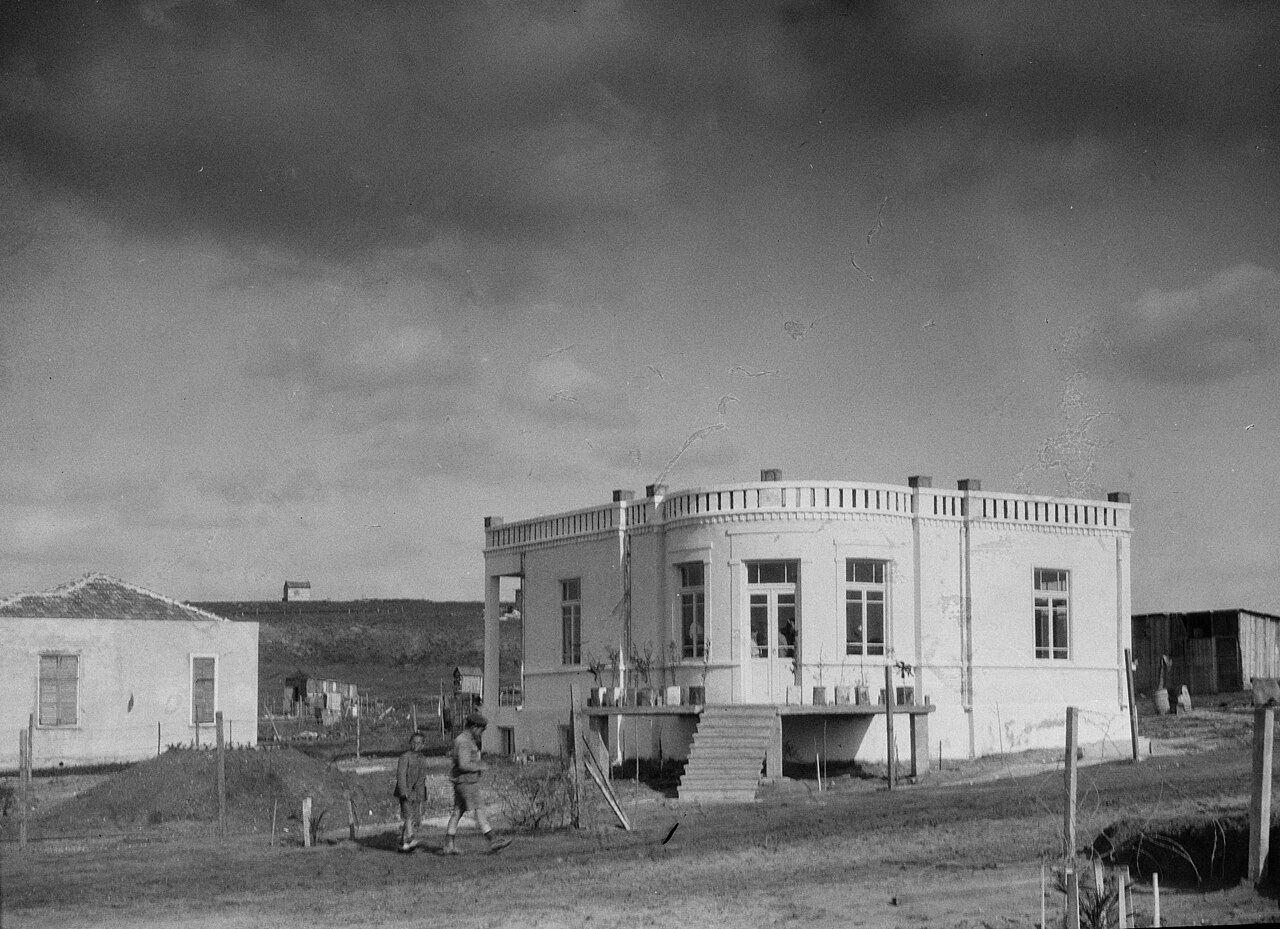
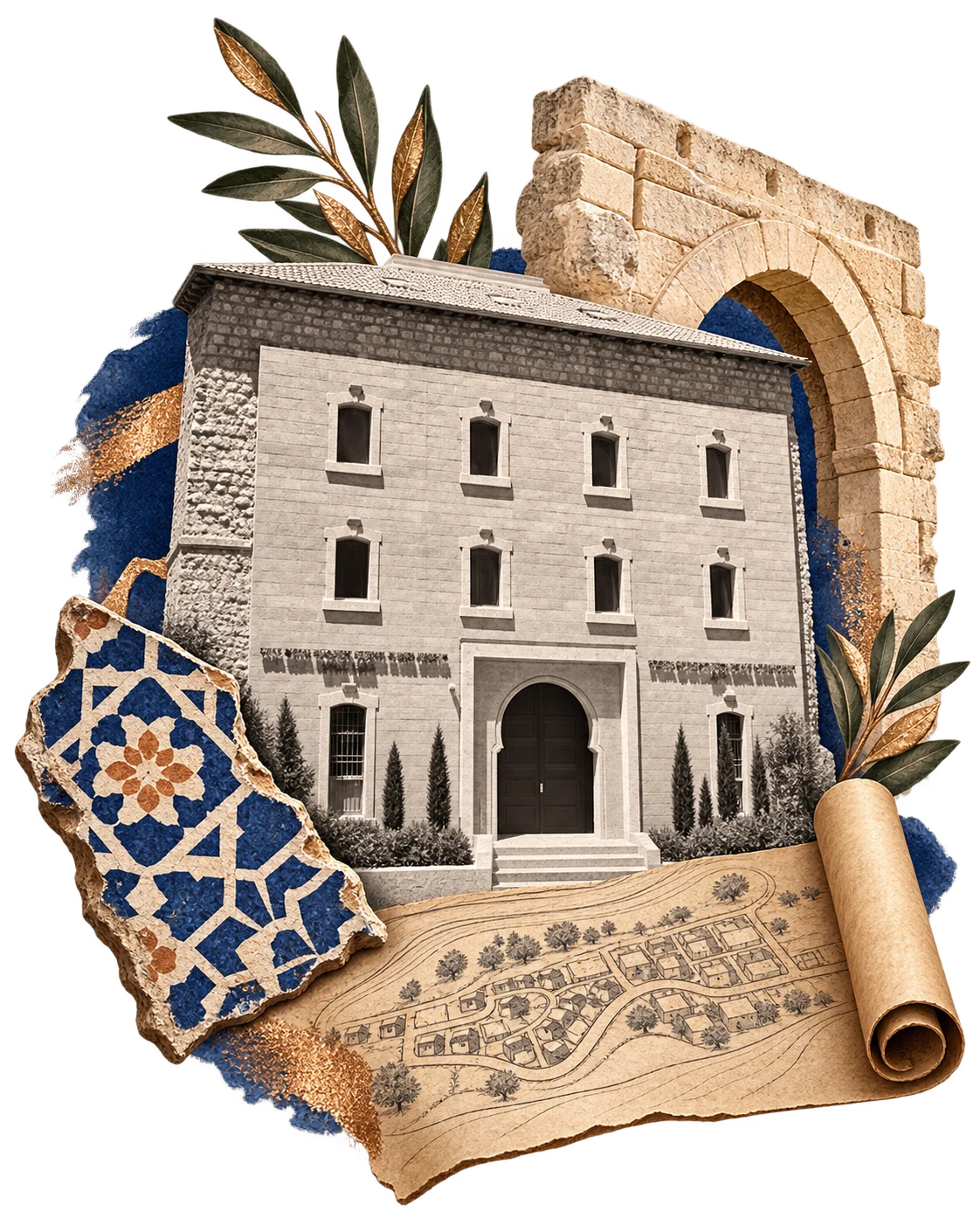
The trial became the talk of the town and was held in the British Magistrate's Court. No less a figure than Haim Nahman Bialik tried to speak up for the Trask Gang, arguing that the flyer was part of Purim's biting satirical literature. The argument failed to impress the judge, who ruled against the gang after finding Baruch Agadati innocent of all the accusations made against him. The sentence was two weeks in prison or a fine. Baruch Agadati said he had no interest in the money and only wanted to clear his tarnished name, but the judge explained that the fine went to the British government, so they could not waive it. It was clear that the gang did not have the money, and to prevent one of its members from going to prison, Baruch Agadati paid the fine himself. This gesture did not stop the gang from spreading the word that Baruch Agadati had lost, and the proof was that he had paid the fine... The trial brought the gang a great deal of publicity, and young actors and artists were drawn to it. The gang's anthem was written by Avraham Shlonsky. Abraham Aldema was among the first settlers of the country's first workers' neighborhood, Borochov (in Givatayim). It was an initiative of the Histadrut, intended to create a kind of "urban kibbutz" where workers could live in a cooperative atmosphere. Abraham built an especially large house, and it was as elegant and ornate as he was. The house became the center of the neighborhood, and celebrations were held in its courtyard.
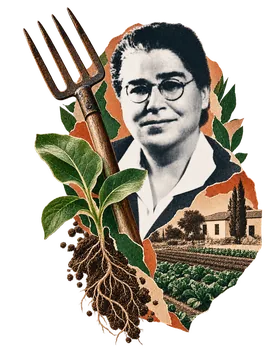
Hannah Chizik (whose brother Ephraim was killed defending Hulda, and whose sister Sarah fell alongside Trumpeldor at Tel Hai) was a graduate of Hannah Meisel Shohat's Young Women's Farm and managed a training farm for women workers in Tel Aviv. Hannah approached him and asked him to let her house the young women in his large home, since he lived there alone.
Abraham agreed to her request and went down to the basement, where he built a weapons cache for the Haganah. The activity upstairs provided excellent cover for the cache, which served the organization for 25 years, with no one knowing about it.
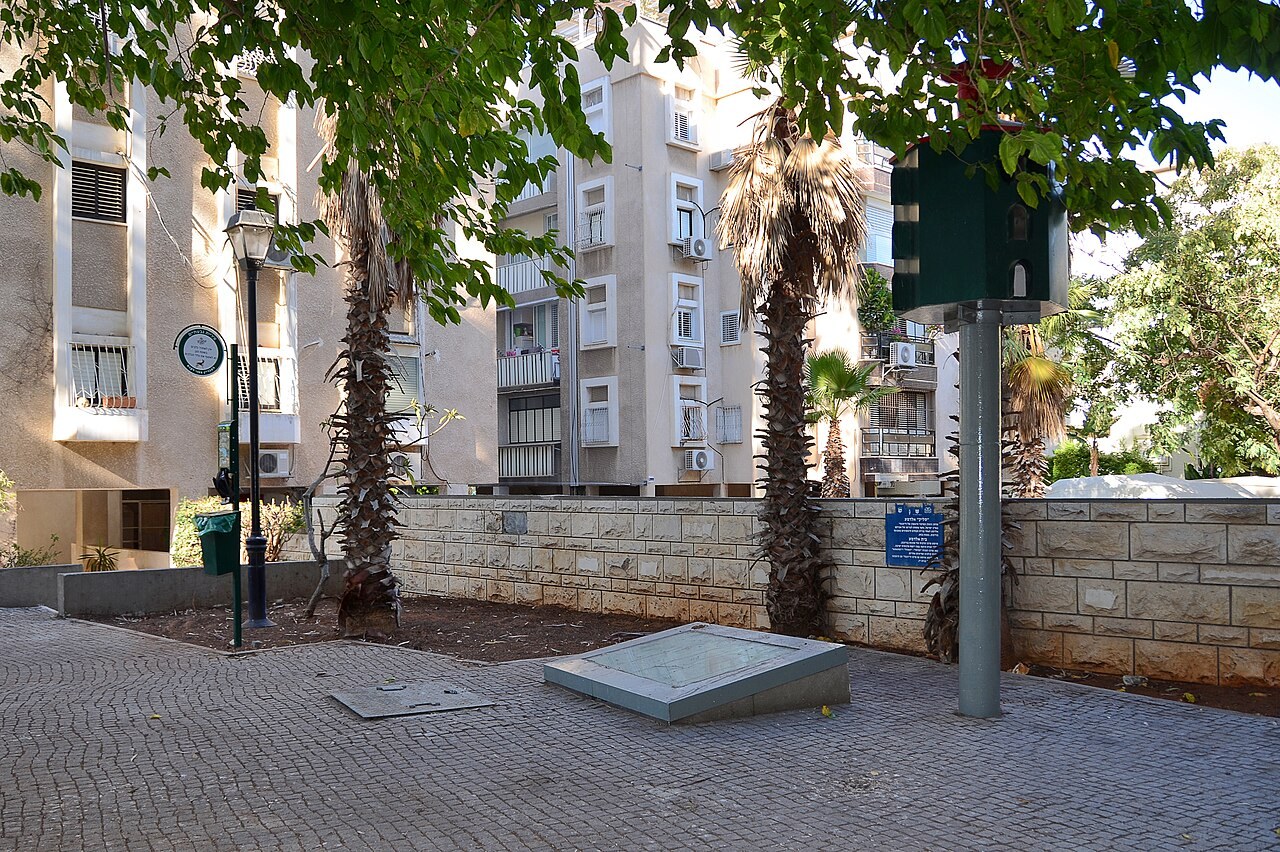
Abraham Aldema, who was still a bachelor at 41, fell in love with Zahava Yudilovich, one of the young women workers. They married in 1925 in the house's large courtyard. This was the wording of the invitation: "Abraham Aldema and Zahava Yudilovich hereby announce that they have gone the way of all flesh and entered into the covenant of marriage - may they rest in peace! Friends and acquaintances are invited to share in their sorrow on Saturday night, the sixth of Cheshvan, at their home, a house appointed for all the living, in the Borochov neighborhood." All the members of the Trask Gang came and held a celebration that lasted all night, including firing guns into the air, as was customary at Arab celebrations.
After the wedding, Abraham Aldema turned the courtyard into a cultural center known as "Aldema Courtyard." He built an 800-seat amphitheater there and invited theater companies such as HaMatateh, HaKumkum, HaOhel, and Habima to perform. The entire proceeds from ticket sales went to the theater. The actors became personal friends of the family, and celebrations for every occasion continued to be held at the house. Abraham Aldema was the first to receive permission from the Mandate government to set off fireworks, which he did at his children's birthday celebrations (they were all born on Yom Kippur, so the fireworks were set off as soon as the Ne'ilah prayer ended).
As an artist and painter, Abraham had a keen eye. He was one of the few people who specialized in identifying handwriting, and was considered one of the country's leading experts in the field, to the point that the Mandate courts would summon him as an expert witness. During the tensions of the Arab Revolt (1936-1939), Aldema was appointed a police officer and legally coordinated the defense of the Borochov neighborhood.
Abraham Aldema died at the age of 79 and was buried at Kiryat Shaul Cemetery in Tel Aviv. His son Gil Aldema was wounded during the War of Independence and lost his leg. It is said that when Abraham visited him in the hospital, it was the first time Abraham Aldema had shed a tear. Gil later became known as a composer and editor of radio music programs.
תגובות
עדיין אין תגובות.