
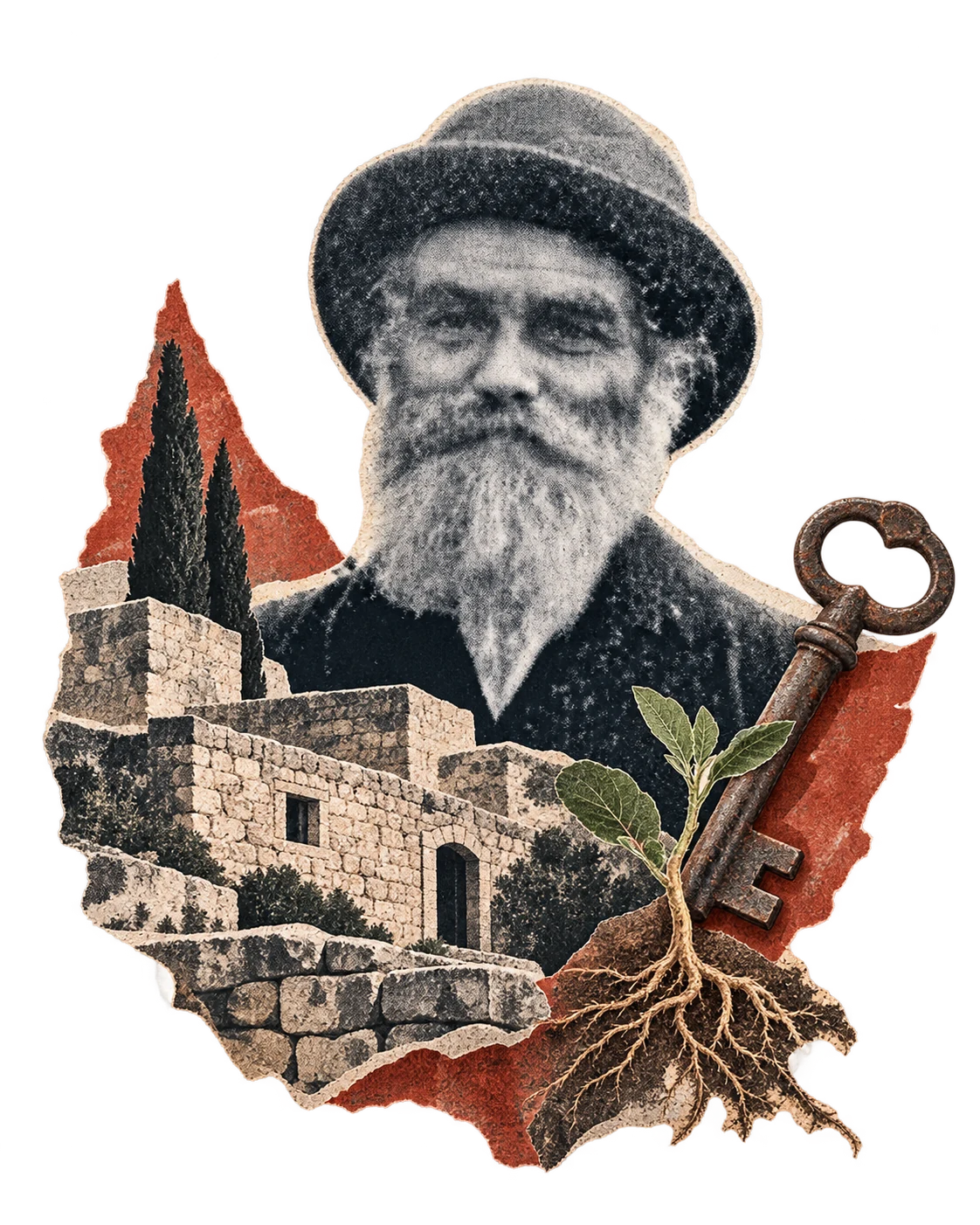
At first glance, an ordinary man who struggled every day to keep the new settlement going, but whose life offered a window into an unfamiliar era.
In early 1919, a moving appeal written in Yiddish by Rabbi Alter Schwartz arrived at the offices of the Eretz Israel Committee of JCA (the Jewish Colonization Association). In his letter, the rabbi described the hardships he had endured and, in heartbreaking yet hopeful words, asked for nothing but justice. The letter began:
"Compassionate brothers, children of Israel, forgive me for writing in Yiddish and not in Hebrew. I must admit that I do not know Hebrew very well, since I still belong to the old generation. I am not used to writing and speaking Hebrew, and I have to write in Yiddish. My brothers, dear to my heart, I ask you to read my appeal and listen to what is happening in the Baron's colony at Rosh Pina. How can an official of the Baron harass an elderly farmer who has served the administrations of Rosh Pina and Yesod Hama'ala for 30 years with honesty and self-sacrifice? When he brought money, nobody complained. No official ever claimed that I had acted dishonestly or cheated in my work. I served honestly, and even in my old age I worked hard. And the administrator treated me tyrannically, as I will explain below..."
Gei-Oni: The First Attempt
Alter Schwartz's story is interwoven with the story of the earliest Jewish settlement in the Land of Israel. He was one of eighteen ultra-Orthodox Jews who, in 1878, answered Rabbi Eliezer Rokeach's call to leave the alleys of Safed and build a new life on the mountainside above the Arab village of Ja'uni. Thus Gai Oni was born, the first Hebrew settlement in the Land of Israel, founded even before Petah Tikva.
Rabbi Eliezer Rokeach, grandson of Rabbi Israel Bak, founder of the first agricultural village on Mount Meron, had encountered the pioneering idea as a child. He challenged the system of halukka funds, arguing that it was enervating the people living in the Land. In 1874, together with Yitzhak Friedman and Moses Montefiore, he established the Society for the Settlement of the Land of Israel, which had 72 members. Four years later, at their initiative, a group from Safed organized and purchased land in the village of Ja'uni to establish a new Hebrew settlement.
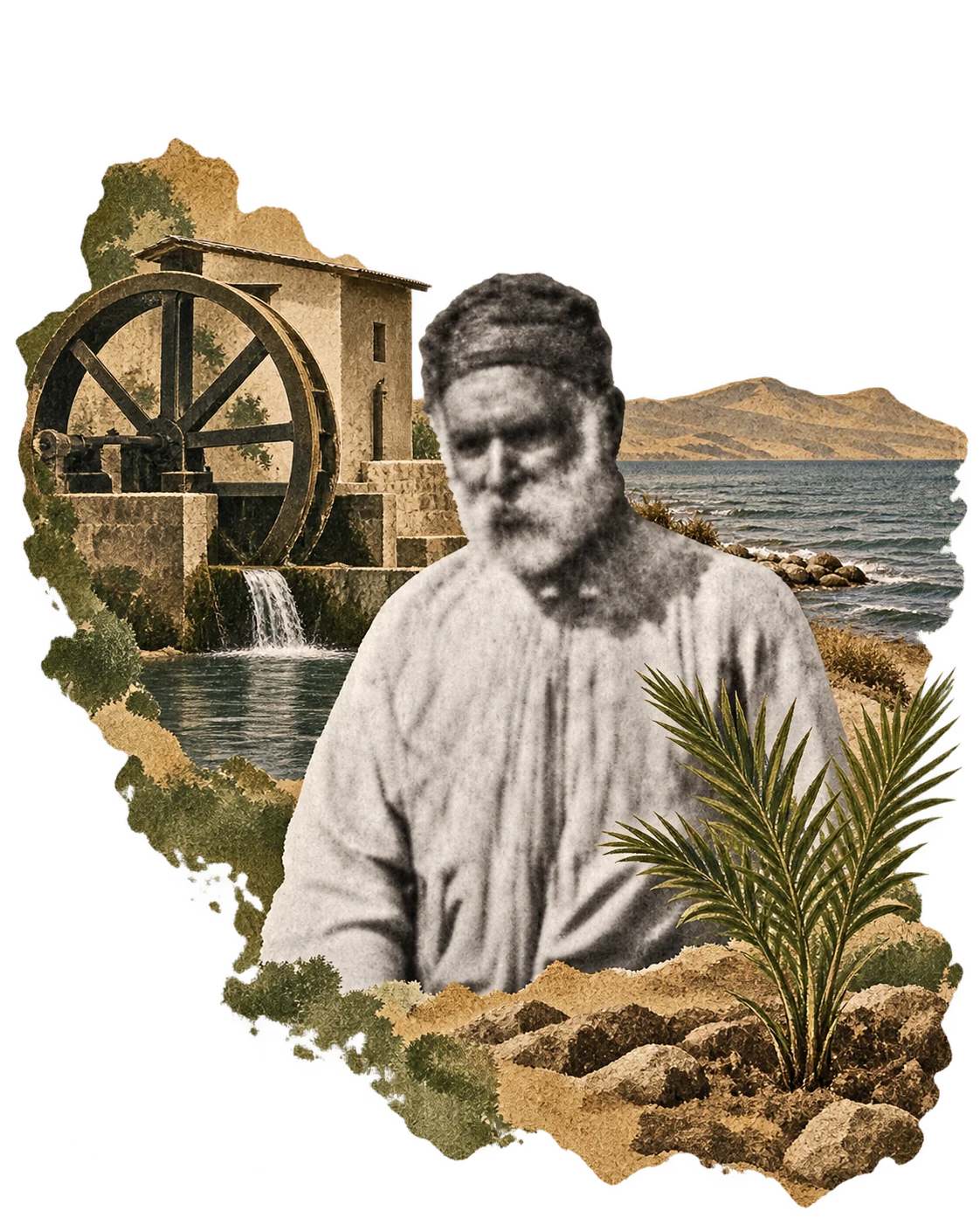
Rabbi Alter Schwartz was among the first settlers. Their great vision was to leave behind donations from the Diaspora and earn their living through hard work. At first they lived in the mud houses they had bought from the local villagers and began farming, work that was unfamiliar to them. Their enthusiasm made up for their lack of experience - for the first time in their lives, they understood what it meant to pray for rain. The first year was blessed, and they truly believed they were pioneers breaking new ground. The second year was already dry, full of illness, and unbearably hard. The families found themselves hungry, penniless, and without hope. In desperation, they appealed to Jews in the Diaspora, but help was slow to arrive. One after another, the families were forced to leave the settlement and return to Safed. Only three remained in the desolate Gai Oni, struggling to survive. Alter Schwartz's family was one of them. Weak in body but strong in spirit, they held on for three years. They gleaned ears of grain in Arab fields, clung to every grain of hope, and through their stubbornness wrote the first page in the history of the Jewish people's return to life in its own land.
In her book Gai Oni, Shulamit Lapid describes the settlement's story: "His voice was hoarse with excitement. There, look, Gai Oni! About ten single-story houses, built of darkening stone and plastered with mud, stood in a row. They were buried in thorns and tall grass. A few mud huts had crumbled into the ravines that cut across the ridge. Yehiel stopped the animals, and they looked straight ahead. The murmur of flowing water mingled with the sound of the wind blowing through the olive treetops. Is this it? Fania did not know whether to laugh or cry. We were seventeen young men when we settled here in 1878, determined to become farmers... Our house is the last in the row. Near the cypress tree. Of the seventeen, four families remain. And then there were three... You will get to know them. Schwartz (Alter), Keller, Friedman, Fromkin... Last year we were all forced to abandon Gai Oni and seek our bread in foreign fields. But Fromkin has already returned. Now I am coming back, and I hope the others will return soon too."
From Gei-Oni to Rosh Pina
In 1882, the light was kindled once more when thirty families from the Romanian city of Moinești decided to join forces and return to the ancestral land to work the soil. As a first step, they sent their representatives, David Shuv and David Buksheshtar, an experienced farmer. With strong faith in their future in the Land, they jointly established the Society for the Settlement of the Land of Israel through Agricultural Work. In the summer of that year, they bought some of the land purchased by the earlier pioneers, as well as part of Gai Oni itself. Two months later, they sailed to Beirut and from there, riding donkeys, reached their destination. In Gai Oni, they decided to make a fresh start and chose to call it Rosh Pina, inspired by the verse from Psalm 118:22: "The stone which the builders rejected has become the cornerstone." Their intention was clear: to lay a cornerstone for the new settlement and, in that same stone, bury the memory of the earlier settlement's failure.
Like the pioneers before them, they first settled in the Arab village houses and in tents, mainly on the upper part of the mountain, where Upper Street is today. Their arrival brought a little encouragement to the three families still living in the settlement. Alter Schwartz rallied his spirits and said, "There is hope!"
But reality was not simple. The new settlers, too, struggled with a lack of agricultural knowledge, their money soon ran out, and they appealed to almost every possible source for help. A year passed, and hope became reality when, in 1883, the renowned benefactor Baron Rothschild came to their aid. Under the agreement reached, the settlers transferred ownership of the land and buildings to the Baron, who in turn appointed an official to manage the settlement, covered its debts, and guaranteed every family a roof over its head and support. Under his patronage, the synagogue and the first Hebrew school in the Galilee were established. By 1900, Rosh Pina had become one of the four largest settlements in the country.
In his letter, Alter Schwartz described how he felt in those days: "How can an official of the Baron harass an elderly farmer who has served the administrations of Rosh Pina and Yesod Hama'ala for 30 years with honesty and self-sacrifice? When he brought money, nobody complained. No official ever claimed that I had acted dishonestly or cheated in my work. I served honestly, and even in my old age I worked hard. And the administrator treated me tyrannically, as I will explain below... When the Baron, may he live long, transferred the settlements to JCA, together with all the farmers and those who had served the Baron faithfully, and when Mr. Meyerson came from Paris to Rosh Pina and reached an agreement with everyone according to their wishes, Messrs. Meyerson and Wormser, the administrator of Rosh Pina, approached me and decided to give me 7,000 francs and a house to live in. I calculated that this would not be good for me, because the money would be lost to me, since I had to marry off my son and would be left without money. I asked that it would be better for my wife, my son, and me to work and earn our bread by the labor of our hands, rather than through gifts. Messrs. Wormser and Meyerson assured me that we would have an inn and that they would lend us 5,000 francs. They gave me the old buildings so I could build a second story. They also set an amount of 360 francs a year for me to bring the mail from Safed, and I would use that money to repay the 5,000-franc loan they had given me."
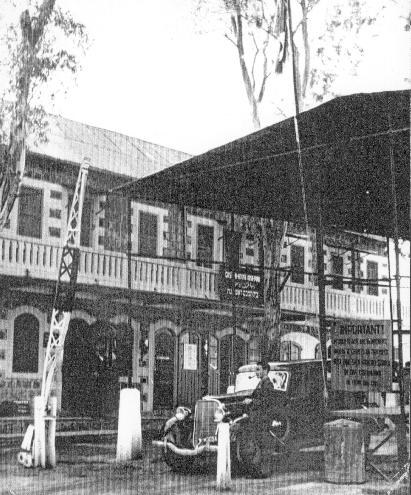
Years later, Amihud, Alter's grandson, recounted: "My grandfather, Rabbi Alter Schwartz, was among the first settlers in Gai Oni and Rosh Pina... He realized that Rosh Pina was an important transportation junction, a major stop on the road north, and that it needed a hotel. It is worth noting that, at the time, the Land of Israel from Samaria northward was ruled by the wali (governor) in Damascus, and anyone who needed to get to Damascus passed through Rosh Pina. An important road to Beirut, via Marj Ayun, also passed through Rosh Pina. During the tenure of the official Yehoshua Ossovitzki, the roads from Rosh Pina to Tabgha, from Rosh Pina to Safed, and from Rosh Pina to Marj Ayun were paved to make them suitable for carts and stagecoaches... The hotel and Alter Schwartz became one, and the hotel operated for as long as Rabbi Alter was alive."
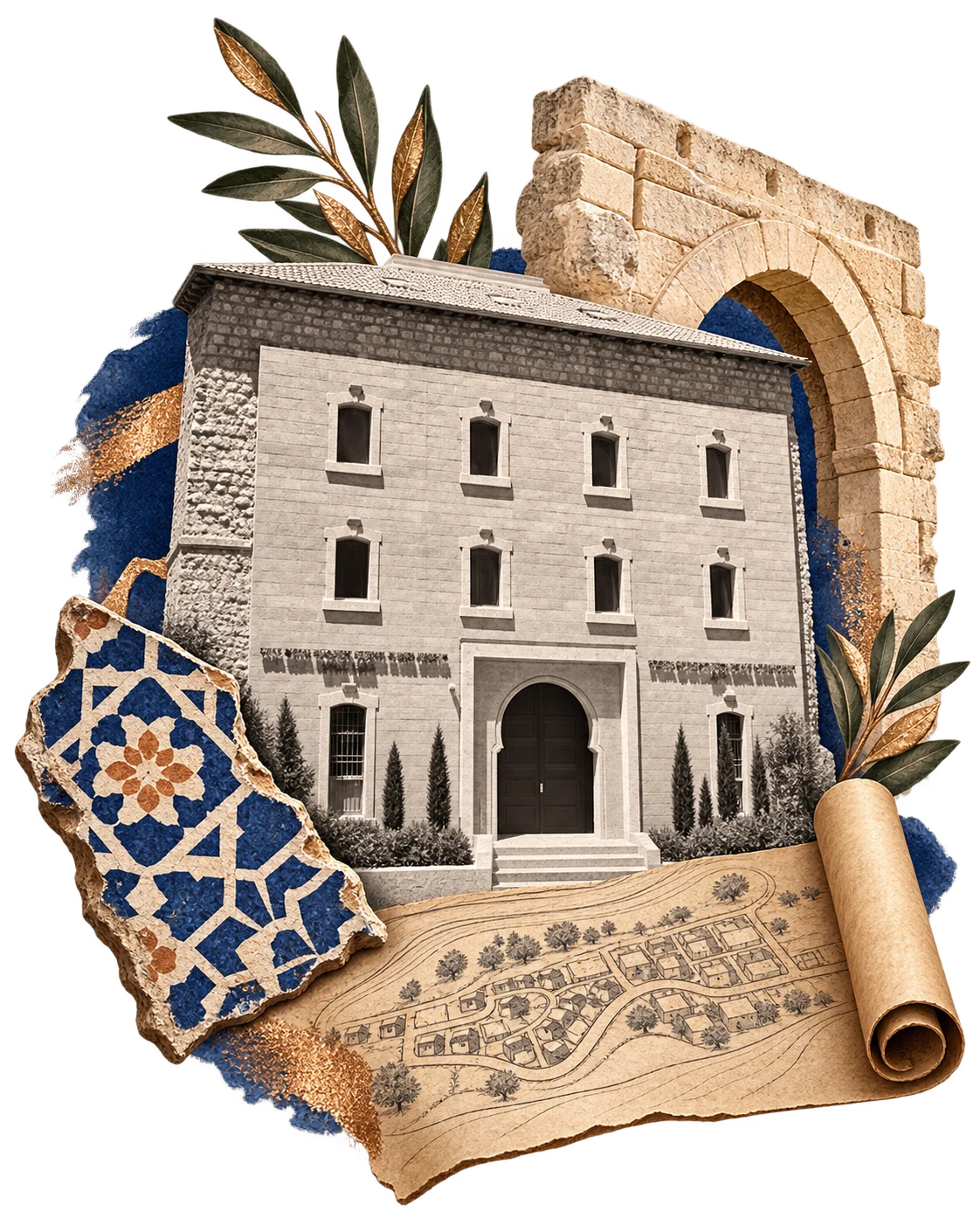
This hotel, which opened in 1901, is considered the first hotel in the Galilee.
The Transfer to JCA and the Conflict
In December 1899, Baron Rothschild decided to end his direct involvement in managing the settlements. In January 1900, management was transferred to JCA, the Jewish Colonization Association. The Baron continued to provide financial support, but stopped giving direct stipends. The settlement lands were returned to the farmers themselves, who undertook to repay loans from the proceeds of their labor. With the transfer of management, all of the Baron's employees in Rosh Pina were dismissed, including Rabbi Alter Schwartz. In return for his years of service, he received the farm storehouse on Upper Street and a loan of 5,000 francs. The transition also brought a change in atmosphere: instead of bureaucratic rule, JCA sought to encourage private enterprise and personal responsibility among the farmers.
Under the leadership of Haim Margaliot Kalvarisky, who turned Rosh Pina into the "mother of the Galilee settlements," a thriving Jewish center was established. Farmers who struggled to make a living turned to growing almond orchards and tobacco for export, while small merchants and innkeepers began settling Vineyards Street, later Pioneers Street. On Upper Street, teachers' homes, the synagogue, and a new, innovative educational center were built.
The teacher Yitzhak Epstein, and later Simha Vilkomitz, laid the foundations for the Hebrew rural school. A vibrant cultural community grew up around these institutions, warmly welcoming newcomers. Many of them stayed at Rabbi Alter Schwartz's hotel, which became an important hub for anyone seeking Hebrew language, culture, and education in the Land of Israel as it was being renewed.
In the letter that opens our story, Rabbi Alter Schwartz complains of a wrong done to him: when he took out a loan, he was promised "that the administration would give me a guarantee that no one else would be allowed to open a hotel in Rosh Pina besides my hotel. I do not want to invest money and then have someone else come along, build a hotel, compete with me, and take the bread from my mouth." But reality proved otherwise. In his words, "There are settlers in Rosh Pina today who have opened hotels and are taking my last slice of bread." When he brought his complaints to the officials, he said, "Messrs. Farinta and Haim Cohen told me I was right and gave me a written and signed document stating that no one in Rosh Pina had the right to run a hotel and compete with me."
When Kalvarisky took up the post of administrator, everything changed. "When he arrived and became administrator, he began persecuting me, and he has not stopped to this day... He took away the 360-franc annual commission I received for carrying the mail during the years 1919-1911. He allotted me only 150 francs a year instead of 360 francs, and allowed more hotels to be built. He made an agreement with Haim Bar Feldman to build a hotel without my knowledge." Alter Schwartz's heartache grew as he recounted that "later, two more settlers built hotels, and I am having a very hard time. They have taken my bread." To his regret, his letter went unanswered.
Family, Trumpeldor and Yigal Allon
As Amihud recounted, his grandfather's personal and family journey was no less moving: "My grandmother Leah, my grandfather's first wife, died young, leaving him with four small children: the eldest, Haya Ital, Rachel, Meir [my father], and little Hannah. My grandfather married Dina for a second time, and together they went to Vienna to meet Dr. Herzl. Dina, who observed the commandments, brought silk gloves with her so she could comply with Jewish law when shaking hands. But Dina, too, passed away soon afterward."
Fate continued to bring twists and turns into Alter Schwartz's life. In 1907, Elisha Gilin, an agricultural instructor who was studying the phylloxera pest that had struck the vineyards, arrived in Rosh Pina. Gilin died in the settlement, leaving his wife Nehama a widow and their three daughters fatherless. Big-hearted Alter Schwartz married Nehama and adopted the three girls as if they were his own flesh and blood.
The hotel established by Alter Schwartz became a magnet for prominent figures of his time. Among its guests were the writer David Farbstein, who spoke in the synagogue in a gentle, Diaspora-accented Hebrew, and the chief rabbis, Rabbi Kook and Rabbi Sonnenfeld, who made a point of staying at the hotel because it was kosher. During the settlements tour, the Turkish governor Jamal Pasha also visited, accompanied by senior officers Amin Bey and Muzaffer Bey. (An extraordinary story relates that Amin Bey's son married Fruma Shpiner, a woman from the settlement who converted to Islam and moved with him to Damascus.) In later years, well-known British officers such as Kitrutch and Locke, as well as the British police commander, also stayed at the hotel.
One of the most famous guests was Joseph Trumpeldor, Amihud recounted: "My grandfather's hotel was on Upper Street in Rosh Pina. It was the first hotel in the Galilee, and Joseph Trumpeldor stayed there when he came here to organize the defense of Tel Hai. He spent a week at the hotel before continuing to Tel Hai. At the time, the three settlements of Metula, Kfar Giladi, and Tel Hai were under the French Mandate, while Rosh Pina was already under British rule. In 1920, the Arabs of Syria and Lebanon rebelled against French rule, and suspicion immediately arose that the three settlements were collaborating with the French. The farmers of Metula, fearing raids and looting, moved their herds to Rosh Pina. Two cows from the herd, belonging to my uncle, one of Metula's founders, wandered around our yard. After one of them calved, she would charge anyone who passed by, fearing for her calf's safety. Arabs from the nearby village of Ja'uni decided to tie a eucalyptus branch between her horns to keep her from attacking. One morning, they went out to catch her. We children stood on a high balcony and watched. Trumpeldor was there too, watching through a low window. The cow spotted him, charged toward him, and he, with one hand, grabbed her by the ear and turned her with force. That enabled the shepherds to bring her under control and tie the branch to her horns. Just a few days after that fateful morning, Trumpeldor was no longer alive."
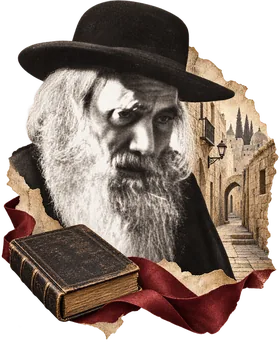
Another hero who spent many hours among the alleys of Rosh Pina was Yigal Allon, who would later lead the liberation of the Galilee. He was the son of Ital, Rabbi Alter Schwartz's eldest daughter. Yigal's father, Reuven Peikovitz, an ordinary laborer in Rosh Pina, married Haya Ital in 1894. For years, they lived with their children in the home of Yigal's grandfather, Rabbi Alter, until they moved to Kfar Tavor in 1907. Yigal's brother Eliav recalled those days with warmth: "In Rosh Pina, the family was given a room or two in the home of their grandfather Alter, who was loved by everyone. To this day I remember his long white beard, the black yarmulke he usually wore because he was an observant man, and the sound of his voice as he led the prayers in the Rosh Pina synagogue."
In his book My Father's House, Yigal Allon himself shared his longing for that time: "As for me, many of the most wonderful days of my childhood were spent at my grandfather's house in Rosh Pina, which reminded me very much of our room in Kfar Tavor, although Grandfather's large, spacious house had two stories and had once served as a guest hotel. After he died, I used to spend my summers at the home of my uncle Meir, my mother's brother, to whom I was especially close." In later years, Yigal Allon established his headquarters in this house, from where he set out to lead the battles to liberate the Galilee.
A Mission, Courage and Legacy
But Rabbi Alter's name was etched into the pages of history for more than just his grandson's sake. His role as a mail carrier involved more than simply delivering mail, and more than once it put his life at risk. An incident that took place while he was bringing the Safed mail to Rosh Pina reveals his courage: "Once, while bringing the post (mail) and the Baron's money from Safed to Rosh Pina, he was attacked by robbers who tried to rob him. Rabbi Alter carried a toy pistol to frighten potential attackers. He did not lose his composure; he drew the pistol and threatened the robbers, and they fled in panic." Yigal Allon himself spoke admiringly of this, saying, "The first strategist in the family was my grandfather, Rabbi Alter."
Rabbi Alter spoke a gentle Yiddish, but he also knew Arabic and cultivated close friendships with Sheikh Ali Yusuf al-Hayb of Tuba. Rosh Pina experienced turbulent days in that period, amid tension and disputes with the residents of nearby Pera'im. Once, after the body of a Bedouin was found in the area and the fear of blood revenge hung over the settlement, Rabbi Alter once again saved the day. The sheikh arrived dramatically with his men, turned to him, and said, "Don't worry, pour the coffee. We are your friends. We know who did it, and we have no complaints against you."
In addition to being a brave mail carrier and a bridge between peoples, Rabbi Alter also served as the synagogue beadle, a member of the settlement committee, and a central figure in community life. In 1923, he traveled to Jerusalem to attend to his ailing wife's health, and at her request even tried to sell the hotel he owned in Rosh Pina. Fate had other plans: that summer, he suddenly fell ill and died during an operation at Bikur Holim Hospital. He was laid to rest in the Hasidic section of the Mount of Olives cemetery.
Rabbi Alter Schwartz's descendants still live in Rosh Pina today and preserve his memory and legacy with warmth and love. The spacious Schwartz Hotel, steeped in powerful memories, has undergone many changes. In the mid-1950s, it was abandoned, its walls cracked, and silence reigned inside. In 2000, thanks to the Council for the Preservation of Heritage Sites, its walls were restored to save it from total collapse.
And so, as Yigal Allon stood on the stage of his life, he spoke the words that burned themselves into the nation's consciousness: "A people that does not know its past has a poor present and a future shrouded in darkness."
תגובות
עדיין אין תגובות.