
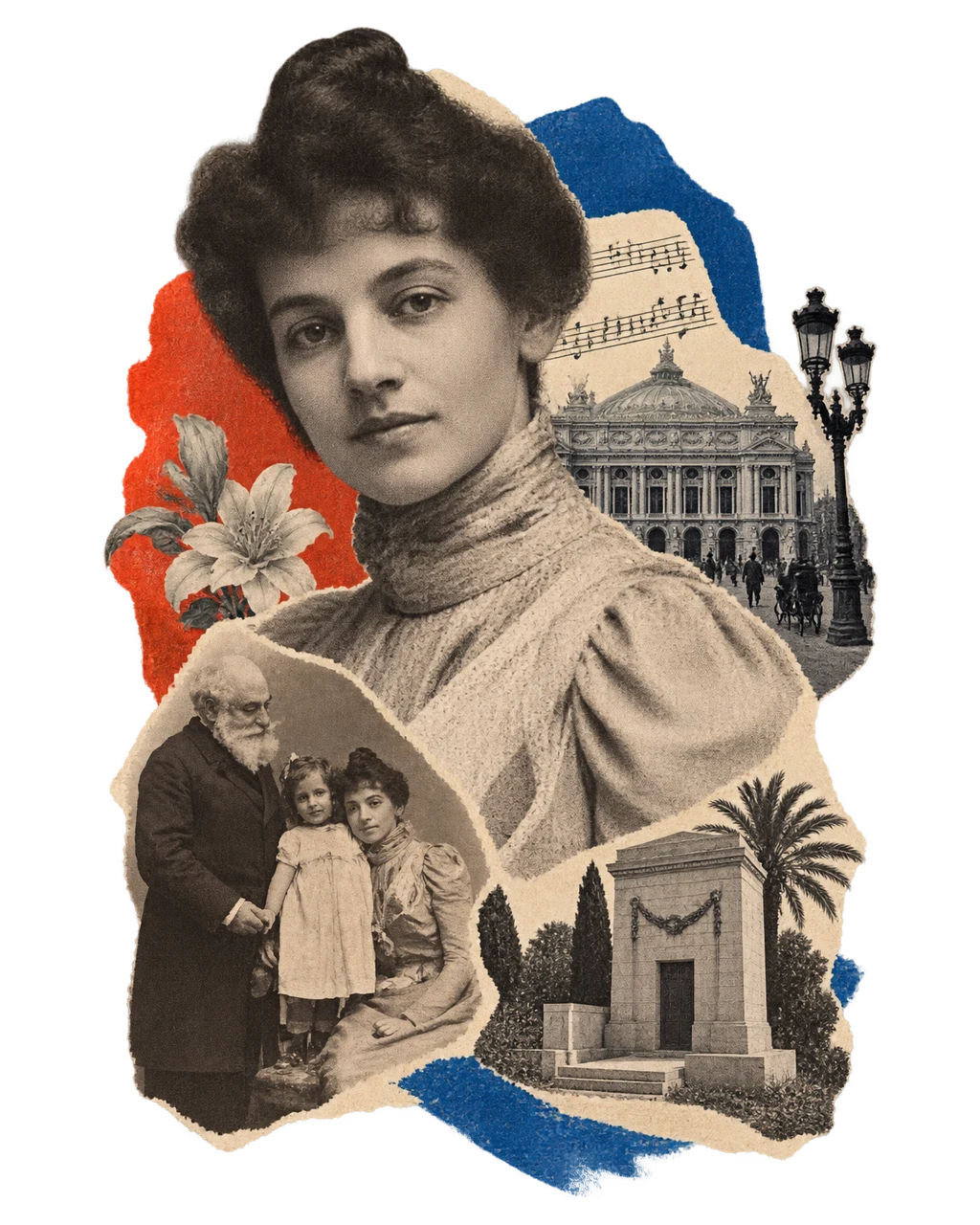
How did a Scandinavian Christian become the emotional anchor who kept one of Zionism's leaders sane? She worked to bring his remains to the Land of Israel and initiated the project to commemorate him. Her life and status offer a unique window into political Zionism.
How did a Scandinavian Christian become the emotional anchor who kept one of Zionism's leaders sane? She worked to bring his remains to the Land of Israel and initiated the project to commemorate him. Her life and status offer a unique window into political Zionism.
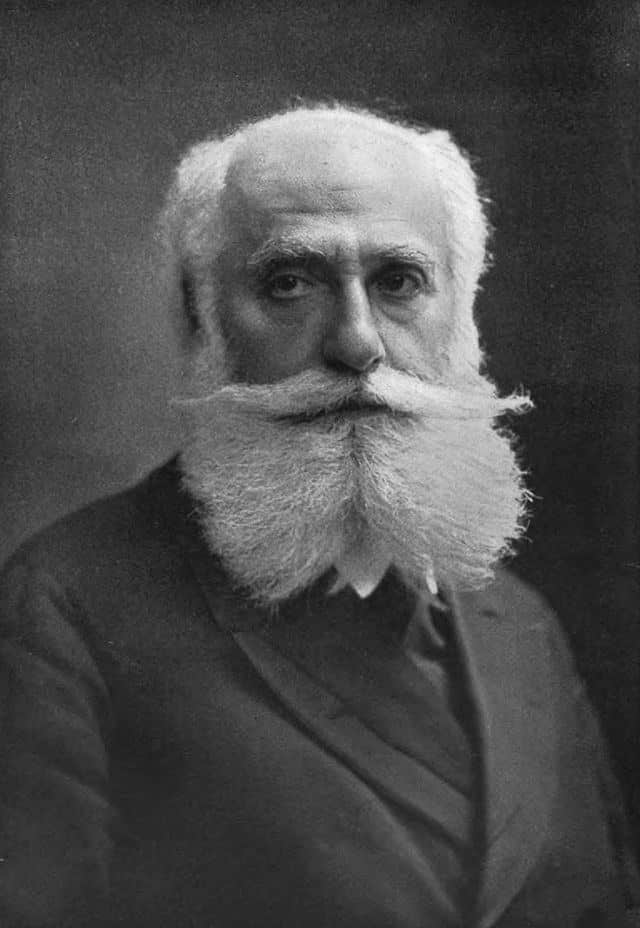
This is a story of love and partnership that captured the interest of some of the leaders of the Yishuv at the time, and that occasionally touches the present and sparks discussion anew. The story began to take shape in Paris in the late nineteenth century, amid the illuminated boulevards and the cafes of the Right Bank. At its center was Dr. Max Nordau, son of an Orthodox rabbi and educator, a physician, a sharp-minded thinker of international renown, and the man who would stand at Theodor Herzl's side as the great orator and chief architect of the World Zionist Organization. Behind the bearded face, penetrating gaze, and fiery national rhetoric stood a complex and fascinating figure. One of the leaders of Zionism married a woman who, by the definitions of the day, was a 'gentile': Anna Dons Kaufmann, a Christian Danish opera singer, widow, and mother of four children from her first marriage.
Nordau's marriage to Anna was not a private biographical episode; it became a political storm that illuminated the deepest fault lines in the early Zionist movement. The encounter between the physician, who fiercely denounced assimilation and called for a revival of national pride, and the Danish soprano posed a moral, ideological, and halakhic challenge to the Jewish world.
Anna Dons was born in Denmark into a distinguished, educated Protestant family steeped in classical Scandinavian culture. From a young age, she stood out for her impressive vocal talent, which led her to pursue professional music studies and perform as an opera singer on stages across Europe. Her work as a vocalist gave her personal independence and an intimate familiarity with the bohemian and intellectual worlds of the late nineteenth century.
In her first marriage, Anna was joined to a prominent figure in the world of journalism and literature: Richard Kaufmann, a Danish Jewish economist, writer, and publicist of considerable reputation. Kaufmann served, among other roles, as a correspondent for Scandinavian newspapers in Paris, and wrote books and essays on French cultural and political life. They had four children together, living in Copenhagen and Paris.
In 1894, family and professional life were abruptly disrupted when Richard Kaufmann died prematurely. Anna, now a young widow, found herself navigating the demands of raising her children, managing her husband's estate, and continuing her artistic career between Copenhagen and Paris. This experience made her an independent woman, free of rigid conventions and exceptionally adaptable to life's upheavals.
Max Nordau was born in Budapest in 1849, under the name Simcha Simon Maximilian Südfeld. He was the son of Rabbi Gabriel Südfeld, a teacher and strict man of Torah. Even in his youth, Nordau displayed intellectual rebelliousness: at fifteen, he abandoned religious observance and Torah study, changed his name to the more European-sounding Max Nordau, and defined himself as thoroughly German and a man of rational science.
Nordau studied medicine at the University of Pest in Hungary and specialized in psychiatry and nervous disorders. After completing his studies, he left for Paris, where he established a successful private practice alongside a brilliant career as a publicist. His critical books made waves throughout the Western world. In his book The Conventional Lies of Our Civilization (1883), he mercilessly attacked religious institutions, the monarchy, social classes, and the sham marriages of the bourgeoisie. The book was translated into 12 languages. In it, he argued that all of modern civilization was built on lies, which everyone knew were lies, but which everyone pretended to believe in order to preserve the existing order.
The height of his fame came in 1892 with the publication of his monumental book Degeneration (Entartung), dedicated to the renowned criminologist Cesare Lombroso. In it, Nordau used medical and psychiatric tools to argue that late nineteenth-century European culture suffered from a collective nervous disorder, and that modern art movements, Ibsen's plays, and the works of Oscar Wilde and Richard Wagner were nothing but evidence of cerebral degeneration, hysteria, and moral pathology. The book sparked an enormous controversy. George Bernard Shaw wrote a forceful rebuttal of Nordau and called Nordau 'a sick and frightened man,' yet the book sold tens of thousands of copies and was translated into many languages.
Despite his image as an aggressive polemicist and fearless intellectual, Nordau's lifestyle was conservative, measured, and almost monastic. He was a confirmed bachelor who, in his mid-forties, still lived in a meticulously kept Paris apartment with his elderly mother and sister. Nordau did not smoke, maintained a healthy diet, swam and fenced regularly, and cultivated a thick beard that turned white prematurely, giving him the appearance of an angry prophet. Moreover, although he had cast off all religious observance, his mother and sister kept a strictly Orthodox, kosher household.
In 1894, the paths of the ascetic critic and the Danish singer crossed. According to a well-preserved family tradition, they first met at a restaurant in Paris's Ninth Arrondissement. Located near the Grand Opera and the offices of the major newspapers, the restaurant was a regular gathering place for the community of artists, musicians, and foreign journalists. Nordau, who had known the late Richard Kaufmann through their shared journalistic work, was introduced to the young widow.
The attraction between them was immediate, yet utterly surprising. Nordau, who had devoted entire pages of his books to critically analyzing romantic emotion and identifying hysterical symptoms in women's behavior, was completely captivated by Anna's charm. Anna was not only a beautiful woman with a clear soprano voice; she also possessed intellectual strength, Scandinavian wit, and a human warmth that broke through the stern physician's defenses.
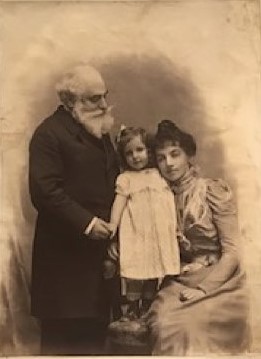
Nordau opened his heart and home: he fully took on the care, education, and financial responsibility for Anna's four children from her marriage to Kaufmann, who had been left fatherless, and regarded them as his own sons in every respect. Their bond grew even closer when their daughter, named after him, Maxa, was born on January 10, 1897.
Anna turned their Paris home into a place of creativity, hospitality, and emotional security, a refuge for Nordau from the storms about to break over him. Anna and Max's relationship lasted nearly thirty years, until Nordau's death in 1923.
Alongside his relationship with Anna, Nordau underwent an ideological earthquake. His journalistic coverage of the Dreyfus affair in Paris and the revelations of antisemitic hatred in the streets of France made it clear to him, just as they did to Herzl, that the Jewish people were in trouble. In 1895, Nordau met Theodor Herzl, a young Viennese journalist eleven years his junior, who asked Nordau for a psychiatric opinion to make sure that the idea of a 'Jewish State' had not driven him mad.
Nordau did more than reassure Herzl: he embraced the national vision with messianic fervor. As the most famous figure to join Herzl, Nordau gave the young Zionist movement international recognition and unparalleled prestige. At the First Zionist Congress in Basel (1897), Nordau was the keynote speaker. He outlined the plight of the Jews in the Diaspora, formulated the 'Basel Program,' and, at the Second Congress, coined the term 'Muscle Judaism,' which transformed Jewish consciousness.
But at the height of his national fame, a dark shadow hung over him: he was married to a Christian woman! This shocked and deeply dismayed broad sections of the Zionist movement, first and foremost the religious delegates, members of Mizrachi, and traditional Hovevei Zion circles from Eastern Europe. How could a man who preached the redemption of the nation, the preservation of its identity, and the struggle against assimilation share his home with a woman who was not a member of the Jewish people? Nordau, fully aware of the potential political damage, initially kept the marriage relatively quiet, agonized over it, and shared with Herzl his fears of the anger of hardline circles within the Zionist Organization.
Theodor Herzl's response to Nordau's concerns is one of the foundational and most fascinating texts for understanding the secular-national approach of the founders of political Zionism. In a personal, reassuring letter he sent Nordau on the occasion of his marriage to Anna, Herzl dismissed his concerns and wrote: 'Your worries about the attitude of our hardline circles toward your mixed marriage may be exaggerated... If our enterprise were already realized today, we certainly would not prevent a Jewish citizen - that is, a citizen of the existing Jewish state - from marrying a foreign Christian woman. Through this marriage she would become Jewish, regardless of her religion. And if they had children, they would naturally be Jewish.'
Herzl's outlook was thoroughly modern. He saw the Jewish state in terms of Western civic sovereignty. Just as a foreign woman who marries a French citizen becomes French under citizenship laws, not through baptism in a church, so in the future Hebrew state national belonging would be established by civic and family ties. Herzl did not see Nordau's marriage as a flaw, but as a preview of a free, liberal, sovereign state.
Anna was not unmoved by the hostile looks, the whispers in the congress halls, or the critical letters sent to her husband. Rather than apologize, hide, or undergo a formal and hypocritical conversion that went against her conscience, she chose to face the criticism with intellectual force. In conversations with close associates and in family letters, Anna put forward a winning historical argument drawn straight from the Book of Exodus: 'If I am attacked for not being of Jewish descent, then, unless I am mistaken, Moses, the greatest leader of the Children of Israel, took Zipporah the Midianite as his wife!'
The comparison was brilliant and incisive. Zipporah was the daughter of a foreign Midianite priest. She was not of Israelite descent, yet she tied her fate to that of the nation's liberator, bore him sons, and, at a crucial moment on the way to Egypt, even saved his life. Anna saw herself in much the same way: a woman from outside who chose to bind her life, fate, and family's future to the leader of the Jewish people during its historic wanderings. This argument became an inseparable part of the family legacy and showed the depth of her identification with the Zionist enterprise. Despite Herzl's support and Anna's self-defense, the political price of the marriage was immediate, heavy, and far-reaching.
After Herzl's sudden death in the summer of 1904, the Zionist movement was stunned and exhausted. The natural, unchallenged, and most deserving successor to head the Zionist Organization was Dr. Max Nordau. Herzl had regarded him as his successor, and Jewish masses throughout Eastern Europe looked to him with unreserved admiration.
Behind the scenes, however, a major storm was brewing: a group of traditional and religious leaders, along with key delegates from Russia and Poland, announced that they could not accept a president of the World Zionist Organization being married to a Christian woman. They argued that such an appointment would provoke a rabbinical scandal, alienate the observant masses, and damage the movement's legitimacy.
Nordau, a proud man with a deep sense of self-respect, refused to ask Anna to convert. He understood the danger of splitting the movement and announced that he was relinquishing the presidency. David Wolffsohn, a Lithuanian-born Jewish merchant, traditional and with a distinctly religious background, was elected in his place. Nordau remained the movement's 'national conscience' and its leading orator, but he was permanently denied its executive and political leadership.
Ironically, the most complex response to Nordau and his marriage came from two of the most prominent leaders of religious Zionism in later generations: Rabbi Abraham Isaac Kook and his son, Rabbi Zvi Yehuda Kook.
The Kook rabbis saw the idea of 'Muscle Judaism' and Nordau's call to build up the Jewish people's physical strength as a divinely inspired act with inner holiness. Rabbi Zvi Yehuda Kook described Max Nordau, alongside the poet Saul Tchernichovsky, who was also married to a Russian Christian woman, as a penitent of the highest order. He drew on the Talmudic saying, 'Anyone who commits a transgression and is ashamed of it is forgiven for all his sins,' and argued that Nordau's work on behalf of the Jewish people atoned for his personal sins. This interpretation missed the reality of his personal life: Nordau never expressed shame or regret about his marriage to Anna.
The tensions surrounding the couple did not subside even after the establishment of the State of Israel. In 1983, during Menachem Begin's government, the Bank of Israel developed a plan to issue a new series of banknotes. One of the leading proposals was to feature Nordau, one of the central founders of Zionism, after whom main streets are named in almost every city in Israel, on an official banknote. (There was also a major uproar over the banknote bearing Saul Tchernichovsky's portrait.) But the plan was secretly and swiftly canceled and shelved. The religious and Haredi parties in Begin's coalition made clear that they would regard putting the portrait of a man who had entered a mixed marriage on the official currency of the State of Israel as a grave and intolerable offense against the sanctity of the people and the state.
One of the most dramatic tests in their lives took place on December 19, 1903, at the height of the internal rift over the 'Uganda Plan.' Nordau was fundamentally opposed to any alternative to the Land of Israel, but at the Sixth Congress he supported the plan solely out of total personal loyalty to Herzl. This made Nordau a target of blind hatred among the plan's staunch opponents. That evening, Nordau attended a festive Hanukkah celebration for Jewish students. In the middle of the event, a 27-year-old Russian Jew named Chaim Loben (Zelig Zhitlovsky) approached him, pulled out a pistol, and fired two shots at Nordau's head at point-blank range, shouting: 'Death to Nordau, the Ugandan traitor!'
By an absolute miracle, the bullets missed Nordau's head. In the tremendous commotion that broke out in the hall, as dozens of people leaped on the assailant and tried to lynch him, Nordau showed astonishing composure: he put himself between the crowd and the attacker, shielded him with his own body, and prevented his killing until the police arrived.
When Nordau returned home, he found Anna and their daughter Maxa distraught. Despite the trauma, that very night Nordau sat down at his writing desk and sent Herzl a poignant, anguished letter: 'Last night I received an advance payment against the Jewish people's debt of gratitude for the devoted work I have done on its behalf... I say this without bitterness, only with sorrow. How wretched our people must be, if it can give rise to such acts!'
It was the first political assassination attempt in the history of the modern Zionist movement. For Anna, the event made tangible the danger surrounding their lives and the heavy personal price exacted by their national mission. Even so, she did not ask Nordau to withdraw from his activities; she continued to be his steadfast, unconditional support.
The greatest test for the household came in August 1914, with the outbreak of World War I. Nordau had lived in Paris for decades and was one of the city's most important intellectuals, but he had never given up his Austro-Hungarian citizenship. When war was declared, the French government classified him as an 'enemy subject.' His Paris apartment, vast library, property, and bank accounts were immediately frozen and confiscated. The family had to flee France in haste within a matter of hours, and found refuge in Madrid, in neutral Spain. The war years in Spain were marked by abject poverty, social ostracism, and crushing loneliness. Nordau, by then an elderly man whose health was rapidly deteriorating, was not allowed to practice medicine, and his ties with the outside world were severed.
In this dark period, Anna's inner strength shone in all its brilliance: she managed the family's daily struggle to survive, looked after Maxa's education and well-being, and devotedly cared for Nordau, who suffered from serious heart problems. Without Anna's resourcefulness, diligence, and steadfastness, it is doubtful that Nordau would have survived the war years physically and emotionally.
The most impressive testament to the depth of Max and Anna's bond was their only daughter, Maxa Nordau (1897 - 1991). Maxa grew up in a multilingual home where French, Danish, and German were spoken, and where Scandinavian artistic heritage mingled with the Zionist vision. Her adoring father wrote a special collection of stories for her in French in 1905, titled Contes pour Maxa (Stories for Maxa). Maxa illustrated later editions herself and became a respected painter. She made long trips to the Land of Israel, stayed in kibbutzim and moshavot, and painted the country's landscapes, Hebrew pioneers at work, portraits of Mizrahi Jewish women, and Arab figures. She also illustrated Hebrew books, including Yaakov Niv's Children of the Field, and exhibited her work in numerous exhibitions in Europe, the United States, and Israel.
Dr. Max Nordau died in Paris on January 23, 1923, at the age of 73, shortly after returning from his exile in Spain. After his death, Anna took on the historic task of preserving his memory, promoting his writings, and securing his place in the Jewish national pantheon. For many years, Anna and Maxa worked to collect the thousands of letters, documents, diaries, and drafts Nordau had left behind. The fruit of their work was published in New York in 1943, at the height of the dark years of the Holocaust, as a comprehensive biography. This book is not only a historical biography but also an extraordinary human document. Anna and Maxa revealed Nordau behind the scenes: the loving family man, the exacting scientist, and the person who suffered profound emotional anguish out of concern for his people. The biography they wrote remains to this day one of the main and most important sources for the study of Nordau's life and thought.
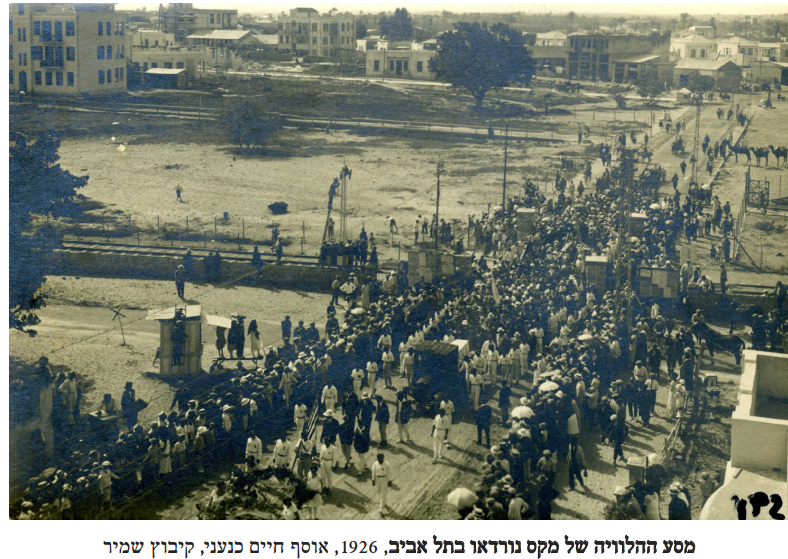
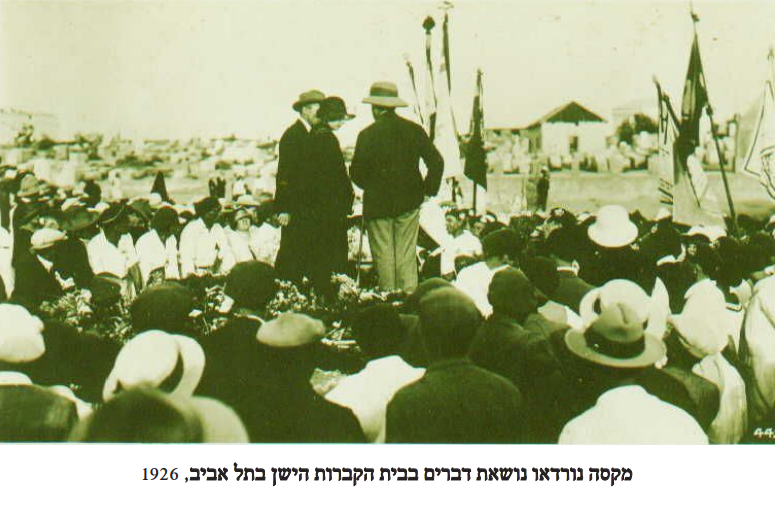
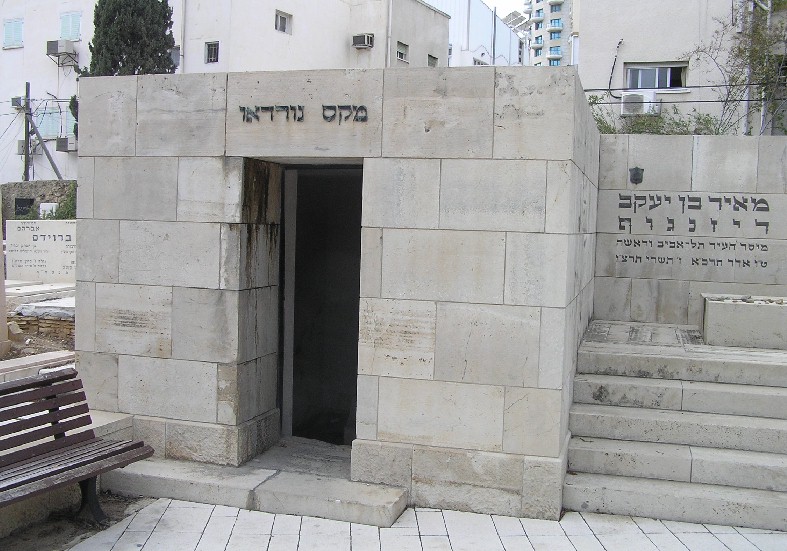
Nordau was initially buried in Paris. In 1926, Tel Aviv Mayor Meir Dizengoff initiated a national campaign to bring the leader's remains to the Land of Israel and bury him there. The funeral procession held in Tel Aviv in May 1926 was unprecedented in scale in the history of the Yishuv. Tens of thousands accompanied the coffin on its journey from the Great Synagogue on Allenby Street through the city's main streets. Ahead of the burial, a new main gate was cut into the western wall of Trumpeldor Cemetery (the gate that serves today as the main entrance), so that the crowds could pay their final respects. Nordau was buried in the plot reserved for the nation's great figures, and a magnificent stone mausoleum was erected over his grave. Anna knew that her mission was complete: Nordau had been laid to rest in the homeland to which he had devoted the best years of his life.
Anna lived many years beyond Max Nordau's death. She died in Paris on February 18, 1953, at the age of 91.
תגובות
עדיין אין תגובות.