
One morning, a monk from a distinguished family wakes up, converts to Judaism, brings his community with him, and makes aliyah. The story of this community is intertwined with the stories of the pioneers in the Land of Israel. Avraham Korkin
The Khazars and Judaism
The beginnings of the converts in Russia are traced to one of the most intriguing kingdoms of the Middle Ages: the Khazar Khaganate. For nearly 400 years, from the 7th century until the beginning of the 11th, Khazaria was a mighty regional empire, stretching from lands north of the Caspian Sea to the shores of the Black Sea, encompassing the Crimean Peninsula and reaching the northern slopes of the Caucasus Mountains. At its height, the kingdom was a cultural and economic crossroads and a center of military and political power. Yet the feature that left an enormous mark on history was the Khazar rulers' decision to adopt Judaism as their official religion.
According to many traditions, this step made them the ancestors of some Russian Jews and even of some Ashkenazi communities. Some even believe that the Khazars saw themselves as successors to the biblical tribe of Dan, which wandered among the lands in search of a new inheritance.
The Subbotniks and the Molokans
Centuries later, another community emerged, no less mysterious: the Subbotniks. While still Christians, they began to observe the Sabbath, and for this reason they acquired this name, which comes from the word 'Sabbath.' At first, the Subbotniks confined themselves to sanctifying the day of rest, but gradually they adopted additional Jewish commandments: they began to observe the laws of kashrut and even took on distinctive customs of the Jewish community. Some went a step further and converted to Judaism, and even made aliyah to the Land of Israel. Among the best known was the mother of Alexander Zaid, the fighter and founder of the Hashomer organization. Another well-known name is Yoav Dubrovin, founder of the Dubrovin Estate in Yesud Hama'ala.
In the 18th century, another movement came onto the scene: the Doukhobors, or 'spirit wrestlers.' They advocated religious anarchism, rejected the authority of the church and state, and their religious and social principles particularly appealed to circles of the Russian nobility in the late 19th century. Their pacifist and communal ideas inspired many, and around 1900 large numbers of them left Russia and emigrated en masse to Canada, where they established cooperative communities that lived according to their beliefs.
Even earlier, in 1779-1780, another subcommunity emerged from among the Doukhobors: the Molokans ('milk drinkers,' from the Russian word moloko; they got this name because they drank milk even on Christian fast days). Over time, a distinctive branch developed among them, the 'Molokan Subbotniks,' who adopted Sabbath observance and some Jewish commandments. Like their spiritual neighbors, they too were persecuted by the Russian authorities. Decrees of exile sent them to the Caucasus, but further migrations carried them as far as Turkmenistan, Iran, the United States, Mexico, Australia, and Brazil.
Their customs made them remarkably similar to Jews: they refrained from eating pork, observed kosher slaughter, and in some communities even wore tefillin and tzitzit and affixed mezuzahs to their doorposts. Many also circumcised their sons. Nevertheless, the difference between them remained fundamental: most still retained a Christian identity, while a minority chose to convert. This reality caused much confusion: among Russian Jews and those immigrating to Israel, Subbotniks who remained partly Christian became mixed up with actual converts, to the point that it was not always possible to tell where the line lay, and the converts were therefore identified as Subbotniks.
Avraham Korkin Converts
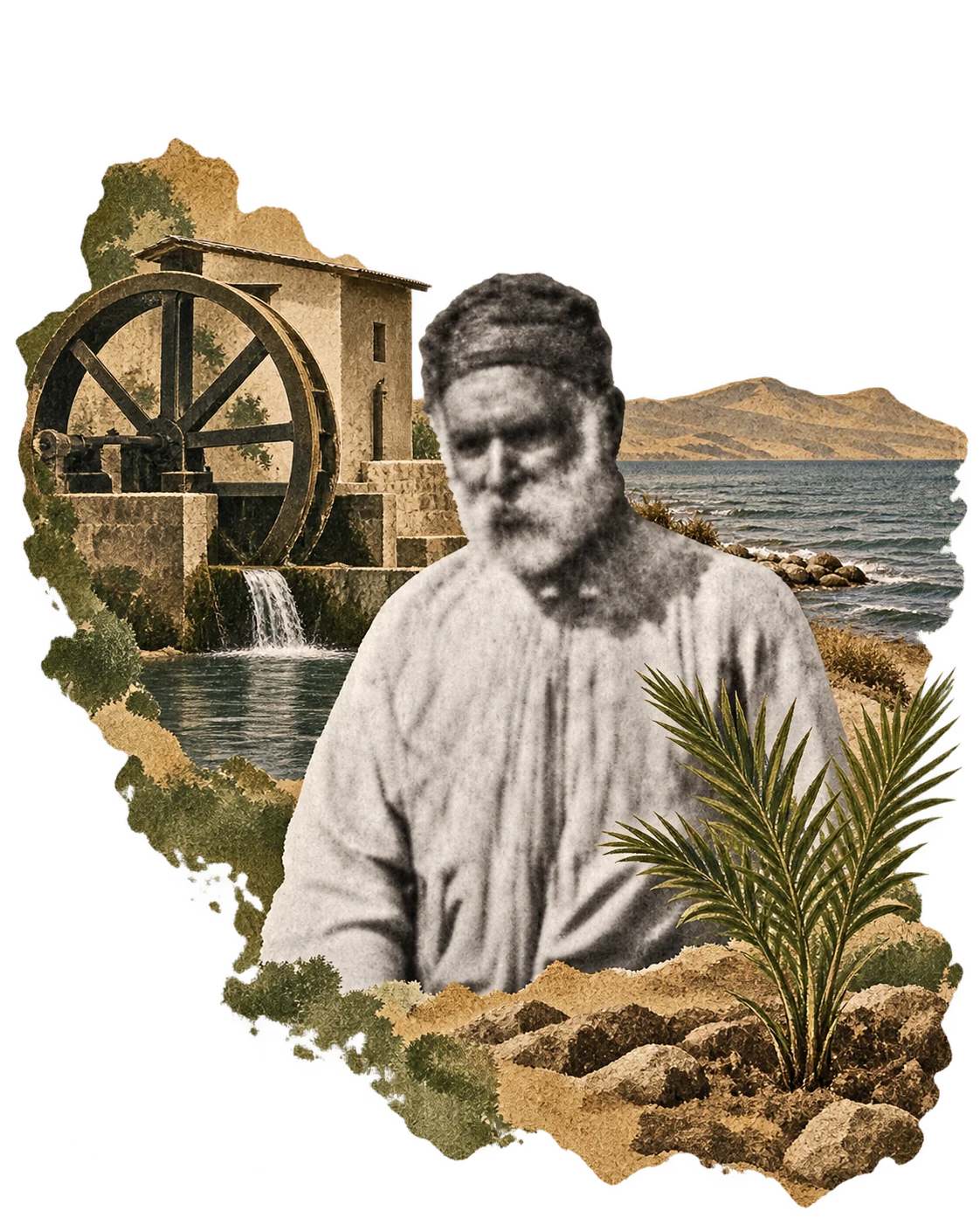
Of all the Russian converts, the figure of Avraham Korkin stands out in particular. His story is among the most fascinating, dramatic, and exemplary accounts of Jewish pioneering. Korkin was born in 1822 to a wealthy aristocratic family in Astrakhan Province, a vast region in southwestern Russia around the Volga River delta, territory that had once been part of the Khazar Kingdom. He was baptized as a Christian under the name Agafon Ivanovich Korkin, and his family coat of arms featured crossed swords, an allusion to the surname Korkin, which probably derives from the word kura (sword). In childhood, after losing his mother, he was sent by his father to a monastery to be educated for the priesthood. Years passed, and the boy became a senior cleric, head of a monastery and a priest, responsible for churches in Astrakhan Province. His father, it is hinted, was one of the figures who inspired Tolstoy's portrayal of Prince Anatole Kuragin or Karakin in War and Peace.
But Korkin's whole world changed in an instant. In 1847, when he was just 25, his world changed all at once after a shattering vision. One day, on his way to ring the church bells, his vision suddenly went dark. He went up and down the stairs again and again, but could not find his way. Exhausted, he sat on a step and, in despair, began reciting Psalm 91. Three times he repeated the words, 'He that dwelleth in the secret place of the Most High shall abide under the shadow of the Almighty.' Suddenly, his sight returned. Korkin understood that it was no coincidence, but a sign from Heaven: he must abandon Christianity and return his soul to Judaism. He told his family: 'This is no mere coincidence; it is a sign from God. From Heaven I was shown that there is no truth in Christianity, and that one must return to the faith of Israel.' From then on, Korkin became a bold thinker, daring to ask forbidden questions aloud: 'Why should we believe in a false religion? How can we believe in a mother of God and a son of God born of the Holy Spirit, something contrary to nature? How can there be a new Torah full of contradictions?'
Korkin's charisma worked its magic. He succeeded in persuading not only his immediate family, but dozens of other families as well. In the end, 163 people, men, women, and children from 37 families, undertook to convert and decided to found an 'Association of the Religion of Israel.' The Russian authorities saw this as treason, and the young community was forced to wander from village to village, persecuted yet strengthened. Along the way, they encountered communities of Christian Sabbath keepers and other righteous converts.
During their travels, they turned to Rabbi Yisrael Pivovar, who took them under his protection and began teaching them the fundamentals of Judaism, including what a synagogue was, the laws of kashrut, ritual immersion in a mikveh, and more. From there they continued to Vilna, where they stayed for a year and a half. A decisive stage took place there: the circumcision ceremonies for the men. In those days there were no anesthetics, and the adults had to endure immense pain, bound to keep them from thrashing about. Avraham Korkin, however, flatly refused to be tied up, fearing that this would make it seem as though his conversion had been forced upon him. He insisted on enduring the agony bravely. They continued their wanderings to Kovno in Lithuania, where Rabbi Isaac Elhanan Spector, the city's chief rabbi, completed their conversion and even welcomed them into his yeshiva. Thus a new community was born, proud and afflicted, made up of genuine converts.
But the stories of the Russian converts' courage did not end with Korkin. Seventy years later, in 1921, an equally dramatic event took place. Rodion Trofimovich Ageyev, a 37-year-old farmer and former combat officer in the army of Tsar Nicholas, went alone to the banks of the frozen Dnieper, near the city of Odessa. He was the father of three young children and the leader of a small, wandering community of several families. That day, he took a bottle of vodka from his bag, took a long swig, and then dipped a razor into it. He removed his outer garments, murmured a quiet prayer, and with a sharp, resolute motion circumcised himself. His blood flowed and the pain burned, but he bandaged the wound with a dressing soaked in alcohol, took another drink of vodka, and completed the act. In his diary he wrote, 'Today, February 22, 1921, I fulfilled God's second commandment.' Ageyev did not stop there. In the weeks that followed, he became not only the leader of his community but also its mohel. With his own hands, he circumcised about 50 men and boys, including his three sons, his two brothers, relatives, and neighbors. He turned the entire community from a Russian Orthodox Christian group into a company of Jewish converts preparing for the great journey, following the call of the biblical Abraham: 'Go forth from your land, from your birthplace, and from your father's house, to the land that I will show you.' Ageyev's community was not alone. It was just one of dozens of similar communities that arose in Russia over the centuries, seeking to return to the faith of Israel, sometimes at the cost of terrible self-sacrifice. The stories of Korkin and Ageyev are not merely historical anecdotes, but living testimony to the search for a new truth that would redeem them from the torments of everyday life in that era, even amid persecution, suffering, and prohibitions.
The Converts in Hadera and Sejera
Avraham Korkin's story did not end with his wanderings in Russia and his community's conversion. He continued to guide his sons and daughters in their new land, but not all his children chose to follow his path. Two of his sons refused to convert, crossed the ocean, and emigrated to the United States. They remained Christians, and even when they offered to help their father during years of severe hardship, Korkin turned them down without hesitation. To him, they were strangers to his new path. Another son, Yaakov, converted but chose to distance himself. He moved to London and changed his name to Friedman. His other sons and his daughter converted and continued with him. In 1897, Avraham arrived in Odessa with his family and followers. There he sought the help of Hovevei Zion, whose leaders were prominent figures in the history of Zionism: Meir Dizengoff, later mayor of Tel Aviv, and Dr. Hillel Yaffe, the physician to the colonies. The two helped them immigrate to the Land of Israel.
In 1898, the converts arrived in Hadera, where they met another community of converts that had arrived three years earlier. Their reception in Hadera was not easy. The established settlers felt that the new community had been imposed on them, especially because they had been brought there at the initiative of Dr. Hillel Yaffe, who was the colony's physician and had also been appointed to manage it. The locals found it difficult to accept the converts not only because they were different, but also because they embodied exactly what the settlers aspired to be: hardworking, knowledgeable farmers. Dr. Hillel Yaffe described them admiringly: 'The converts are the ones who saved the situation. Thanks to their work, perseverance, modest needs, and endurance, they succeeded. They are very good Jews, devoted with all their hearts to the religion, ready to assimilate among the Jews, to live and die in this land. They are worthy of emulation... We need people like them.' Hillel Yaffe's wife also testified that her husband saw the converts as an advantage: 'Dr. Yaffe said that the Jews' blood, weakened by generations of marriages between close relatives, would not be harmed at all if it were mixed with Christian blood.'
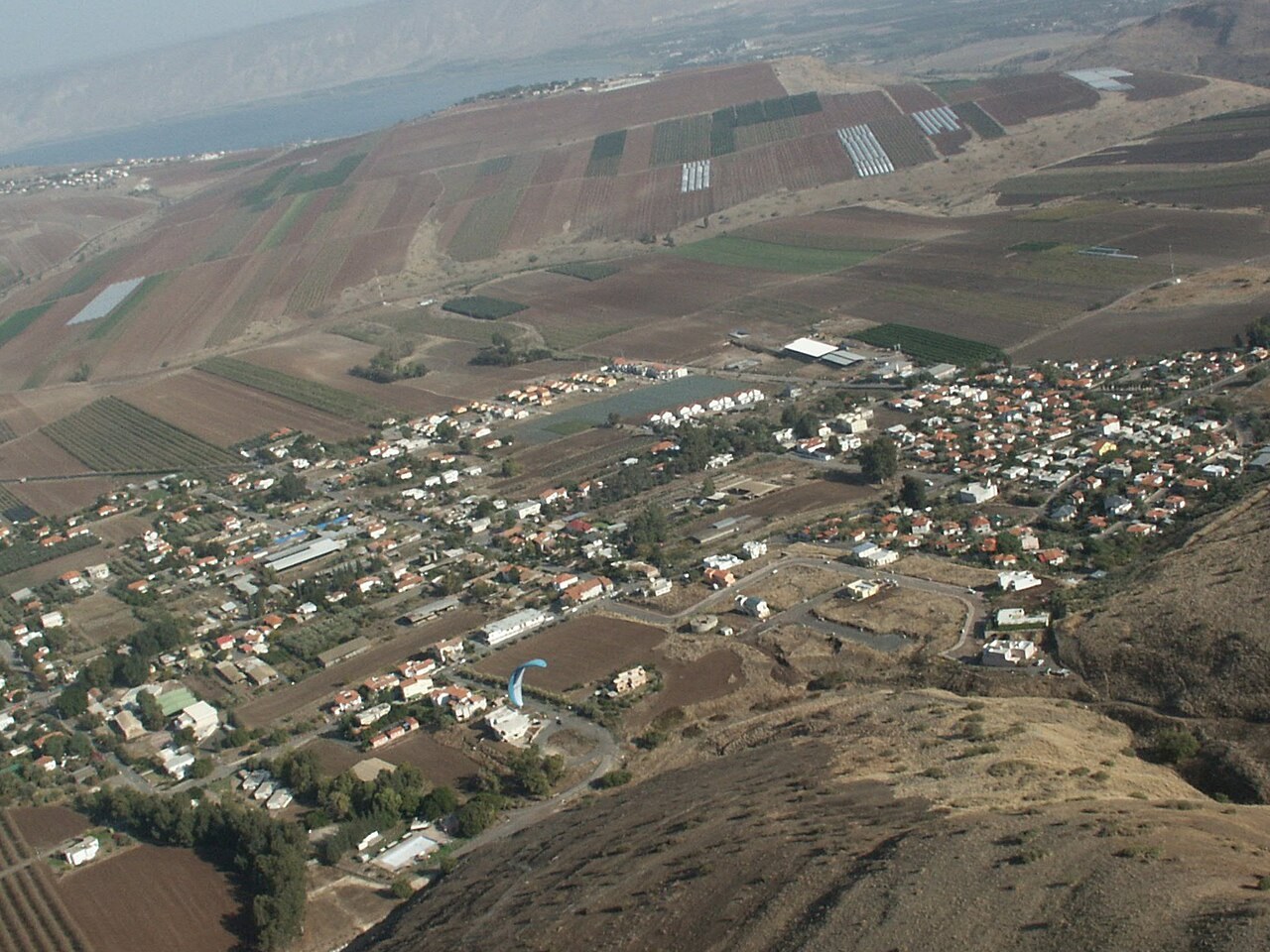
The converts themselves asked for nothing, neither homes nor concessions. They were content with permission to build huts with their own hands, on the understanding that they would leave them whenever asked. Their conduct contrasted with that of the local settlers, who rightly complained about their difficulties but were suddenly confronted with 'the diligent converts,' who did not complain at all. Another source of tension was that they had brought agricultural knowledge from Russia that did not fit the farming methods established in the colonies. Finally, Dr. Yaffe told the committee: 'Let them sow whatever they want, as long as they don't waste their time.' Above all, doubts about their Jewishness hung over them constantly. Although they observed all the commandments, it was claimed that they were merely 'Subbotniks,' Christians who observed only the Sabbath and were not real Jews. Three years later, in light of the tension and difficulties, the converts left Hadera and moved to Sejera (today Ilaniya). The lands of Sejera had already been purchased in 1890 by a group of Jews from Rishon LeZion and Jerusalem, but the attempt had failed. Nine years later, they were bought by ICA (the Jewish Colonization Association, founded by Baron Hirsch to establish agricultural training farms for immigrants). Its first manager was Haim Margaliot Kalvarisky (the Galilee community of Margaliot was named after him), and he was later replaced by Eliyahu Krauze. The Korkin family and other convert families fitted in well there. In 1903, 21 workers trained in Sejera, including members of the Korkin family, were sent to work in Beit Gan, near Tiberias. There the converts became a significant part of the population. Some persevered through the difficulties; others gave up and returned to Russia.
In 1906, a new manager arrived in the Galilee colonies, named Rosenhack, and his attitude toward the converts was hostile. He saw them as backward farmers with no place in the colonies and ordered them to be dispersed, a move that provoked outrage. Dr. Hillel Yaffe protested the decision and wrote: 'It would be an unprecedented injustice to interfere with their work. This would not be an interference with them alone, but with all Jewish settlement... We must not create sects and groups; we must treat them with respect.'
The converts, who understood that their diligence aroused envy and hatred, began to complain as well, as the historian Yosef Klausner described, solely to deflect the Jewish farmers' anger from them. Over time, however, relations improved. The farmers became better at farming, and the converts' children grew up alongside them until they were just like them in every way. When the moshav of Mishmar Hashlosha was established near Yavne'el, the converts' descendants were counted among its founders as equals.
Guard Duty and the Legacy
In addition to farming, the converts also contributed to security. Even before the Hashomer organization was founded, Yitzhak Korkin and his son Reuvka organized the guard at Beit Gan and brought in Sephardic guards from Tiberias, as well as Bedouins and Circassians. When Hashomer was founded in 1912, members of the Korkin family joined it too.
The converts aspired to assimilate completely. Marriage to Jews 'of the seed of Abraham' was considered the height of their hopes, although this was not always possible in the first generations. Avraham Korkin himself admitted sadly: 'I did everything to enter the Jewish people, and yet I am still not one of the seed of Abraham. My only consolation is that when my grandchildren enter the covenant with the children of Israel, the blood of Abraham will flow in them too.'
His descendants fulfilled his wish. During the Yishuv period and the War of Independence, they took part in the security effort. His grandson Avraham Avigdorov received the Medal of Valor for an act of combat in Kiryat Motzkin. Another grandson, Menachem Korkin, sailed with the 23 seaborne fighters and disappeared in Syria. Rafael Cohen, the son of Devorah Korkin, fell in the battle for Lubya in the Galilee. Their names, along with many others, are engraved in the people's book of valor.
Avraham Korkin lived to an advanced age and died in 1926, probably at the age of 104. His vision came true, and his descendants became part of the people. Some changed their surnames to Yitzhaki and Avidan and became an inseparable part of Israeli society. They fought, fell, built, and established, just as the founder of the convert movement in Astrakhan Province had hoped, as he envisioned his grandchildren and great-grandchildren 'entering the covenant with the children of Israel.'
Lieutenant Colonel Yossi Korkin, of blessed memory, who was killed in the Shayetet disaster, was a fifth-generation descendant. Another descendant of the family, Menachem Korkin, of blessed memory, was among the fallen of the 23 seaborne fighters. I am a descendant of the Korkin family, from the branch of Moshe Korkin.
Who is Rafael Cohen?
Devorah Korkin (my great-grandmother) had only one daughter, named Ruth Korkin (my grandmother).
The one who fell in the battle for Lubya was her son-in-law, Yehoshua Rogachevsky, Regev (Regev), my grandfather, who married Ruth. My brother is named after him, Shuki Regev.
Avital Regev: Devorah Korkin is the sister of my grandfather, David, Efraim, and others. She had twins, Sarah and Rafael, and her surname after marriage was Cohen. Rafulik was killed in the War of Independence, and Sarah'le Ariav lived in Ein Harod.
תגובות
עדיין אין תגובות.