
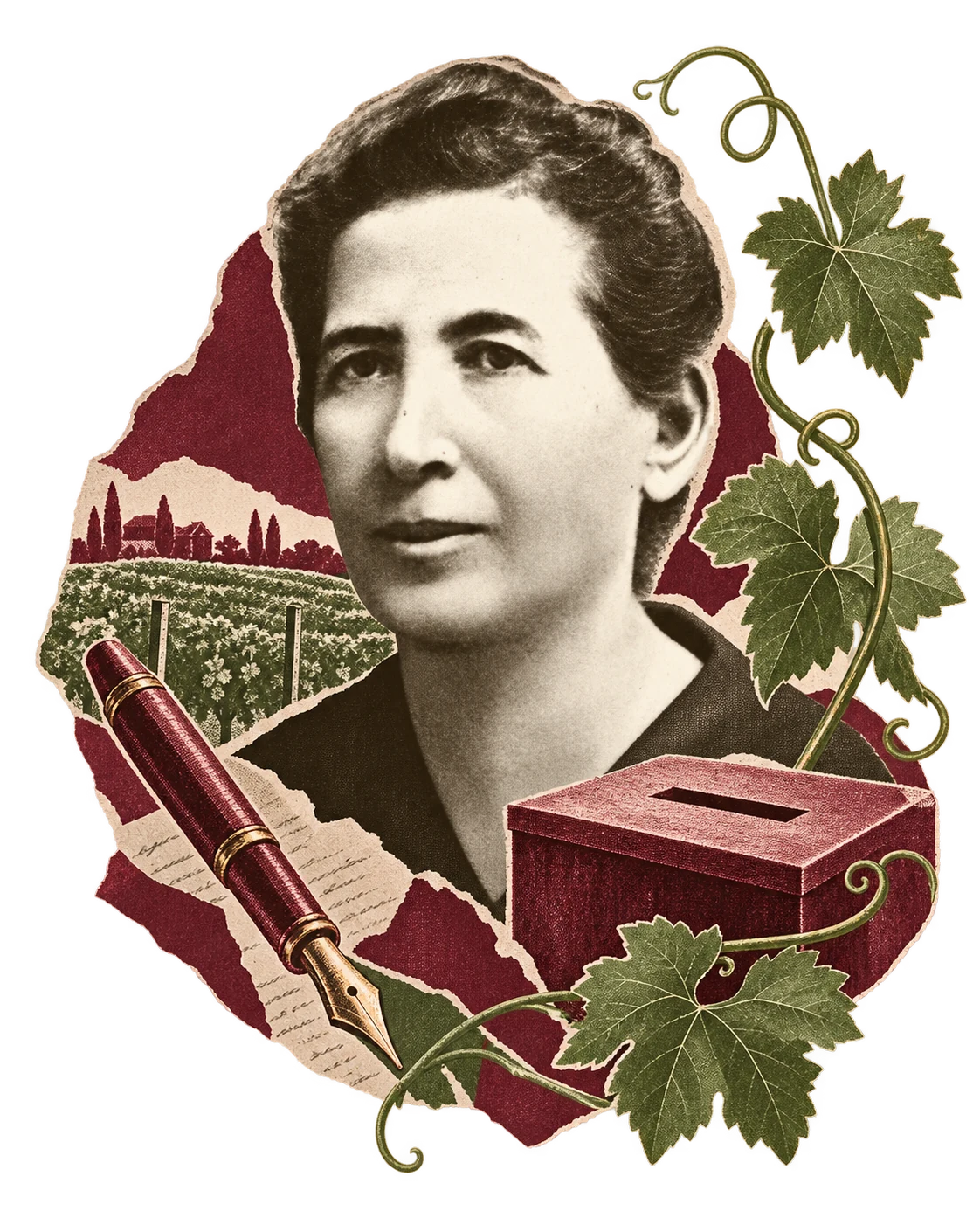
The first Eretz-Israeli woman writer, one of the earliest fighters for women's rights, “the mother of the Yemenites,” and the first woman elected to the colony council. Nechama Feinstein Pukhachevsky
Only about 25,000 Jews out of the approximately 4.5 million who emigrated from Europe came to the Land of Israel. Most were religious Jews who immigrated for ideological reasons - members of the First Aliyah - and they were the ones who established the first colonies: Rishon LeZion, Rehovot, Zikhron Ya'akov, Rosh Pina, and others. At the same time, about 5,000 Jews from Yemen also arrived, religious immigrants who came for ideological reasons. Unlike the immigrants from Europe, who enjoyed the support of European Jews, the Yemenites arrived with nothing.
The Yemenites and the Feminist Voice
In 1909, as people sought to “conquer” the work from Arab laborers, 75 Yemenites arrived in Rishon LeZion and were housed in the basement of the community hall. The poor conditions and overcrowding led to outbreaks of disease, and two children died.
Nechama Pukhachevsky and the women of the “Linat Tzedek” association set out to improve the Yemenites' living conditions. They organized classes for the children and paid their tuition. Four years later, another group of dozens of immigrants from Yemen arrived and settled at the edge of the colony. Nechama took them under her wing and came to be known as “the mother of the Yemenites.” As Nedra Saybehi, the wife of Rabbi Saybehi, recounted: “We had just arrived. Poor things, we had nothing... We came... They needed Yemenites. We didn't know how to speak. And there was Mrs. Nechama... She arranged shoes, clothes, food for everyone... She would come to the houses, look at the house, look at the children, at the women. She would see what they had, who was pregnant, when they would give her milk. Write it down - shoes for the children, kindergarten... She took care of us until they arranged houses for us. Until they arranged land for us. She helped everyone. May she dwell in the Garden of Eden.”
Nechama Pukhachevsky came to Rishon LeZion at the age of 20, seven years after the colony was founded in 1882, and found 35 families there. That same year, under the pen name “Nefesh” (Nechama Feinstein), she published her first article in the newspaper Ha-Melitz. The article addressed a distinctly feminist issue and the question of education: “It is as though women were not created to take part in anything good and useful, as though they counted for nothing in the life of the nation and could bring no benefit, and as though they possessed no spirit at all. The reason for the ‘lack of love for Israel’ among the younger generation lies in the mothers' inability to plant in their hearts (the hearts of their daughters, who will one day be mothers) love for their people and their brothers, so that they may pass on this holy spirit to the generation born at their knees and raise children faithful to their people.” She became an admired figure in Rishon LeZion. Everyone recognized her remarkable abilities, her steadfastness in upholding her principles, her intelligence, and her diligence.
Nechama could not accept that the revolution of “conquering labor” did not include women's rights. In those days, women had no right to attend colony assemblies, let alone vote or stand for election. She was disappointed that her husband, Michal, did not support her views. When her son Asael was born, she returned to her parents' home in Russia, where she studied photography. Michal, who remained in the country, continued sending her love letters and asking her to forgive him. After a year, she relented and returned to the country with the child.
From Russia to Rishon LeZion
Nechama Pukhachevsky was born in 1869 in Brest, Lithuania, to the Feinstein family, a wealthy and educated family. At the age of nine, she moved to Tsaritsyn in southern Russia. At the gymnasium, a Russian nobleman fell in love with her. He was not Jewish, was married, and had children, and he recognized her worth. Fearing she might be abducted, her parents hired a private tutor who lived in their home and taught her Hebrew, the Bible, and the history of the Jewish people. Thanks to him, the girl became an ardent Zionist, and at just 16 she began corresponding with the era's greatest poet, Judah Leib Gordon (Yalag).
While still in Russia, Nechama began corresponding with Michal Pukhachevsky, a fellow townsman known as “the man of the tree,” who was one of the first six agricultural instructors in the Land of Israel, sent by Baron Rothschild. When Michal returned to Russia, the two married, and immediately after the wedding they immigrated to the Land of Israel and settled in Rishon LeZion. Their son Asael wrote of his father: “Whether his life partner had been chosen for him in heaven, as the sages say, that there they decide who is destined for whom, or by one of the Lovers of Zion in Brest... the fact is that when they married, both their wishes were fulfilled; and how great was their happiness when they arrived in Rishon LeZion.”
When Nechama Pukhachevsky arrived in Rishon LeZion, she recruited the colony's women for volunteer work in the community. She founded the “Lina Association,” whose purpose was to care for new immigrants arriving in the colony, as she wrote: “New immigrants settled in the colony who could find no means of supporting themselves. They needed help and advice - and who would take care of such matters, if not a woman, who is more alert than a man to the suffering of others?” Later, the association's name was changed to “Linat Tzedek,” and under its new name the women of Rishon LeZion also cared for the sick. Nechama organized a loan fund to provide financial assistance and loans. She joined Eliezer Ben-Yehuda in promoting the Hebrew language, and only Hebrew was spoken in her home. Together with the colony's women, she founded the “Devorah” association, named after Eliezer Ben-Yehuda's wife. Among its cultural aims was to promote Hebrew through mothers. Nechama and Michal Pukhachevsky hosted many cultural figures in their home, including Hemda and Eliezer Ben-Yehuda, Bialik, Ahad Ha'am, Moshe Smilansky, Menachem Ussishkin, and Professor Nahum Slouschz.
Struggles in the Colony and in the Rabbinical Court
Nechama Pukhachevsky also mobilized the colony's women to improve and advance women's status and equal rights. They campaigned for the right to vote and stand for election. In 1919, they tasted victory when the two women who received the most votes for the colony council were Nechama Pukhachevsky and Adina Kahansky. Despite her victory, and because this was “a time of emergency and great responsibility,” Nechama handed the position to another council member who already had experience.
The following year, Nechama was a member of the central committee of the “Association of Hebrew Women for Equal Rights” and a delegate to the first Assembly of Representatives. She was also a member of the colony's school board; a representative of the “Women's Association”; the colony's representative to the “National Council”; a member of the colony's cultural committee; a member of the judges' committee; a member of the “Hebrew Writers' Association”; and, as a close friend of Henrietta Szold, an active member of WIZO.
Although Nechama Pukhachevsky had no legal education, her work as a fighter for women's rights led to her serving as a judge in Rishon LeZion's local court. These were secular courts established by the settlers as early as 1909 so they would not have to turn to Ottoman or rabbinical courts. The local courts served as a kind of mediation service and, in some cases, as arbitration panels. They heard cases concerning money, honor, slander, and libel. The judges were members of the community, chosen for their integrity and common sense. Most had studied Talmud and were familiar with halakhic rulings and the innovations of rabbis and religious judges. In light of this, it is clear how exceptional Nechama Pukhachevsky was, both as a woman and as someone who had not studied in a traditional Jewish school, or cheder. In her favor was the fact that her father, worried that she would not know Jewish culture, had hired a private tutor to teach her Hebrew and Jewish law.
The local court in Rishon LeZion was established in 1924 and operated for 22 years under the leadership of Aharon Mordechai Freiman. At the same time, Nechama Pukhachevsky's home hosted a court that settled family disputes. Nechama's daughter, Efrat Ben-Cohen, recalled: “The house was always open, and people came to ask for help and advice, both in financial distress and in emotional distress... She (Nechama Pukhachevsky) had a deep need to help, and people found a listening ear in her... Mother was not only a writer. She was an activist. She was active in every field. There was a private court in the house, and there was social assistance in the house... She was an authority.” In her home court, Nechama Pukhachevsky earned the title “the Yemenites' consul.” Among the Yemenites, for whom she served as an arbitrator and judge, the custom was that if a husband beat his wife, she was forbidden to him until he appeased her, and only someone accepted by both spouses could reconcile them. On Fridays, all the couples who had quarreled during the week would gather at the Pukhachevsky home. At 2:00 p.m., Nechama would come out onto the balcony, sit on the bench, and try to reconcile them. If mediation failed, she would take the woman under her protection. This was the case with Lulu, the wife of David Ratzabi, who suffered greatly at her husband's hands. Nechama took her under her wing and provided for all her needs until she was convinced that her husband would no longer beat her, as Nedra Saybehi described: “She was alone, he was alone. She arranged work for her and gave her food. They didn't live together for maybe a year, maybe two... In the end, she made peace between them. They have lived together ever since.”
Literature Against Injustices
Two issues that caused Nechama Pukhachevsky deep pain and a profound sense of injustice were the inheritance law and the law on bigamy. The inheritance law is depicted in her story “On the Slope,” which tells of a peasant widow whose husband died young. She continued to run the farm on her own while raising two small children. The farm flourished and prospered “until she was counted among the wealthiest farmers.” The years passed, and her sons, now grown and married, decided that their mother was no longer needed and sought to dispossess her of her property under the inheritance law, which transferred the farm to male heirs.
Among Ashkenazi Jews, the ban of Rabbenu Gershom prohibited taking more than one wife. Among Yemenite Jews, however, it was customary for a man to marry another wife if his first wife had not borne children.
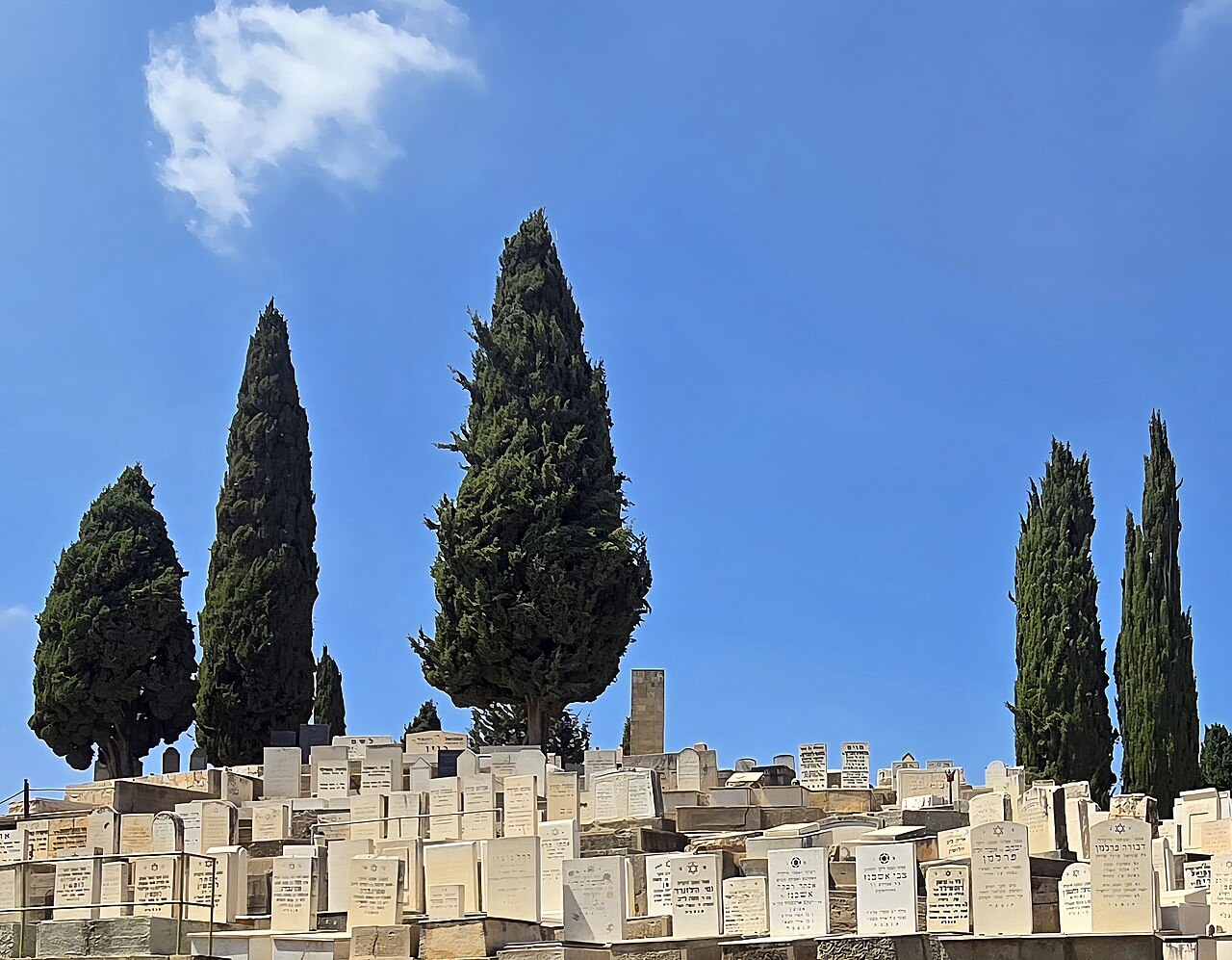
Nechama Pukhachevsky died on May 21, 1934, in Rishon LeZion, where she was also buried. Today, a small, hidden street named Nechama lies at the foot of Rishon LeZion's Great Synagogue. It was where the first immigrants from Yemen to arrive in the colony lived. In 2016, the Israel Postal Service issued a stamp bearing her portrait.
Nechama Pukhachevsky had been writing from a young age. It began with letters, continued with articles, and after she immigrated to the Land of Israel she began writing stories, short novellas, and a novel. She drew her material from her immediate surroundings and, with a perceptive and sensitive eye, skillfully portrayed the period, the farmers' wives, and the Yemenites. She wrote about injustice and wrongs: “What does a writer actually do?... He takes a piece of life, cuts it out of its setting, and places it in a frame called a book.” Elsewhere she wrote: “A writer draws on his own life, on the past and the present... But there is also what wells up from the depths of his soul alone. Then he must ask himself whether the portrayal is true, whether its lines are authentic. There is no definitive answer, but his faith... tells his heart that this is the true character of life.” The rabbinical establishment of the time considered the publication of her first book in Hebrew an act of immodesty. It took her quite some time to publish the book under the pen name Nefesh (Nechama Feinstein, her maiden name). Her book “In New Judea,” published in 1911, earned her the distinction of being the first Eretz-Israeli woman writer. A woman who was both a farmer and a writer.
In her stories, Nechama Pukhachevsky depicts the early settlement from the perspectives of both the Ashkenazi farmers and the immigrants from Yemen, especially the women, whose lot was particularly hard. In her stories, their lives are harsh, cruel, and unjust. With her sensitive eye, Nechama skillfully portrayed the difference between the physical hardships endured by Ashkenazi women and those endured by Yemenite women. Her first story collection, “In New Judea,” contains ten stories. The protagonists of the first five are Ashkenazi, while the rest are Yemenite. “Her limbs are battered and broken, yet she still stands at her post, cooking, washing - and cleaning” is a classic depiction of an Ashkenazi heroine suffering physical exhaustion as a result of hard labor on the farm and at home. The bodies of Ashkenazi women are entirely enlisted in the Zionist enterprise through hard physical labor. Their romantic and family lives are also portrayed as bleak. The Ashkenazi husband does not demand a larger family or children: “We talk standing up... I begin to feel slight tremors in my heart when the edge of his coat somehow brushes against the sleeve of my blouse. And sometimes, when he casts a tender, deep glance, an electric current runs through my temples.” She gives these feelings no chance, because “I have sealed the tomb over my youth.” Nechama portrays Ashkenazi women with suicidal thoughts, some of whom do die. The Yemenite women, too, were steeped in suffering, but unlike the Ashkenazi women, most of their suffering stemmed from their inferior position in relation to men. While the Ashkenazi women harnessed their bodies to the Zionist enterprise, the Yemenite women earned their living doing domestic work in Ashkenazi homes - work without Zionist vision or grandeur. The Yemenite man is portrayed as regarding a woman as an object, or at best as a valuable commodity: “He looks at her upright figure and is delighted! Afia, the prettiest of the young women! Indeed, heaven helped him buy her. He paid ten riyals. But what a girl for ten riyals!” Since the woman is the man's property, he believes he can do anything - beat her, or even order her to die and join him, as Saadia orders his wife Afia on his deathbed. She has no right to live without him.
A Journey in the North of the Country
In 1908, Nechama Pukhachevsky set out on a trip of several weeks in the north of the country. This was a time when communication was slow and information about the colonies and cities came from travelers. Since then, the country has undergone a number of changes, while some things, perhaps at a deeper level, have remained the same. She published accounts of the trip in several articles in the journal HaOlam, edited by Nahum Sokolow. A full account of the journey can now be read in her book “I Shall Cross the Land: Journeys in the Land of Israel by Members of the First Aliyah,” edited by Yaffa Berlovitz and annotated by Rehavam Ze'evi. Nechama's journey takes us back to those days and offers a narrow window onto that period. Through the travel book of Nechama Pukhachevsky, the Zionist settler, we can see her enthusiasm for the settlers, as well as her criticism of the ultra-Orthodox in the large cities. The first colony she encounters on her trip is Motza, very close to Jerusalem, where the tree planted by Herzl stood. Herzl had died four years before her trip, and the grief was still fresh.
“And along the road stretches little Motza, eight hundred dunams in size. A special joy comes over you when, suddenly, on the main road, you meet a group of Hebrew children and they call out loudly: ‘Hello, sir!’ or ‘Hello, ma'am from Rishon LeZion!’ The families live far apart here, and their plots of land are far from one another. Like true heroes, they live here without guards or watchmen. And far away, almost at the edge of their land, Herzl left them a precious memento. He planted a cedar there, and the tree grew, blossomed, and flourished... I drew close to that place. What holiness hovers over it! You stand before the tall cedar, your heart pounding; for a moment, you imagine that the gentle soul of the great leader dwells here. You want to kneel and embrace this tree... A deep longing stirs within you for the man who planted the cedar... Why did he hurry away from us so soon?!” Today, the cedar mentioned here is gone, and the community of Arza commemorates that famous cedar.
She also described, with undisguised envy, the German Templar colony in Haifa and the beginnings of industry in the country - the Atid soap factory established by Nahum Wilbusch (the brother of Mania Shohat and husband of Shoshana Feinberg, whose father, Israel Lulik, was among the first residents of Rishon LeZion and was known to Nechama from her own colony): “We came from Rishon LeZion to Haifa in the evening. After passing through the old city, we entered the German colony. The home of my acquaintances, where I had gone to spend the night, was at the far end of the colony, and I had to cross it from end to end. It was dark all around, yet the order and cleanliness, the beauty and prosperity of this place were apparent. And then, for the first time in the Land of Israel, I felt envy of others. Quietly, without noise or commotion, the foreigners are creating gardens of Eden for themselves in this land... Pride: here you see the beginning of Hebrew industry! ‘Atid’ is still young, and already it has made a great name for itself in the country with its laundry soap and its bathing soap, distinguished by its quality and fragrance.”
Nechama Pukhachevsky, a fighter for women's rights, was moved in Menahemia: “We said goodbye to Menahemia and to our new acquaintances there. As we were leaving the colony, we saw two fascinating young women working in a garden at the corner of the street, next to the pharmacy. The sight was so new to me that for a long time I could not take my eyes off them. When will we be fortunate enough to see young women working in a garden in Judea?” By contrast, Tiberias became a target for her barbs: “There are some eight thousand Jews in Tiberias. A quarter of them are Ashkenazi, and the rest Sephardi. Before entering the city, near the hot springs of Tiberias, we passed the building over the tomb of Rabbi Meir Ba'al HaNes. There are two yeshivas there, one for Ashkenazim and the other for Sephardim. Most of Tiberias's Jews live on the halukkah. They sit crowded and cramped in their narrow homes on the filthy streets. I walked down one narrow street, full of mud and slime... The streets are crowded, the alleys cramped. They twist around one another - a real labyrinth. And people with bent backs, pale faces, sunken eyes, torn and dirty clothes, drifting about, muttering - in short: living... Filth and squalor, lack of air and light, sidelocks reaching down to the neck, ignorance, stupidity, ‘halukkah,’ degrading poverty.”
Nechama was also enthusiastic about Rosh Pina: “Beautiful Rosh Pina, a Garden of Eden! Nature bestowed its beauty upon it with a generous hand: Mount Canaan rises to the south of the colony. The Bashan hills, covered in the morning with silvery dew, lie to the east, and there to the north is the old man himself, smiling with charm and the gentleness of youth, gazing over the tranquil waters of Merom. We enter the school in Rosh Pina, the most celebrated of the colony schools, headed by one of the most outstanding teachers in the Land of Israel. Some two hundred children study at this school, almost all healthy, beautiful, and charming. The upper grade especially impressed me with the students' knowledge and cleanliness. Blessed be Rosh Pina, which raises such saplings!...”
From Rosh Pina she went up to Safed, where, just as in Tiberias and Jerusalem, she encountered the Old Yishuv, and once again her critical arrows were drawn: “I am in Safed. The Jewish streets are narrow and full of filth and mud that give off a terrible stench... Filth and squalor such as one cannot see anywhere else in the world. This is the holy city of Safed! As you walk through this sea of filth, you ask yourself: How do people live here? How do contagious diseases not spread? And remembering the pleasant surroundings, you tell yourself: Surely the mountain air holds them back.”
The Will and the Legacy
Shortly before her death, Nechama Pukhachevsky wrote a literary will: “Did I dictate it? No! There was no time - the hard work swallowed up the writer, and as for what was published, I do not know how or when it left my pen. If, after I take up my eternal dwelling, someone wishes to collect into a volume what they find among these pages and in a few other places, in print or in manuscript, I ask that the work be entrusted to faithful hands, willing to care for unfinished works.” She meant her novel “Midron,” which she had been unable to publish. In 2000, the writer's great-grandchildren fulfilled her wish and brought it to print.
Her passion for writing passed on to her descendants. Her son, Asael Pukhachevsky, was a poet whose work remained hidden in a drawer until his grandchildren, Ora, Asael, and Atzmon Yaniv, rediscovered and collected it in the book “Gachelet.” Asael's poems show that he was the first native-born Hebrew poet in the Land of Israel. Nechama's great-granddaughter, Dr. Ora-Nechama Asael (Zilberstein), is an active and prolific writer who has published eight books of poetry, prose, and research to date, while her great-grandson Atzmon Yaniv has published four books of poetry so far.
תגובות
עדיין אין תגובות.