
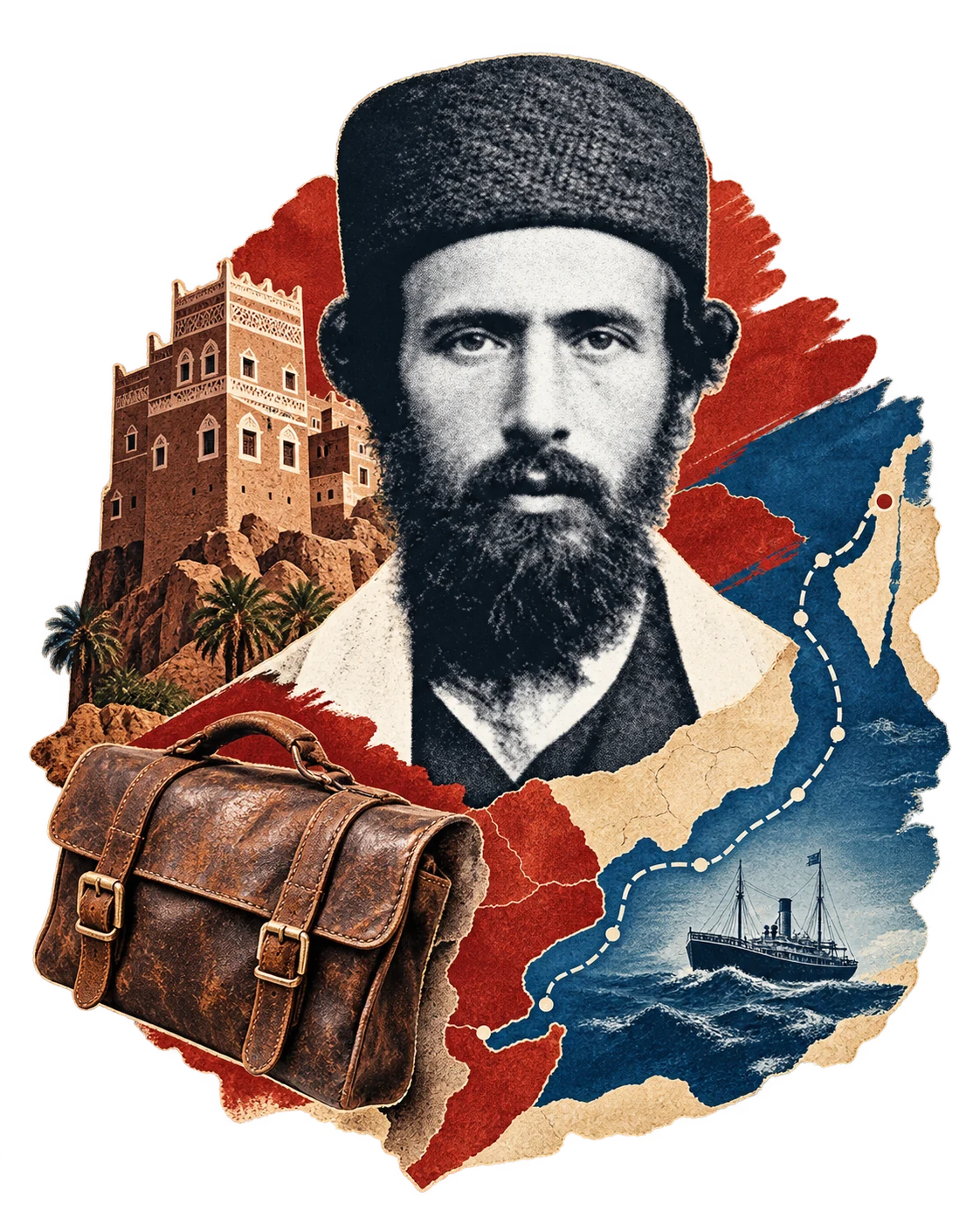
He was no ordinary Zionist activist from the Second Aliyah. He was part of the Jewish settlement's first initiative to bring Yemenite Jews to the Land of Israel.
For Yemenite Jews, the Land of Israel was never merely a distant memory, but an object of constant, living and fervent longing. They saw their lives in Yemen as temporary, a corridor in which they waited for the moment when the Messiah would come and bring them home. Unlike other communities that waited for a miracle, Yemen was shaped by a tradition of active messianism. The Jews believed they had to take various actions to hasten redemption and bring the end of exile closer.
That fervent spiritual ground was the perfect setting for a call that came from an unexpected direction - the Palestine Office in Jaffa. In 1911, under the leadership of Dr. Arthur Ruppin, the most important institutional body of the Zionist movement decided not to wait for immigrants to arrive, but to go out and bring them. Thus the "Yavnieli Mission" was born. Shmuel Yavnieli's mission to Yemen was the first time the Zionist movement took the active, direct initiative to "import" immigrants. Its practical aim was to create a "natural" Jewish workforce, one that could compete with Arab laborers in the settlements and establish Hebrew labor on the land.
But beyond the economic goal, a new historical bond was born. When the Zionist movement sent an emissary on its behalf to call on people to leave their homes and immigrate to the Land of Israel, a covenant of mutual responsibility was forged:
For the movement, this created a moral debt to the immigrants and an obligation to care for the fate of those who answered its call. For the immigrants, it created a deep sense of belonging to the Zionist enterprise, with the understanding that they were part of a great and organized plan.
Although Jews from Yemen had immigrated to the Land of Israel before 1911, Yavnieli's mission changed the rules of the game. It turned immigration from a private initiative into a national enterprise and indissolubly linked the ancient yearning of Yemenite Jews for Zion with the modern Zionist revival in the Land of Israel.
The First Yemenite Aliyot
As early as the 16th century, long before the modern waves of immigration, the remarkable figure of Rabbi Zechariah al-Dhahiri stood out - one of Yemen's greatest sages, a daring poet and an adventurer at heart. At just 20, al-Dhahiri set out on a journey across the world, passing through India, Persia, Iraq and Turkey, and, of course, the Land of Israel. In his book Sefer Ha-Musar, he described arriving in Safed and Tiberias around 1567. He reached Tiberias at the height of Dona Gracia and Don Joseph Nasi's attempts to establish a settlement there, and saw the city's construction with his own eyes as a clear sign of the beginning of redemption.
The first organized aliyah, known as "I Shall Ascend the Palm Tree," began in 1882 (5642). The name was chosen because the numerical value and rearranged Hebrew letters of *BeTamar* (בתמר) allude to the Hebrew year 5642, and was inspired by the verse from the Song of Songs, "I said, I will ascend the palm tree."
The immigrants who arrived in Jerusalem with nothing faced severe difficulties in settling in. To their great astonishment, the Sephardic community, then the dominant one, questioned whether they were Jewish. The journalist Israel Dov Frumkin, editor of Havatzelet, came to their aid and founded the Ezrat Nidachim association. The association bought land for them in Kfar Hashiloach (Silwan), where the "Yemenite Village" was established. At its peak, the neighborhood had about 160 Yemenite and Ashkenazi families living side by side.
The second wave of immigration (1907-1909) brought new momentum to settlements such as Rehovot, Rishon LeZion and Petah Tikva. The farmers in the settlements saw the Yemenites as the "natural worker" - a diligent, skilled and modest workforce, and cheap (!) - able to replace Arab laborers and withstand the harsh climate, unlike immigrants from Europe, who were considered more pampered at the time.
Those Yemenite immigrants wanted to be part of the Zionist idea and the building of the Land of Israel, and so they took on every job assigned to them. In this way, they became the backbone of Hebrew labor in the orchards. Over time, they established a permanent foothold in the country: they founded the famous Sha'arayim neighborhood in Rehovot and joined workers' moshavim such as Nahalat Yehuda, thereby bringing their heroic chapter in the building of the country to a close.
Painful as it is, the truth must be told: the leaders of the workers' movement who came from Europe discriminated against Jews from the East. They regarded the Jews of Yemen and the East merely as a workforce meant to help, while immigrants from Eastern Europe were seen as the "high-quality core" destined to lead the state in the making.
Beyond the image of them as "natural workers" who needed little, Yemenite immigrants had strategic advantages. First, their status as Ottoman subjects gave them a political advantage over immigrants from Eastern Europe, who were considered foreign nationals. Second, their command of Arabic and familiarity with the local climate made it easier for them to deal with their neighbors and adapt to working conditions on the ground. Finally, their traditional observance created a shared language and a natural bond with the farmers of the First Aliyah, unlike the religious tensions that sometimes arose with secular workers from Europe.
Yavnieli's Mission to Yemen
Shmuel Yavnieli arrived in Aden in January 1911 and returned to the Land of Israel in April 1912. During this period, he made two journeys in Yemen. The first was mainly to the rural regions of southern Yemen, as well as to the communities of central Yemen around Sana'a (January-July 1911); the second was to the provinces of southeastern Yemen, as far as Habban (January-March 1912). Before setting out on his first journey through Yemen, Yavnieli wrote a "proclamation to immigrate": "Anyone among you in whose heart there dwells an intense hatred of exile and a burning love for the Land of Israel, who has a healthy body suited to hard agricultural labor, and who has enough money for the journey to Jaffa - anyone who possesses all three should immigrate to the Land of Israel."
The proclamation promised work and housing: "Work with a hoe, that is, digging holes and trenches, hoeing fields, vineyards and orchards; plowing, sowing and harvesting; that is, guarding vineyards at night, guarding settlements, orchards and fields; work with horses... The settlement residents try to provide Yemenites immigrating to the Land of Israel and to the settlements with places to live during their first period after arrival, such as houses, stables, tents, cellars and the like."
When he visited the Jewish communities in southern Yemen, he was impressed by their good economic circumstances and their good relations with their Muslim neighbors. In a letter to Dr. Ruppin at the Palestine Office in March 1911, he wrote: "Sometimes I find myself wondering how I praise the Land of Israel and fieldwork to them, and how they will leave such a setting and such a world for the Land of Israel."
At first, Yavnieli's mission did not inspire much enthusiasm. From his listeners he heard mainly the argument that "the true redemption has not yet come... and you are forcing the end before its time," while others interested in immigrating said they could not afford the cost of the journey.
In response, Yavnieli worked out the conditions for the immigration of Yemenite Jews: (1) At least half of the immigrants' travel expenses must be covered...; (2) places for them to settle must be prepared in advance...; (3) "a certain state of mind must be stirred: an awakening toward the Land of Israel"; (4) people among the Yemenites must be found to serve as Yavnieli's assistants...
And indeed, the institutions covered part of the travel expenses. To inspire them, Yavnieli built on the messianic expectation that stirred within them. When they asked him, "Do you bring some tidings? Is the hour near? Do you have any signs?" he answered in their florid language: "I am no prophet, nor the son of a prophet, neither the Messiah nor a herald of the King Messiah. Yet I am a herald, and I have tidings to tell. I bring you news of redemption, for it is near: the redemption of our people, the redemption of the souls of our people who are awakening to immigrate to the Land of Israel and revive it through the labor of their hands and the sweat of their brow, even at the cost of their lives. But with the hope that it is near, and with joy, I proclaim the redemption of our land. Every part of our land that is cultivated by Jewish hands is redeemed! It is redeemed in itself. The land has begun to return its produce to its sons, its workers, and this is a sign to us that redemption is near..."
He also said: "Who knows, perhaps the end has truly come? Perhaps it is drawing near, and then one must indeed immigrate. Besides, since it is possible to earn a living in the Land, after all, 'whoever lives in the Land of Israel has all his sins forgiven.'"
His listeners answered in kind: "Many sages from the Land of Israel have visited us, but none of them told us about the Land of Israel. From not one of them did we hear tidings of redemption. You are the first to bring us tidings of redemption" - an allusion to their bitter experience with the false messiah Shabbetai Zevi. Yavnieli returned to Aden, and his call to immigrate began to bear fruit: "The people have become more stirred. The rumors in the land are growing ever more heartening, ever more legendary, and the movement is growing stronger and stronger, rising higher and higher."
As a result of his work, in just one year more than a thousand Jews left Yemen on their way to the Land of Israel. Several hundred more Jews arrived from Yemen in the Land of Israel during 1914. But the country was not ready to absorb them, and Yavnieli was ordered to halt the immigration.
These immigrants were settled in poor conditions and appallingly exploited. Thousands of pages have been written about this, but the story is captured in Dan Almagor's song "Dry Vine Shoots," about the farmer Yonatan Makov of Rehovot, who caught two of his Yemenite workers gathering dry vine shoots to heat their homes. He beat them, tied them to his donkey and led them along the main street in a humiliating procession, as the residents of the settlement watched, including the two women's children. Years later, I discovered that one of them was the grandmother of a close friend of mine.
Between 1949 and 1950, during Operation On Eagles' Wings (Exodus, chapter 19, verse 4: "I carried you on eagles' wings, and brought you to Myself"), most of Yemen's Jews were brought to Israel. The operation was intended to bring the exile to a final end. It was also known as Operation Magic Carpet and Operation Coming of the Messiah. About 50,000 Jews immigrated during the operation, representing most of Yemen's Jewish community. The last aliyah took place in March 2016, when 17 Jews were rescued in a complex, secret operation with the assistance of the Jewish Agency, effectively bringing the immigration of Yemenite Jews to an end. This group included the last members of the community.
Only many years later, and despite the difficulties, did most of the immigrants manage over time to find their place in the country's various fields of endeavor and become an integral part of the Jewish settlement.
The Path of Shmuel Yavnieli
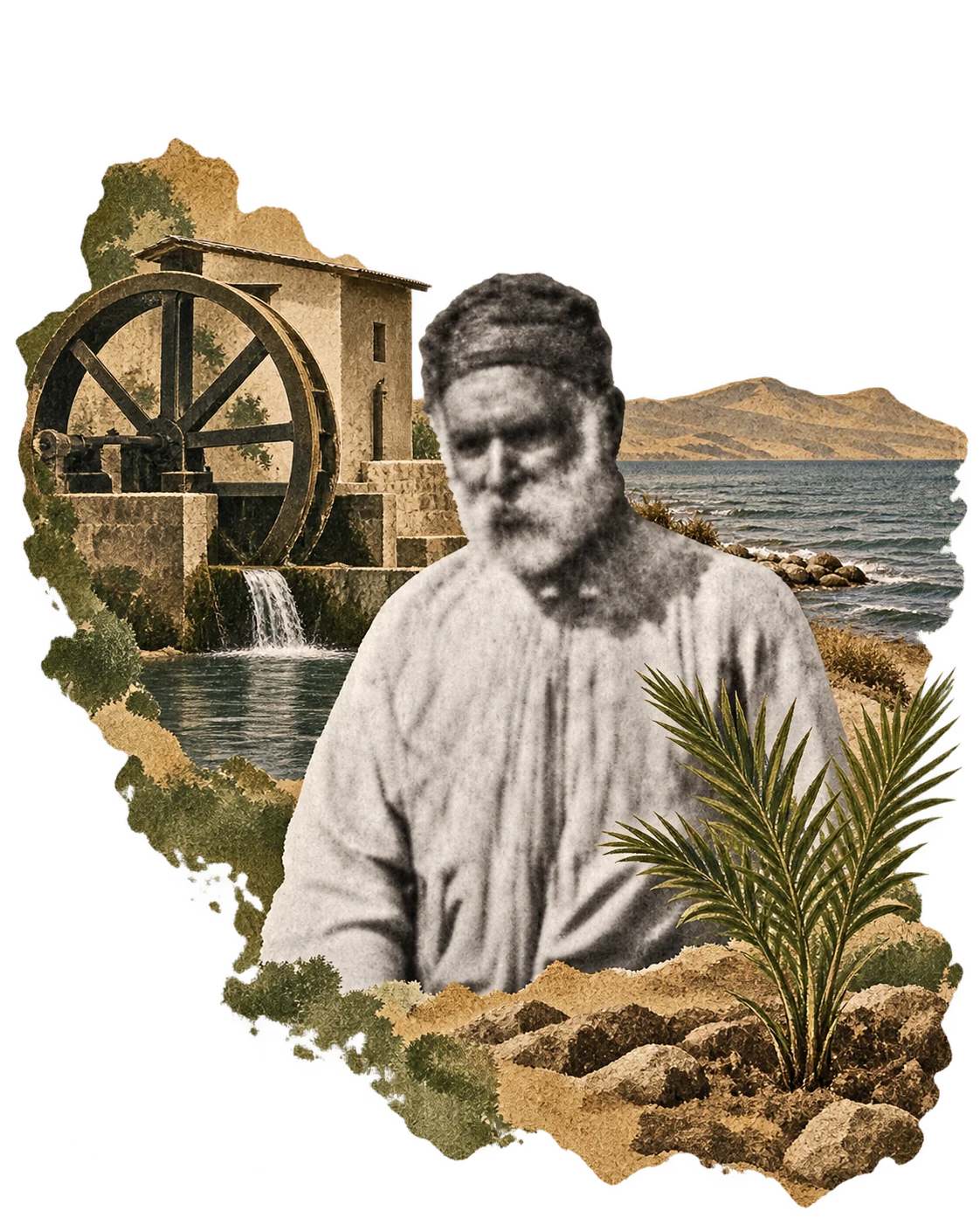
Shmuel Yavnieli was born with the surname Warschawski in the summer of 1884, to a Zionist family living in the village of Kazanka in Kherson Governorate (today in Ukraine). Shmuel Yavnieli's story begins with deep roots in agricultural labor. His family came from a region that had been under Ottoman rule until the end of the 18th century, when it was conquered by the Russians and became the site of a vast Jewish agricultural settlement project. His mother was the daughter of one of the founders of the Jewish settlements in the Kherson region, so for young Shmuel the idea that a Jew could, and should, work the land was entirely natural. He grew up with the belief that changing the Jewish way of life and turning Jews into productive farmers was the key to solving the people's plight and giving rise to a "new Jew," one who combined modern ideas with ancient tradition. The Odessa pogroms shook his world and led him to make his final decision: to immigrate to the Land of Israel.
During Hanukkah 1905, Yavnieli arrived in Jaffa aboard a ship carrying a group of 85 immigrants, among them people who would become pillars of the Jewish settlement, such as Noah Naftolsky and Hannah Sprinzak. His first job was as a laborer at the Hadid soap factory (near Ben Shemen), and from there he moved on to the small Ahuzat Bayit, which would one day become Tel Aviv, the first Hebrew city.
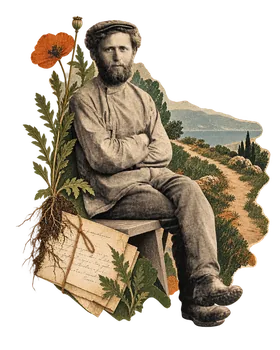
But Yavnieli's heart drew him to the Galilee. He arrived at the moshava of Yavne'el, where, driven by a sense of mission and a desire to be reborn as a farmer, he changed his surname to Yavnieli. Four years after his immigration, at just 25, he was already part of the founding group that settled on the lands of Umm Juni, which would become Degania Alef. There, among the clods of earth, he formed a friendship with David Ben-Gurion.
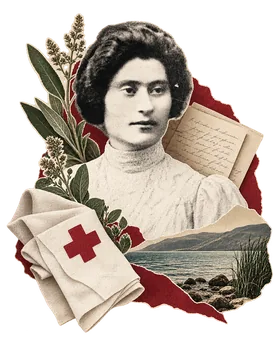
In 1914, he married Hania, a nurse by profession and a member of the Second Aliyah in her own right. Hania studied in Bobruisk alongside exemplary figures such as Sarah Shmukler (Berl Katznelson's beloved) and Yocheved Rabinovitz.
Yavnieli was one of the founders of the Shomron Workers' Sick Fund, and after World War I he devoted himself to political activity and was among the founders of the Histadrut. After the establishment of the state, he continued to serve the public through the Ministry of Education.
For many years, Yavnieli refused to speak or write about the operation to bring Yemenite Jews to Israel. Only toward the end of his life, after Operation Magic Carpet had been completed, did he decide to reveal his journey in his book Journey to Yemen.
Shmuel Yavnieli died in April 1961 at the age of 76. In his will, he made a modest and moving request: to be buried in the cemetery at Kinneret, not beside the great figures of the nation, but among the graves of Yemenite immigrants who had died while settling in Kinneret, bringing full circle a bond of love and appreciation for his fellow travelers.
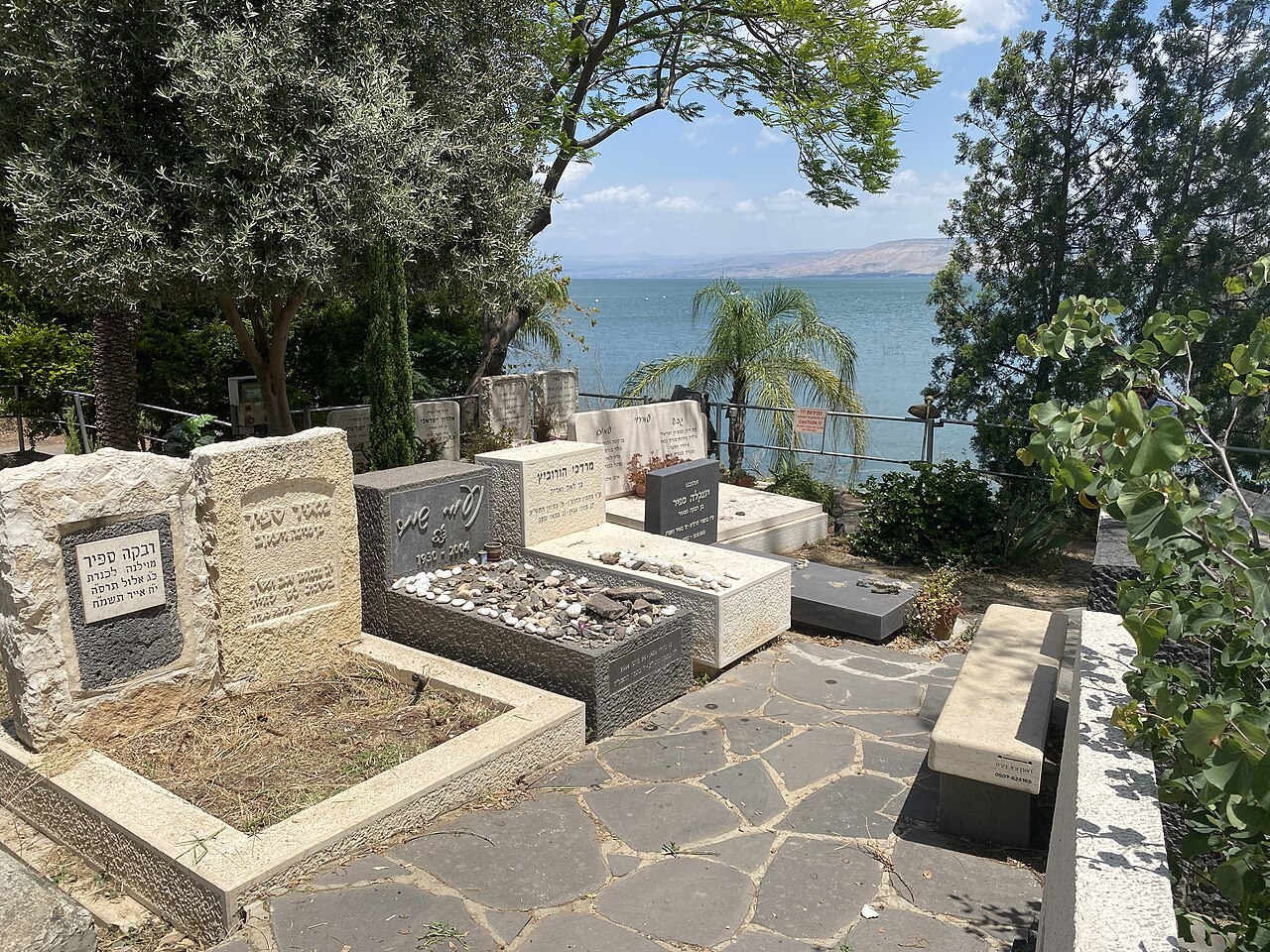
Today, streets throughout the country bear his name.


תגובות
עדיין אין תגובות.