
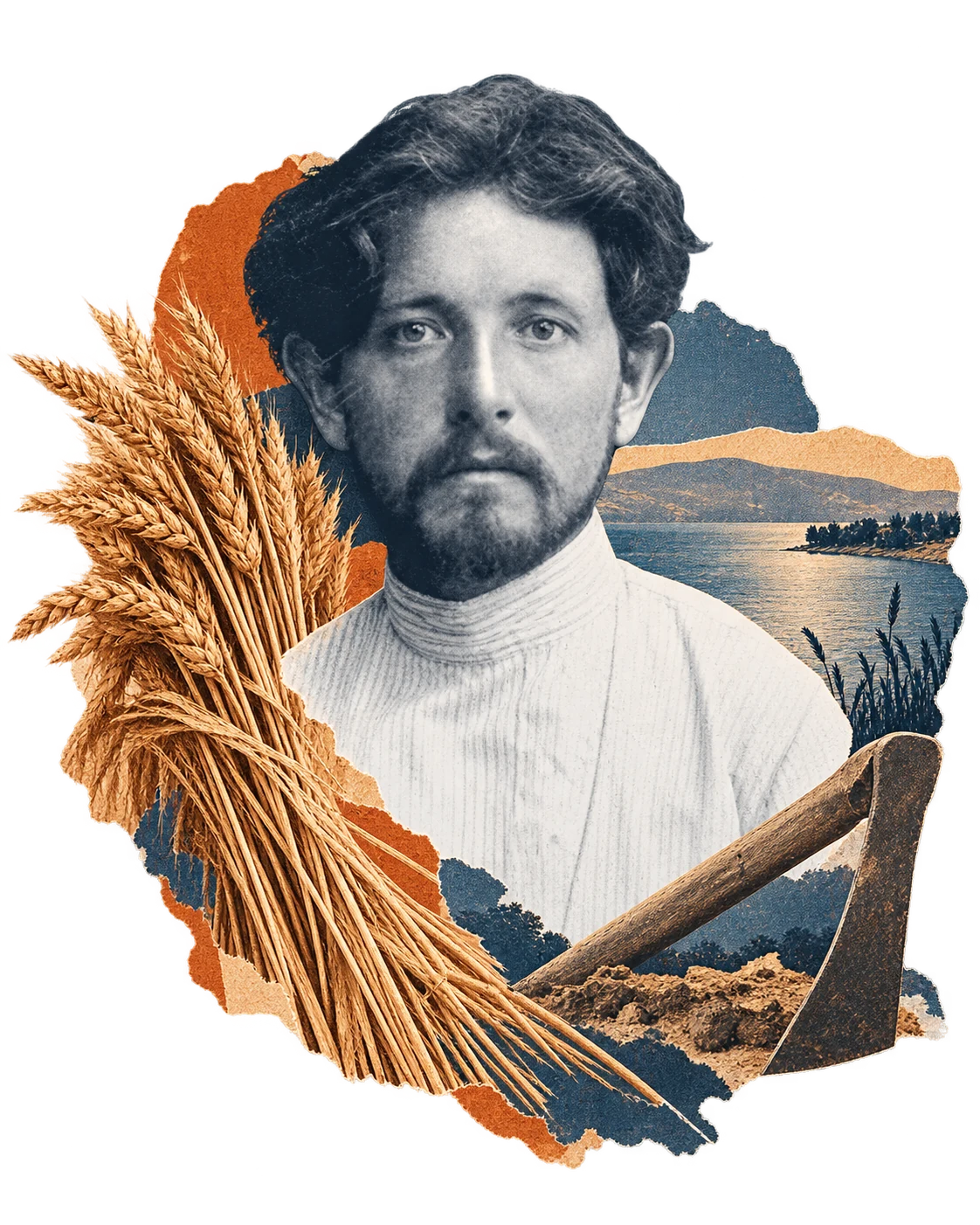
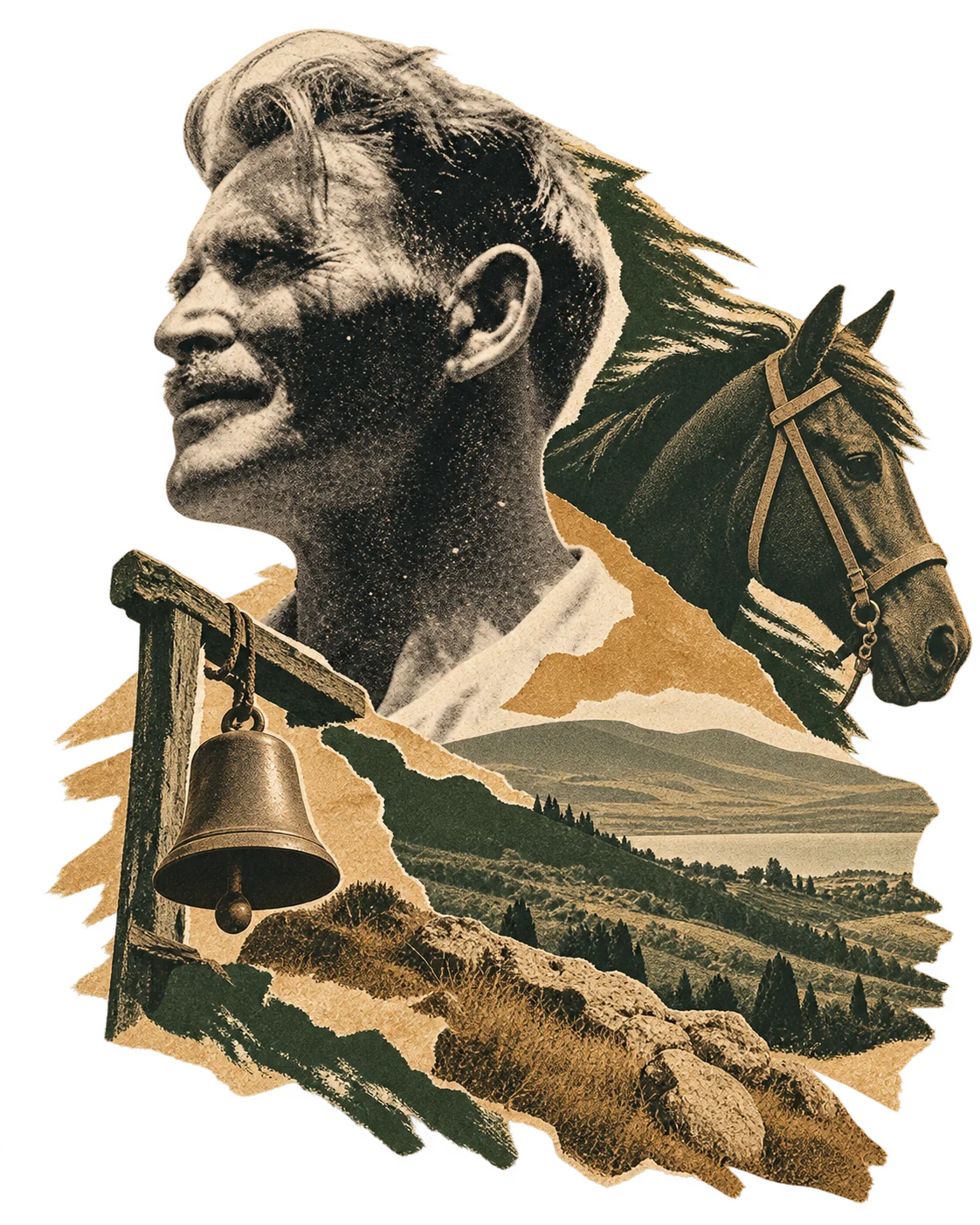
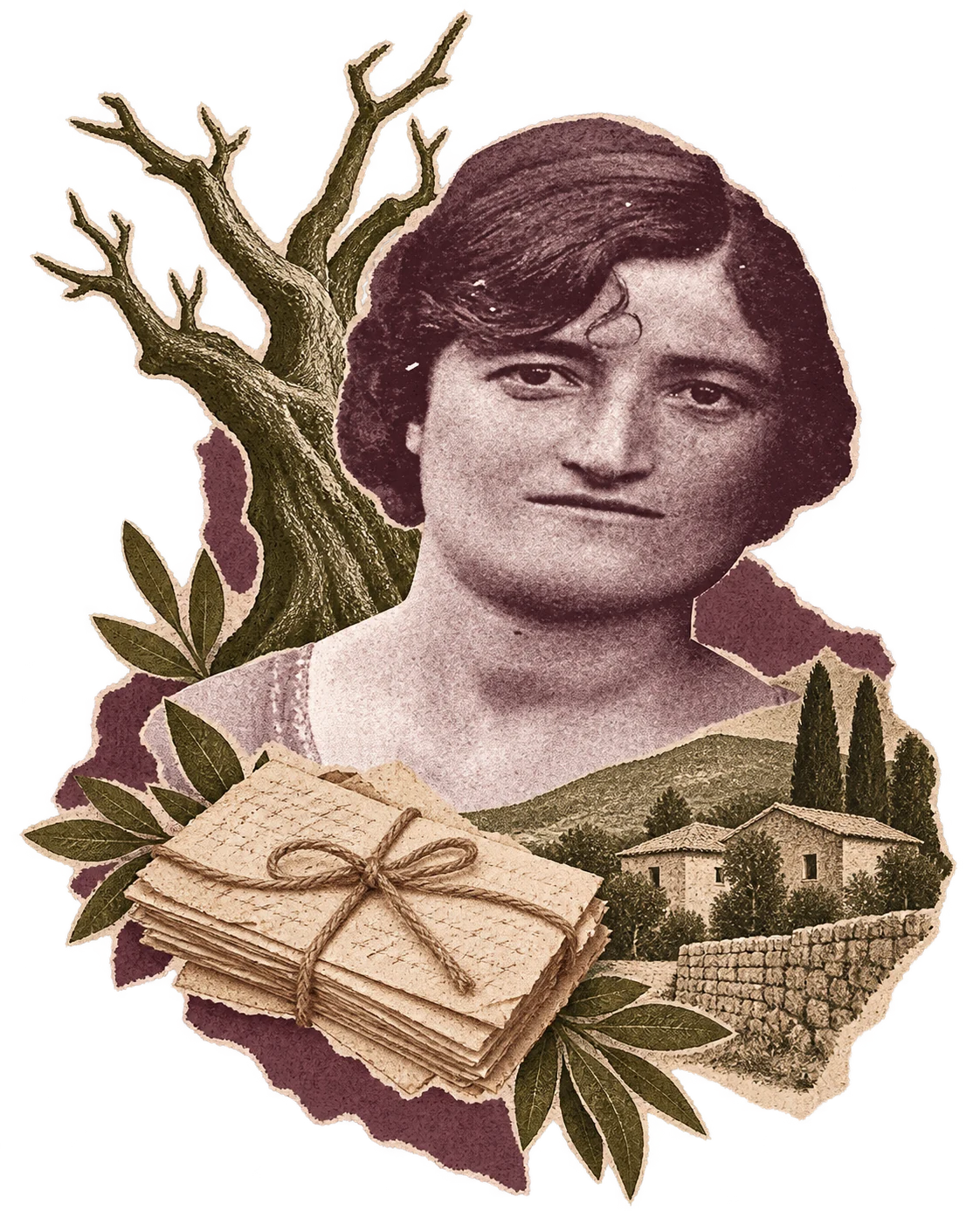
He was one of the pioneers of the Second Aliyah and a founder of the Kinneret group. He was the group's first to be killed, and it was said of him: "With his blood, he strengthened our covenant with the land."
On November 24, 1913, Yosef went out to work in the "Big Field" near Lower Beitanya. At the end of the day, Yosef unhitched the mules from the plow, harnessed them to a wagon, and headed home with his friend Yehoshua Adler. The murderers were lying in wait for him beneath a jujube tree. Eliyahu Golomb, who witnessed the incident, described it this way: "Several Arabs approached the wagon. He told them to move aside, and one of them immediately shot him. He had not yet felt the wound and fired his Browning. After the first shot, the pistol jammed, and Yosef Zaltzman fell." Yosef was the first member of the Kinneret group to be killed.
Yosef's murder was an act of revenge. Two days earlier, on November 22, Moshe Barsky of Degania had been murdered. While fighting off robbers, Barsky had shot and killed one of them. Yosef was murdered in an act of blood vengeance...!
Yosef Zaltzman was born in Warsaw in 1890 to a religious family devoted to the Jewish people. The family owned a fabric shop in the city, and when he grew up he joined the business, but he aspired to more. A meeting with Yitzhak Tabenkin in 1904 led him to join "Flowers of Zion," a group devoted to organizing Jewish self-defense against pogromists. The following year, he joined the Poale Zion party. That same year, strikes broke out in Russia and across Poland, and Yosef threw himself into supporting the strikers, setting up inexpensive kitchens for them and requisitioning food from merchants. He was caught and imprisoned for his subversive activities.
To fund the party, Yosef robbed the railway station's cashbox, and was caught again. He was sent to frozen Siberia, but managed to escape. In 1907, he reached Vienna, and from there made aliyah at the age of 17.
In the prime of his life, a young, strong man who had encountered his dream and felt he was on a historic mission for the people to whom he belonged, a pioneer who would prepare the country for those who came after him, he turned to his friends who had remained in Poland and asked them to join him.
In the Land of Israel and the Kinneret Group
After arriving in the country, Yosef joined the workers' group established by Israel Shochat, founder of Hashomer, and worked cutting wood in Hadera. He emerged as a leader and the group's driving spirit, and his great physical strength was evident in the volume and pace of his work. In Hadera, he met the poet David Shimoni, who dedicated his poem "In the Hadera Forest" to him after his death. At the beginning of the poem, he wrote: "To the soul of Yosef Zaltzman, whom I came to know in the Hadera forest." This is how he describes him in the poem: "With a casual motion of his hand, he would bring it down diagonally on the tree trunk, and its branches were severed... His forelock seemed to dance in the heat across his forehead, damp with sweat; beneath his torn shirt, the delicate skin of his chest gleamed white, and swollen veins raced across the reddish-brown skin of his neck..."
In 1910, Yosef went to work at Kinneret Farm, where he met Berl Katznelson, whom he greatly admired. At the farm, he also met Hannah Meisel, its founder, and the poet Rachel, whom he courted. Rachel accepted his advances, and the two would take their boat, a "Black Sea Fleet" boat, out on the Sea of Galilee and sing. The following year, he returned to Russia and enlisted in the army, but was discharged after a training accident severed one of his fingers. He returned to the country and immediately began working in Sejera (Ilania) and Migdal.
We learn about the time he worked at the farm in Migdal from the testimony of his friend Yaari Polonsky: "Zaltzman and I worked with a group of laborers on our own. We weren't day laborers or monthly workers; we were simple workers, paid by the job... Then I came down with a severe fever that shook me like a sieve. The heat and chills attacked my poor body in fierce waves. During those days of fever, Yosef Zaltzman was like a good mother, a dear sister to me. There was no milk at all at the farm, yet Zaltzman managed to get me milk every day. I don't know where or how he found it. When he saw that the fever wasn't letting up, but was instead taking hold of me, he wouldn't let me keep lying at the farm without a doctor keeping watch. He got me a pass for free admission to the hospital in Tiberias, hired a donkey with his last coins, put me on it, and took me to Tiberias."
"With the murder of the worker Yosef Zaltzman, the budding labor movement lost one of its leading figures, an initiator of the Labor Legion," Gershon Gera later wrote in his book The Kinneret Courtyard and Its People.
In Sejera, Yosef joined Ben-Zion Yisraeli and his group, and together they set out to establish Kfar Uria. The group also included Eva Tabenkin, Yitzhak Tabenkin's sister and Yosef's friend since their days in the Warsaw underground. In Kfar Uria, Yosef worked at plowing, his favorite task of all. Toward the end of 1913, he returned to Kinneret Farm to prevent its closure and became one of the founders of the Kinneret group. The young women in the group were taken with him: "His eyes are large, as blue as the Sea of Galilee on calm summer days, and a constant smile plays across his face. He is always in good spirits, optimistic. Easy to talk to, he speaks fluently about everything close to your heart and his," one of his friends described him.
On November 24, 1913, as he was returning from work, he was murdered. Yehoshua Adler picked up Yosef and brought him to the Kinneret courtyard, where Yaakov Hefetz, the colony's paramedic, tried to ease his suffering, but to no avail. As he lay dying, he turned to the paramedic and said: "If you're treating me in the hope of saving me, fine. If not, just leave me alone." After three hours of terrible agony, Yosef died at the age of 23. The Scottish doctor who arrived from Tiberias could do no more than pronounce him dead.
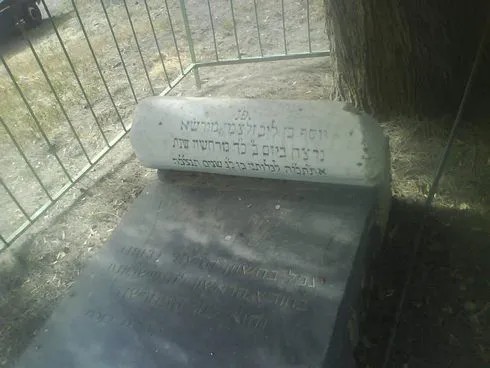
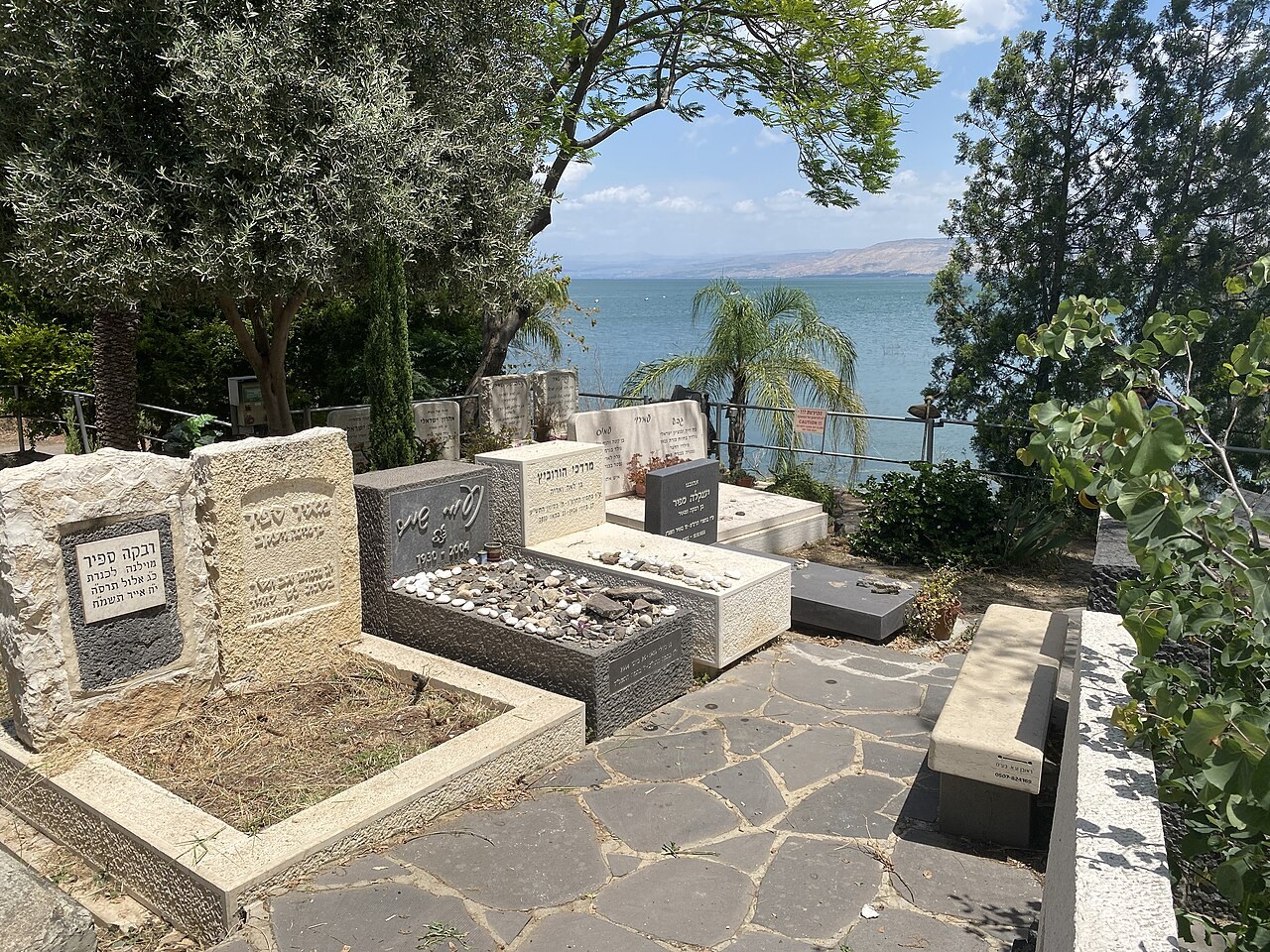
His close friend Ben-Zion Yisraeli buried him exactly where he had been murdered, a place that came to be known as "Zaltzman's Slope." His funeral was attended by a large crowd. The Zionist activist Yehoshua Barzilai eulogized him, and A. D. Gordon recited the Kaddish and burst into heart-wrenching sobs that shook those present. Yosef would be remembered as the first member of the Kinneret group to be killed.
In addition to the shock of the murder, the community also suffered an economic blow when the valuable mules were stolen. Ben-Zion Yisraeli recounted the extensive efforts to find the murderers and the mules: "An Arab from Beisan (Beth Shean) came and said he knew where the stolen mules were." Friends from Degania and Menachamiya organized an expedition to Salt in Syria and, with the help of a bribe, recovered the animals, but the murderers were never caught.
The murders of Yosef Zaltzman and Moshe Barsky led Eliyahu Golomb to conclude that the settlements in the area had to be united and strengthened, and from then on he devoted himself to defense. Yosef Tabenkin, the son of Yitzhak and Eva Tabenkin, was born in 1921 and named after Yosef Zaltzman.
תגובות
עדיין אין תגובות.